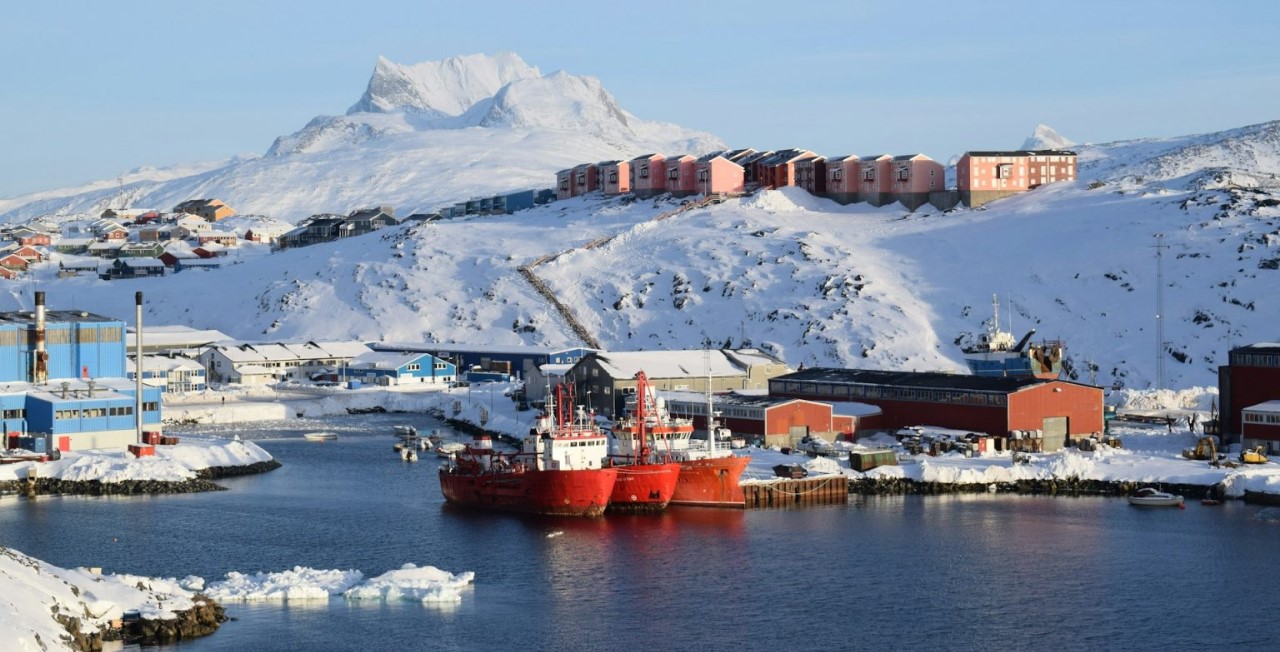
Polar Law Symposium 2025 – Unpredictable Climate became symbolic of Stormy and Unpredictable Polar Politics.

A record number of participants had gathered in the 2025 Polar Law Symposium in Nuuk, Greenland, not just for legal debate but to see the island that is now at the centre of geopolitical competition, including between NATO allies. The extreme and unpredictable climate became symbolic of stormy and unpredictable polar politics.
The poles are entering a dangerous phase of regression, of law, of institutions and of rights, as nations scramble to exploit their resources. At this year’s symposium, participants warned that the hard-won rules and frameworks that once safeguarded the Arctic and Antarctic were starting to unravel under the pressure of geopolitical competition. The Arctic Council and Antarctic Treaty System are struggling, indigenous rights are being sidelined, and the legal definition of ice itself remains unresolved even as melting accelerates access to, and competition for the minerals, fisheries and shipping lanes.
This year’s event focused on indigenous rights. The tone was set by Sara Olsvig, chair of the Inuit Circumpolar Council. She warned of a slide in indigenous rights and argued that Denmark, to which Greenland belongs, had never taken an institutional approach to the rights of indigenous people or addressed systemic inequity. She insisted that Inuit’s always be given a seat at the Arctic negotiating table and not be referred to as ‘stakeholders’ in their homelands.
Then came the law itself or rather its absence. Sea ice, for example, is still legally undefined and escapes conventional governance. In international law, land dominates the sea, with no law for ice. Frontierism, the mindset that the poles are to be conquered, developed or claimed rather than as shared as global commons is resulting in nature being viewed through the lens of resource extraction, with Greenland seen as a frozen vault of critical minerals. But there was also optimism. New legal bodies are emerging to complement existing rules, such as the newly minted Biodiversity Beyond National Jurisdiction Agreement, ratified in September.
The need to expand polar law was a clear message from the Symposium. More laws are required to deal with extractive industries in the poles, fisheries shifting to warmer waters, new shipping lanes, the expanding tourism industry, and subsea cables triggering dual-use concerns and sovereignty disputes. Current legal frameworks that operate in regions where the climate and geography are changing are, at best, reactive.
There are also no international conventions on mining. National regimes are accelerating approvals, often under pressure to secure critical raw materials. The European Union’s 2024 Critical Raw Materials Act lists 34 such minerals. Of these 34 minerals, Greenland has 25, making it central to Europe’s resource strategy. Yet the safeguards for local communities are unclear.
The memorandum of understanding between the EU and Greenland outlines cooperation, but does not answer core questions:
- Are there veto rights?
- Are terms around ‘free, prior, and informed consent’ binding?
- Can precaution override extraction?
The symposium also focused on the pressure that institutions are facing. Kenneth Hoegh, Denmark’s Arctic ambassador, admitted it was not ‘business as usual’ for the Arctic Council, and that its survival depended on it being ‘a la carte’ rather flexible, fragmented, informal.
On the Antarctic front, Alan Hemmings, a well-known Antarctic scholar, was blunt: ‘The Antarctic Treaty System is broken’, Power rivalry had infiltrated what was meant to be scientific cooperation. Global confrontations between major powers were not external to these systems; they were stressing them from within.
What emerged from Nuuk was not optimism; it was clarity. Polar law needs to keep up, and hard-won rules and institutional arrangements need to be upheld. As Olsvig put it: ‘‘This is a time to be careful and thoughtful about what we built, not making wrong moves that risk what has been achieved’’ Polar law is still incomplete. Both it and the institutions that it operates must continue to be built rather than dismantled.
Team Maverick





The Middle East Conflict, and Global Power Play
Hyderabad, April 2026 : There have been a plethora of views on the Middle East conflict at…

The Middle East Conflict, and Global Power Play
Hyderabad, April 2026 : There have been a plethora of views on the Middle …