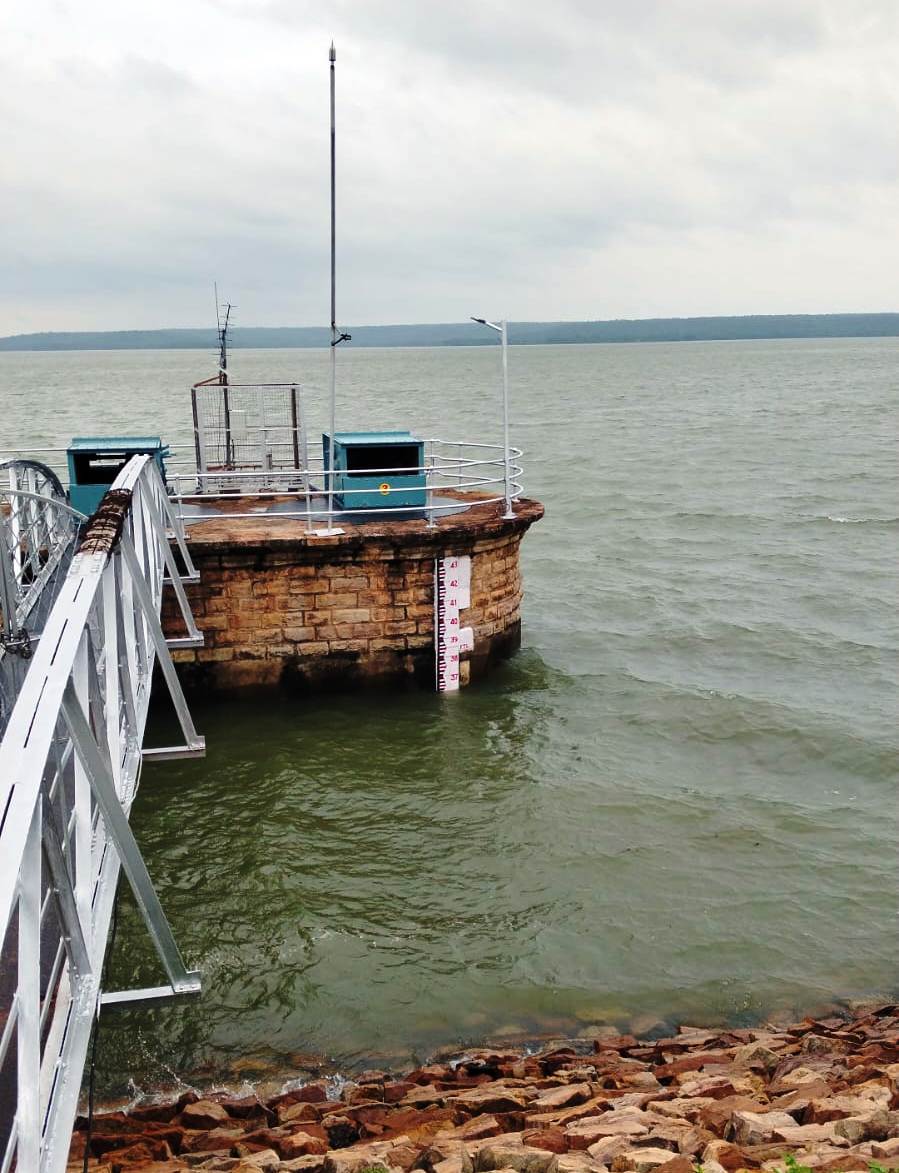
By Bringing Water From the Tandula Reservoir to Every Field, Chhattisgarh Creates a Historic ‘Water Revolution’

Chhattisgarh Emerges as a Model of a ‘Water Self-Reliant State’
Irrigation has empowered more than 42,000 farmers with agricultural self-reliance
Irrigated area expanded from 87,000 hectares to 1,13,000 hectares in 25 years
265 recharge pits and 300 soak pits constructed for rainwater replenishment
Raipur, Nov 2025 : A Historic ‘Water Revolution’ Through Tandula Reservoir Water Reaching Every Field Guided by the principles of “Water is Life, Water is Development” and “Water to Every Field, Happiness on Every Farmer’s Face,” the Tandula Water Resources Division in Durg has achieved remarkable milestones in irrigation development, water conservation, technological innovation, and public welfare over the past 25 years since the formation of Chhattisgarh (2000).
Under the visionary leadership of Chief Minister Vishnudev Sai and the farmer-centric policies of the state government, the department has made unprecedented progress toward establishing Chhattisgarh as a ‘Water Self-Reliant State.’
The department’s core priorities are clear:
- Public welfare through water resources
- Prosperity through expanded irrigation
- Transparency through modern technological systems
Irrigation Development: Unprecedented Expansion and Strengthening
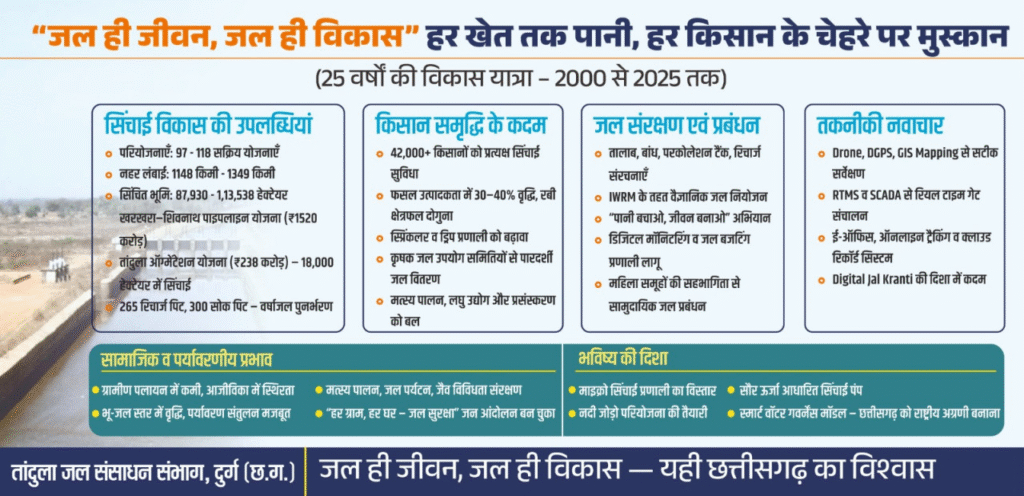
The Tandula Water Resources Division has revolutionized irrigation facilities. When the state was formed, only 97 irrigation projects were operational; today, 118 projects are actively functioning. Canal length has expanded from 1,148 km to 1,349 km, enhancing the water supply network.
In the undivided Durg district, the irrigated area has increased from 87,930 hectares to 1,13,538 hectares. Technological upgrades such as canal lining, strengthened structures, and gate automation have significantly reduced water wastage.
Major projects like the Kharkhara–Shivnath River Pipeline Scheme (₹1520 crore) and the Tandula Augmentation Sahgaon Lift Irrigation Scheme (₹238 crore) have provided irrigation to 18,000 hectares in the Durg-Balod region, ensuring reliable water supply to rural areas.
Lift irrigation systems now enable water to reach higher-elevation regions, fulfilling the goal of “Easy irrigation to the last mile – Water guaranteed to the last field.”
This year, 265 recharge pits and 300 soak pits were constructed to enhance groundwater recharge through rainwater harvesting.
Achievements in Agricultural Prosperity and Water Management
Due to the efforts of the Tandula Water Resources Division, more than 42,000 farmers have directly benefited from irrigation facilities, strengthening their journey toward agricultural self-reliance.
Crop productivity has increased by 30–40 percent, and the area under Rabi crops has doubled. To promote the objective of “More crop per drop,” sprinkler and drip irrigation systems are being encouraged.
Through Farmer Water-Use Committees, transparency and community participation have been ensured in water distribution. These developments have supported agro-based small industries, processing units, and fisheries, contributing to increased farmer income and greater economic stability in rural areas. This has given a new direction to the Green Revolution in the state.
For water conservation, the department has constructed ponds, dams, percolation tanks, and recharge structures. De-silting, repair, and modernization have significantly enhanced reservoir storage capacity.
Integrated water resource management and water budgeting have ensured scientific and balanced planning. With the participation of women and self-help groups, water management has taken on a community-driven character.
Under the Jal Shakti Abhiyan, the “Save Water, Create Life” campaign has become a public movement built on the principle of “Groundwater recharge is future security.”
Technological Excellence, Transparency, and Social Benefits
To modernize water management, the Tandula Water Resources Division is moving toward a ‘Digital Water Revolution.’ Precise land surveys are conducted using DGPS, drone surveys, and GIS mapping.
Real-Time Monitoring Systems (RTMS) have improved the monitoring of canals and reservoirs. The upcoming SCADA system will automate gate operations, reducing human error. E-office and online project tracking systems have established full transparency.
These advancements have also delivered major social and environmental benefits. Irrigation access has reduced rural migration and strengthened livelihood stability. Rising groundwater levels have improved environmental balance. Biodiversity conservation and fishery development have been promoted in ponds and reservoirs.
The campaign “Water Security for Every Village, Every Home” has now become a mass movement. Under administrative reforms, the Water Policy 2025 focuses on sustainable use and water pricing. The state-level Water Data Portal has made all statistics public, and grievance-redress systems have strengthened public trust.
Future Vision and Unwavering Commitment
Looking ahead, the department is modernizing irrigation canals and expanding micro-irrigation systems under the goal of “More crop per drop.” Plans are underway to expand solar-powered irrigation pumps and convert anicuts into barrages.
The Water Resources Department remains firmly committed to delivering water to every farmer and continuously enhancing irrigation capacity. Along with ensuring equitable and sustainable use of water, the department aims to develop a self-reliant water-supply system for industrial, urban, and rural needs.
With these commitments, the department reaffirms that in Chhattisgarh, “Water is life, water is development — this is the state’s unshakable belief.”






India Advises Citizens to Avoid Non-Essential Travel to Congo, Uganda and South Sudan Amid Ebola Outbreak
New Delhi, May 2026 : The Government of India on Sunday issued an advisory urging Indian c…

India Advises Citizens to Avoid Non-Essential Travel to Congo, Uganda and South Sudan Amid Ebola Outbreak
New Delhi, May 2026 : The Government of India on Sunday issued an advisory …