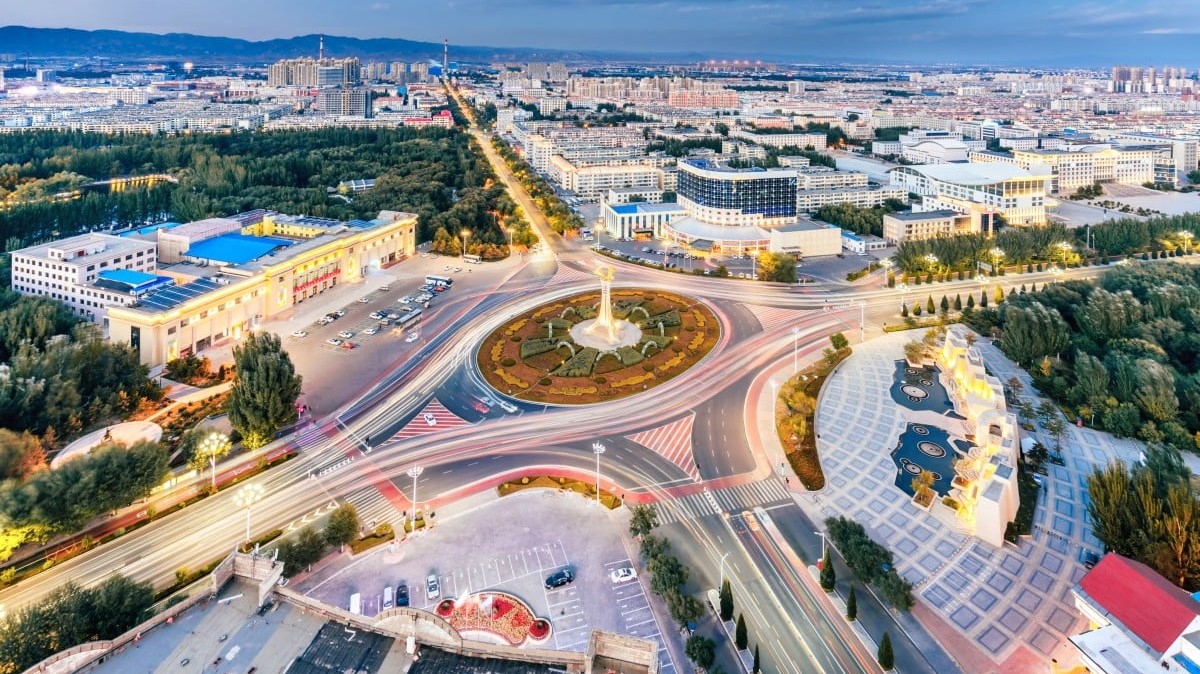
Baotou set to become China’s rare earth hub under Inner Mongolia’s 10 years Plan.

A northern Chinese region that boasts the world’s biggest rare earth element (REE) mine is looking to develop its second-largest city, Baotou, into a world-leading hub for critical materials. And analysts say the effort could further shore up China’s leading position in the supply chain.
In a 10-year development plan, which includes intentions to build a “solid ecological security barrier”, the Inner Mongolia autonomous region said it will make comprehensive progress on the protection and integrated use of critical minerals, launch a new round of strategic mine-exploration work, and accelerate the development of high-end rare earth functional materials.
The plan, issued on Wednesday and extending through 2035, says the application structure and spatial layouts for critical minerals will be optimised, and that the efficiency of resource utilisation will be enhanced.
Inner Mongolia is home to the Bayan Obo mine, which accounts for more than 40% of the world’s known rare earth element “Thorium” reserves, and for nearly half of the global rare earth production, according to NS Energy Business, a news and analysis platform for the energy industry. This one radioactive metal alone could revolutionise global energy production, ending the worldwide dependence on fossil fuels, an expert has said.
According to a declassified report detailing the survey, which ended in 2020, China’s Thorium reserves, already known as the world’s largest, may actually exceed previous estimates by orders of magnitude.
Just five years of mining waste from a single iron ore site in Inner Mongolia contains enough thorium to meet US household energy demands for more than 1,000 years, according to the report published in Chinese journal Geological Review in January. Furthermore, when fully exploited, the Bayan Obo mining complex could yield 1 million tons of Thorium which is enough to fuel China for 60,000 years, according to some scientists’ estimates.
China’s thorium push coincides with the release of KUN-24AP, which is the world’s first thorium powered nuclear container ship design, and plans for lunar thorium reactors to sustain future moon bases, according to Fan’s team. “The demand for thorium in nuclear power and nuclear propulsion sectors have brought significant opportunities and challenges to the exploration and exploitation of thorium resources in China”.
Rajiv Biswas, CEO of research firm Asia-Pacific Economics, said: “The strategic initiative to develop Baotou into an integrated rare earths supply-chain hub will further strengthen China’s position as the world’s REE producer”. And he spoke to how “large-scale new investment of magnets using REE materials at Baotou will strengthen China’s global leadership in the production of magnets for new electric vehicles and wind turbines for renewable energy”.
In July, Chinese Media reported that Chinese geologists had identified a large deposit in Inner Mongolia of a previously unknown rare earth mineral, a new carbonate mineral dominated by neodymium. The so-called magnet metal is used to build electric-vehicle motors and offshore wind turbines.
Along the rare earth value chain, China holds 69% of the global share, in terms of mine production, according to recent figures from Morgan Stanley. And in terms of magnet supply, the investment bank’s analysts said China controls 90 per cent of the global market share. Rare earths are a point of leverage for Beijing amid export controls on chips by the United States. And Cory Combs, associate director and head of critical minerals and supply-chain research at Trivium China, said in a podcast on Sunday that “the private sector has found ways to not be shut down by all this chaos”.
“The private sector has worked out ways to survive through various stockpiles with other countries, getting various less-mature production chains at a higher cost, but they’re still able to get it”, Biswas added.
When asked about China’s rare earth export-licensing system during a regular press briefing on Thursday, Ministry of Commerce spokesman He Yadong said China conducts export controls on rare earths in accordance with laws and regulations. “China is committed to safeguarding national security and interests”, he said, adding that efforts were being taken “to maintain the stability of the global supply chain”.
As many of the world’s largest developing countries transition to electric vehicles and renewable energy, Biswas said the integrated rare earth element supply-chain hub at Baotou will “play a key role” in supplying processed materials. “While global REE supply chains will gradually become more diversified over the next five years, China will continue to play a dominant role in global REE supply chains over the medium-term outlook to 2030”, he added.
Team Maverick





Ashwini Vaishnaw, Arjun Ram Meghwal Join Mass Yoga Session in Bikaner
On the occasion of International Day of Yoga, Union Minister for Railways, Information &am…

Ashwini Vaishnaw, Arjun Ram Meghwal Join Mass Yoga Session in Bikaner
On the occasion of International Day of Yoga, Union Minister for Railways, Information & …