Kazakhstan’s President Kassym-Jomart Tokayev has affirmed that Donald Trump was “sent by heaven”, Russia is a “God-given” Neighbour.

In February, 2024 while speaking with an Indian Journalist, Prime Minister Narendra Modi had quoted that “I’m a non-biological; sent directly by God”, had attracted widespread criticisms, adding to the hues of the oppositions in becoming a Pre-Parliamentary Election Issue.
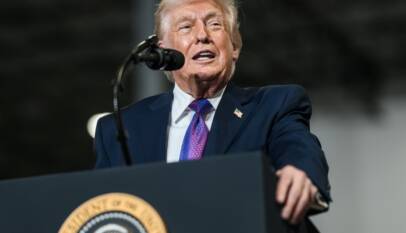
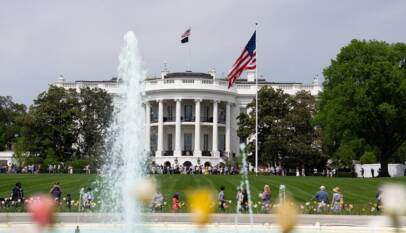
In 2025 on 06th November, during the Dinner Meet at White House after the C5+1 Summit, Kazakh President Kassym-Jomart Tokayev affirmed that US President Donald Trump is a “great leader and statesman, sent by heaven to bring common sense and traditions that we all share and value back into the United States policy”, while this overwrought rhetoric may create the impression that U.S.-Central Asian relations are truly on the verge of reaching a fundamentally new level of cooperation, but achieving this in practice will be very difficult, even if both sides are willing.
Neither the U.S. President’s extremely unwarranted knowledge of the region nor the additional tariffs he have imposed (25% for Kazakhstan, 10% for the rest) could alienate Central Asia’s leaders after that. On the contrary, the region’s Presidents became even more active in adapting to Washington’s new agenda, publicly criticising NGOs and the fight against climate change.
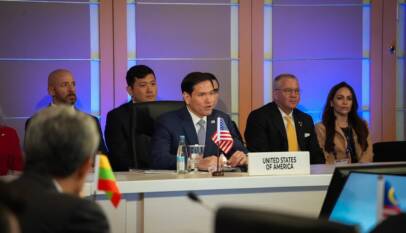
Trump may be less than a year into his Presidency, but this adaptation has already yielded results. In September, the U.S. President briefly met with the leaders of Uzbekistan and Kazakhstan on the sidelines of the UN General Assembly in New York, and now he has held a C5+1 summit with all five Central Asian leaders in Washington.
Although Trump administration officials are keen to emphasise that their approach to Central Asia is fundamentally different from that of their predecessors, the foundation for the current U.S. rapprochement with Central Asia was laid under Joe Biden. America’s geopolitical goal in the region remains to contain China and Russia. With his conservative ideas, Trump may enjoy greater trust among Central Asian leaders than his predecessors, but that is unlikely to be enough to overcome the objective constraints that have been building for decades.
Despite all the talk about the vast potential for investment, the United States has yet to launch a single major project in Central Asia comparable to China’s investments under the Belt and Road Initiative or Russia’s recent plans to build Nuclear Power Plants in Kazakhstan and Uzbekistan.
Even if US really wants to increase its investment in the region, it wouldn’t be easy. The investment climate in Central Asia isn’t particularly favourable for Western partners, and the rules of the game are idiosyncratic and require understanding of the patron-client relationships among local elites. Even countries well versed in the region’s business practices are not immune to having their assets appropriated, as regularly happens to Chinese and Russian investors.
Another challenge for potential U.S. investors is how saturated Central Asian economies are with Chinese and Russian projects. China is now present in virtually every sector and area of the region, which, among other things, hinders the advancement of the EU’s Global Gateway infrastructure initiative. It will be all but impossible to advance influence and investment in Central Asia without developing some form of coexistence with China and Russia.
The chances that the excitement caused by Trump’s attention will push Central Asia to distance itself from Russia are also slim. Moscow remains both the main security guarantor for the region’s political regimes and the main potential threat to their stability. Accordingly, it is too dangerous for local leaders to jeopardise their images as loyal allies in Moscow’s eyes. After all, U.S. leaders come and go, but Russia’s does not change.
The contrast between the optimistic atmosphere of the U.S. meetings and the modest practical results is fraught with risks for Central Asia itself. Trump may decide that the region’s countries are doing disproportionately little given the attention he’s devoting to them, and demand more, whether on the Chinese or Russian fronts. Moreover, he could demand it as an ultimatum, without delving into the subtleties of Central Asia’s dependence on its two giant neighbours.
After the G5+1 summit, as Tokayev flew into Russia for his state visit, 02 Su-35 fighter jets escorted his plane through Russian airspace. The Kazakh leader had, meanwhile, smoothed his arrival in Moscow by writing an article published to coincide with his visit by Russian newspaper Rossiyskaya Gazeta and headlined, “Eternal Friendship – A Guiding Star for Our Peoples“.
In the article, Tokayev described how he had held talks with the leaders of China, the US, European and other Asian countries. He wrote: “Despite the fact that many of them are at opposite ends of the geopolitical spectrum, they all recognise the exceptional role of Russia and its leader in resolving key issues in international relations. In other words, it is impossible to overcome the contradictions of the modern world without Moscow’s participation“.
The Russians are well-used to the pragmatic multi-vector foreign policy found across Central Asia, but Tokayev was clearly signalling to Putin that in building up relations with the US, business or otherwise, he knows to tread very carefully. Russia already faces the difficulty that China has crept to dominance in trade and investment with Central Asia and now threatens to surge ahead. However, geopolitically at least, it is not prepared to give up on the premise that it will always have a special place in the region’s considerations.
In meeting Putin, Tokayev continued to lay it on thick, describing Russia as a “God-given” neighbour, declaring that his state visit to the country was the highlight of his year and asserting that the inking of a declaration of the transition of Russian-Kazakh relations to a comprehensive strategic partnership and alliance as set to “usher in a new era”.
“Tokayev’s visit to Moscow after the US-Central Asia summit can be seen as a confirmation of Kazakhstan’s strategic ties with Russia and an attempt to allay any concerns among the Russian political elite“, assessed Yunis Sharifli, a researcher at the China Global South Project, talking to media reporters. “Especially since Moscow continues to play a crucial role in ensuring security, leveraging its long-standing military and military-technical ties with governments in the region“, he added.
Central Asia’s rapprochement with the United States has every chance of remaining at the level of empty promises and utopian projects with impressive-sounding figures. But it could also force the region to face a difficult choice between incurring the wrath of its traditional allies Russia and China, or disappointing Trump and becoming even more dependent on Moscow and Beijing.
For now, however, the region is unlikely to be concerned about this. The current task for Central Asia’s leaders is to squeeze as much capital as possible, even if it’s only symbolic, out of Trump’s interest. By the time they need to demonstrate practical success, there may already be someone else in the White House.
Team Maverick

Museums will be named after India’s National Heroes, not invaders: Chief Minister
Grand museum named after Chhatrapati Shivaji Maharaj being constructed at a rapid pace: CM…
Museums will be named after India’s National Heroes, not invaders: Chief Minister
Grand museum named after Chhatrapati Shivaji Maharaj being constructed at a rapid pace: CM …