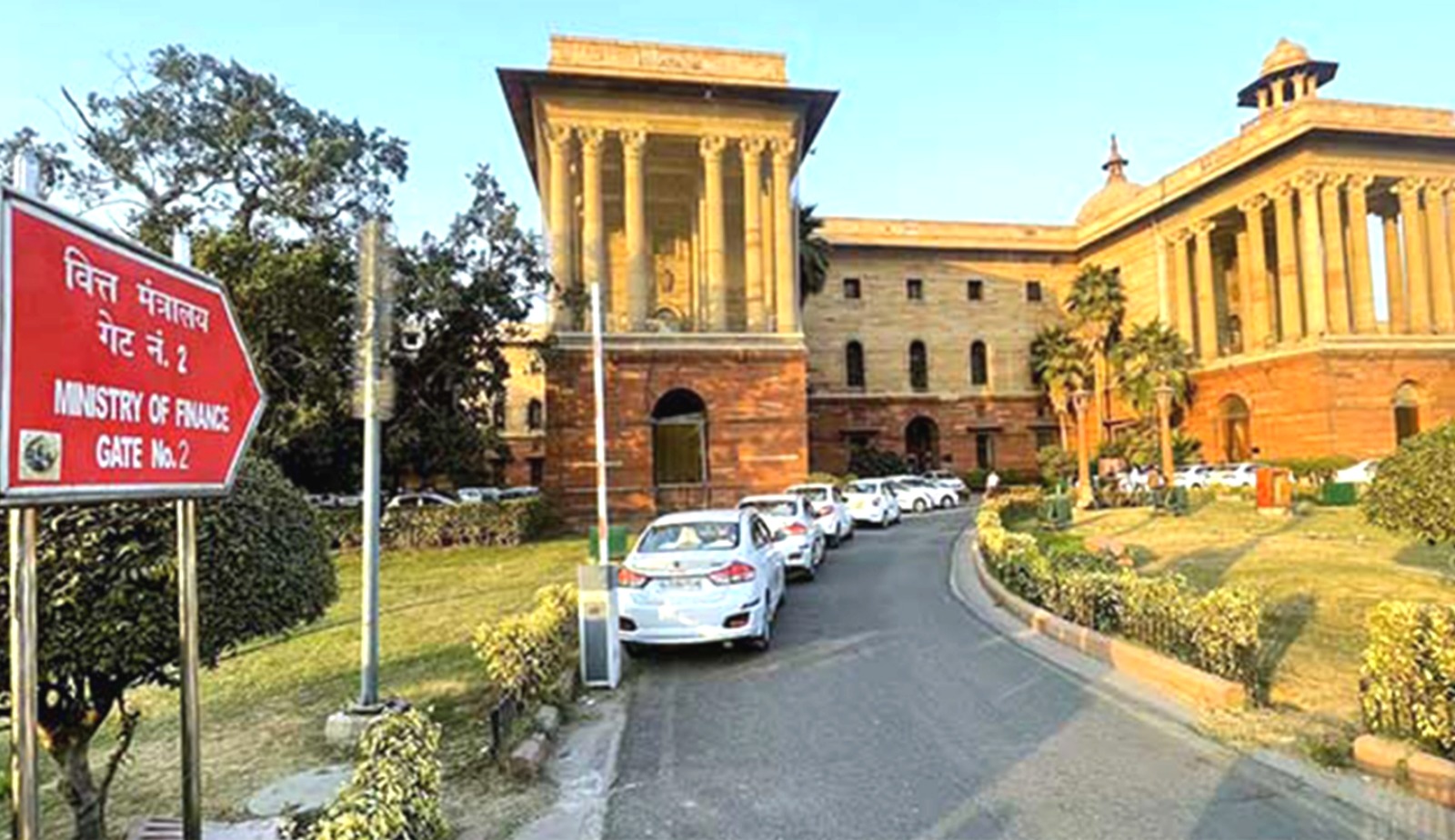
Fiscal Deficit Widens To Rs 9.77 Lakh Crores In April-November FY26, Surge Of 15.4% YoY Amidst GST Remaining Resilient.

New Delhi; January 2026: India’s fiscal position during the April-November period of FY26 indicates that concerns over lagging tax revenues and adherence to the full year budget targets have resurfaced, even as the government continues to prioritise capital expenditure-led growth, as per a report by Union Bank of India. The report stated that the fiscal deficit stood at Rs 9.77 lakh crore during the first eight months of FY26, accounting for 62% of the Budget Estimate (BE).
This compares with a deficit of Rs 8.47 lakh crore, or 54% of the Revised Estimate (RE), recorded in the corresponding period last year, reflecting a year-on-year increase of 15.4%. It stated, “India’s fiscal position during April-November FY26 suggests that concerns around lagging tax revenues”. The higher fiscal deficit was largely driven by front-loaded capital expenditure, which rose sharply by 28% year-on-year during April-November FY26.
A fiscal deficit occurs when a government’s total spending exceeds its total revenue (from taxes, fees, etc.) in a financial year, creating a shortfall that must be covered by borrowing, adding to the national debt. The widening of the deficit reflects an investment-led fiscal strategy rather than a consumption-driven expansion. This approach is seen as improving the quality of fiscal adjustment and supporting stronger medium-term growth prospects.
Revenue expenditure, however, remained subdued during the period. Overall receipts recorded only modest growth, despite support from a higher-than-budgeted dividend transfer from the Reserve Bank of India and robust non-debt capital receipts. These factors provided some cushion to government finances, even as expenditure pressures increased due to higher capital outlays.
The report also mentioned that with the Goods and Services Tax (GST) compensation cess largely phased out, the role of states has become increasingly important in shaping consolidated government finances. States’ own revenue performance and their borrowing behaviour are expected to play a key role going forward. While central government finances appear broadly on track, sustained fiscal consolidation will depend on coordinated execution of capital expenditure and effective revenue mobilisation at both the central and state levels.
Overall, the current fiscal stance remains broadly consistent with the medium-term fiscal consolidation path. However, this will be contingent on continued revenue buoyancy and the maintenance of high-quality expenditure, particularly sustained investment-led spending that supports long-term growth.
Meanwhile the Goods And Service Tax (GST) data of December 2025 has demonstrated a resilient figure, in India’s tax collections despite steep rate cuts earlier in the year, with imports, steady domestic demand and higher refunds shaping picture, stated experts reacting positively to the GST numbers.
Pratik Jain, Partner at Price Waterhouse & Co LLP, said that the growth of monthly GST collections is encouraging even after the significant reduction in GST rates. He said, “Despite the steep cut in GST rates earlier this year, a growth of around 06% growth in gross monthly collection is encouraging, though it is largely attributable to imports. If this momentum continues for the remaining three months of this fiscal year the YoY growth of around 09% is still possible”.
Manoj Mishra, Partner and Tax Controversy Management Leader at Grant Thornton Bharat, said the December GST numbers reinforce the structural strength of India’s formal economy. Gross GST collections grew at 6.1% year-on-year to Rs 1.75 lakh crore, which he described as an encouraging signal. He stated, “The composition of collections is equally telling with import related IGST growth of 19.7% points to resilient supply chains and manufacturing momentum, while steady domestic collection reflects able consumption”.
As the Union Budget 2026-27 approaches, he said these trends strengthen the case for building further on GST 2.0 reforms, including automation of compliances, reduction of unwarranted litigation and a calibrated credit framework.
Karthik Mani, Partner, Indirect Tax at BDO India, said net GST collections for December 2025 declined by around 4.3% on a month-on-month basis. He added, “The gross GST collections on domestic transactions for December 2025 have largely remained flat on a year-on-year basis, despite the impact on revenue in the current period due to major rate cuts in September 2025, indicating some improvements in the economic activity on a year-on-year basis. The next (/topic/t) few months should give a decent indication of new normal monthly GST collections, after adjusting for rate cuts”.
Mahesh Jaising, Parter and Indirect Tax Leader at Deloitte India, said GST collections for December 2025 reflect continued revenue buoyancy supported by festive-season consumption and rate rationalisation measures. He said, “The GST council’s policies have clearly translated into higher compliance and improved cash flows across sectors. These trends indicate that even post the GST 2.0 path-breaking tax rate reductions, the tax system continues to mature, demonstrating both elasticity and stability as the economy scales”.
Team Maverick.






Trump Says Cuba “Will Be Next” to Collapse, Signals Openness to Oil Shipments
Washington, March 2026 — US President Donald Trump on Sunday described Cuba as a failing s…

Trump Says Cuba “Will Be Next” to Collapse, Signals Openness to Oil Shipments
Washington, March 2026 — US President Donald Trump on Sunday described Cuba as a …