Pope Leo Praises DDF’s Work Over Past 02 Years.

Vatican City; January 2026: Pope Leo XIV received participants in the plenary assembly of the Dicastery for the Doctrine of the Faith (DDF) and praised the dicastery for its work over the past two years.
“Your task is to offer clarifications regarding the doctrine of the Church, through pastoral and theological guidance on often very sensitive issues”, Pope Leo said. The dicastery, he observed, has published seven major documents “over the last two years”, and “all this work will certainly be of great benefit to the spiritual growth of the holy and faithful People of God”.
Notably absent from the Pope’s list of seven documents was “Fiducia Supplicans”, the dicastery’s declaration on the pastoral meaning of blessings. It was published just over two years ago, in December 2023. The Pope went on to praise the dicastery for discussing the theme of the transmission of the faith in its plenary assembly and for the work of its disciplinary section.
“I would like to mention, before concluding, another service of yours, for which I am grateful and which I commend to your care: that of welcoming and accompanying, with every kindness and judgement, the Bishops and Superiors General called to deal with cases of crimes reserved to the Dicastery”, he added. “This is a very delicate area of ministry, in which it is essential to ensure that the requirements of justice, truth and charity are always honored and respected”.
Plenary sessions of the curial Dicasteries are discussed in Praedicate Evangelium, the 2022 apostolic constitution on the Roman Curia:
All the members of the Dicastery are convoked for the plenary session. It is to be held every two years … Matters and questions of greater importance are reserved for the plenary session, according
to the nature of the Dicastery. It is convoked, as needed, to deal also with matters
of general principle or others that the head of the Dicastery deems necessary
to address in this manner (n. 26).
Members of the various Dicasteries include curial officials, resident bishops, and others appointed by the Roman Pontiff.
Fiducia Supplicans –
This Declaration considers several questions that have come to this Dicastery in recent years. In preparing the document, the Dicastery, as is its practice, consulted experts, undertook a careful drafting process, and discussed the text in the Congresso of the Doctrinal Section of the Dicastery. During that time, the document was discussed with the Holy Father. Finally, the text of the Declaration was submitted to the Holy Father for his review, and he approved it with his signature.
While the subject matter of this document was being studied, the Holy Father’s response to the Dubia of some Cardinals was made known. That response provided important clarifications for this reflection and represents a decisive element for the work of the Dicastery. Since “the Roman Curia is primarily an instrument at the service of the successor of Peter” (Ap. Const. Praedicate Evangelium, II, 1), our work must foster, along with an understanding of the Church’s perennial doctrine, the reception of the Holy Father’s teaching.
As with the Holy Father’s above-mentioned response to the Dubia of two Cardinals, this Declaration remains firm on the traditional doctrine of the Church about marriage, not allowing any type of liturgical rite or blessing similar to a liturgical rite that can create confusion. The value of this document, however, is that it offers a specific and innovative contribution to the pastoral meaning of blessings, permitting a broadening and enrichment of the classical understanding of blessings, which is closely linked to a liturgical perspective. Such theological reflection, based on the pastoral vision of Pope Francis, implies a real development from what has been said about blessings in the Magisterium and the official texts of the Church. This explains why this text has taken on the typology of a “Declaration”.
It is precisely in this context that one can understand the possibility of blessing couples in irregular situations and same-sex couples without officially validating their status or changing in any way the Church’s perennial teaching on marriage.
This Declaration is also intended as a tribute to the faithful People of God, who worship the Lord with so many gestures of deep trust in his mercy and who, with this confidence, constantly come to seek a blessing from Mother Church.
Víctor Manuel Card. Fernández
Prefect
Praedicate Evangelium –
Praedicate Evangelium (cf. Mk 16:15; Mt 10:7-8): this is the task that the Lord Jesus entrusted to his disciples. This mandate constitutes “the primary service that the Church can render to every individual and to all humanity in the modern world”. To this end, she has been called to proclaim the Gospel of the Son of God, Christ the Lord, and thereby to awaken in all peoples the hearing of faith (Rom 1:1-5; Gal 3:5).
The Church carries out this command above all when, in all that she says and does, she bears witness to the mercy that she herself has graciously received. Our Lord and Master left us an example of this when he washed the feet of his disciples and declared that we shall be blessed if we do likewise (cf. Jn 13:14-17). “An evangelizing community thus gets involved by word and deed in people’s daily lives, it bridges distances, it is willing to abase itself if necessary and it embraces human life, touching the suffering flesh of Christ in others”. In this way, the people of God fulfil the commandment of the Lord who, in bidding us to proclaim the Gospel, exhorted us to care for those of our brothers and sisters who are most vulnerable, infirm and suffering.
Team Maverick.





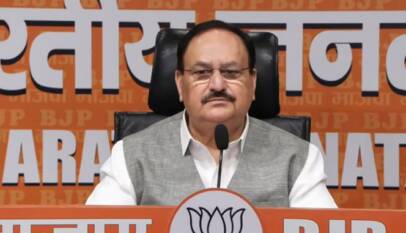
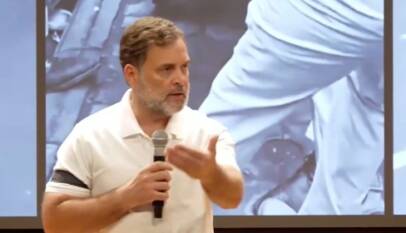
Rahul Gandhi, INDIA Bloc Hold Candlelight Vigil at Gandhi Smriti Over NEET Paper Leak Row
New Delhi, July 2026 : The Opposition intensified its campaign over the alleged NEET exami…
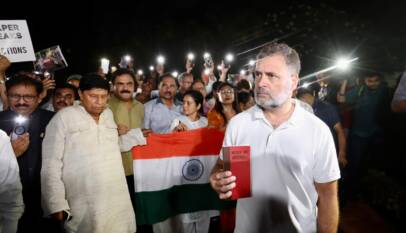
Rahul Gandhi, INDIA Bloc Hold Candlelight Vigil at Gandhi Smriti Over NEET Paper Leak Row
New Delhi, July 2026 : The Opposition intensified its campaign over the alleged NEET …