India Ensures Safe Passage for Ships Through Strait of Hormuz Amid Regional Tensions

New Delhi, April 2026 : India is actively working to ensure the safe movement of its maritime trade through the strategically vital Strait of Hormuz, even as tensions continue to escalate in West Asia. The Ministry of External Affairs (MEA) confirmed on Thursday that six Indian ships carrying key energy supplies, including LPG and LNG, have successfully crossed the sensitive waterway in recent days.
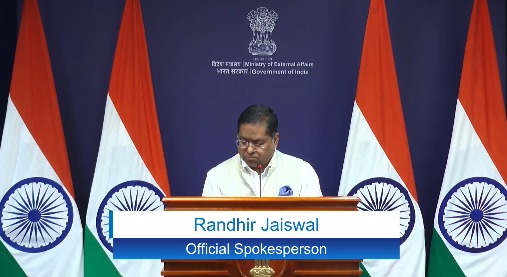
Speaking during the weekly media briefing, MEA spokesperson Randhir Jaiswal said that New Delhi remains in constant communication with Iran and other regional stakeholders to facilitate safe and uninterrupted transit for Indian vessels. He noted that discussions over the past few days have yielded positive outcomes, allowing several ships to pass through without incident.
India’s efforts come at a time when concerns over maritime security have intensified due to the ongoing conflict in the region. The Strait of Hormuz, through which nearly one-fifth of the world’s oil supply passes, remains a critical chokepoint for global energy flows. Any disruption in this corridor has the potential to impact international markets and energy security worldwide.
Jaiswal also addressed reports suggesting that India might be paying a transit fee to Iran for the movement of its ships through the strait. He categorically denied such claims, reiterating that there has been no discussion or agreement of this nature between the two countries.
In addition to bilateral engagement with Iran, India is also participating in multilateral efforts to address the evolving situation. The MEA confirmed that India’s Foreign Secretary will attend a high-level meeting hosted by the United Kingdom to deliberate on ensuring the security and stability of maritime routes in the region.
The ongoing geopolitical tensions have heightened the importance of maintaining open and secure shipping lanes, particularly for countries like India that rely heavily on energy imports. Recognising this, India has consistently emphasised the need for dialogue, diplomacy, and adherence to international norms governing freedom of navigation.
Last month, Iran indicated that it would allow vessels from certain “friendly” nations, including India, to pass through the Strait of Hormuz despite restrictions imposed on others. Iranian Foreign Minister Seyed Abbas Araghchi had clarified that while the strait was not completely closed, access was being selectively regulated in line with Tehran’s strategic considerations.
India’s diplomatic outreach also includes direct engagement at the highest level. Prime Minister Narendra Modi recently held discussions with Iranian President Masoud Pezeshkian, focusing on the regional security situation. During these interactions, India reiterated its concerns over attacks on critical infrastructure and stressed the importance of keeping maritime routes open and secure.
With nearly 18 Indian-flagged vessels reported to be operating in or around the Persian Gulf, ensuring their safe passage remains a top priority for the government. Officials indicated that continuous monitoring and diplomatic coordination are underway to prevent disruptions and safeguard India’s energy supply chain.
As the situation in West Asia continues to evolve, India’s balanced approach—combining diplomatic engagement, strategic coordination, and participation in global discussions—aims to protect its economic interests while contributing to broader regional stability.






AAHL’s Navi Mumbai, Guwahati Airports in Prix Versailles 2026 List
Editor’s Synopsis • Navi Mumbai International Airport and Lokpriya Gopinath Bordoloi Inter…

AAHL’s Navi Mumbai, Guwahati Airports in Prix Versailles 2026 List
Editor’s Synopsis • Navi Mumbai International Airport and Lokpriya Gopinath Bordoloi International Airport, both …