Israel Faces Fresh Iranian Missile Barrage as War Escalates and Global Tensions Deepen

April 2026 : Israel came under a renewed barrage of Iranian missiles on Friday, marking another sharp escalation in a conflict that has already gripped the Middle East for over a month and sent shockwaves across the global economy. As air raid sirens sounded across multiple cities, Israeli air defence systems were activated to intercept incoming projectiles, while political rhetoric from Washington signalled the possibility of even more aggressive military action.
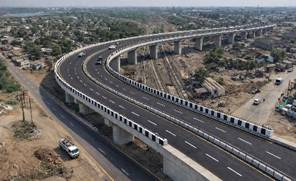
The latest wave of attacks comes amid growing threats from Donald Trump, who warned that the United States had not yet begun fully targeting Iran’s remaining infrastructure. In a strongly worded message, he indicated that critical facilities such as bridges and power plants could be next, raising fears of a further intensification of hostilities.
The conflict traces its origins to coordinated strikes by the United States and Israel on Iranian targets more than a month ago. Since then, retaliation from Tehran has expanded the theatre of conflict far beyond its initial scope, drawing in multiple countries and destabilising key economic corridors. Iran has vowed to respond with what it describes as “crushing” attacks, while the US has threatened overwhelming force if Tehran refuses to negotiate.
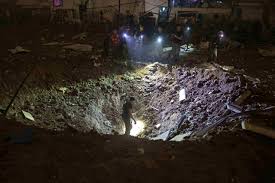
On Friday, Israel’s military confirmed that several missiles were launched from Iran, with most intercepted mid-air. However, some projectiles penetrated defences, causing localized damage. Emergency services reported that a cluster missile struck residential areas, damaging homes and vehicles. Shrapnel also reportedly hit a railway station in Tel Aviv, underscoring the vulnerability of civilian infrastructure despite robust defence systems.
Iran’s Foreign Minister Abbas Araghchi responded to US threats by condemning attacks on civilian infrastructure. He stated that targeting non-military sites would not force Iran into submission, reinforcing Tehran’s defiant stance even as the conflict intensifies.
A major flashpoint in the ongoing crisis is the Strait of Hormuz, through which roughly one-fifth of the world’s oil and liquefied natural gas supplies pass. Iran’s effective closure of this vital shipping route has triggered alarm across global markets and prompted urgent diplomatic efforts. Gulf nations, increasingly exposed to the conflict, have called for international intervention to safeguard maritime traffic.
The war has also expanded geographically, with Gulf countries now facing direct threats. Iran has accused several states in the region of facilitating US operations, and retaliatory strikes have reportedly targeted economic assets in countries such as the United Arab Emirates and Bahrain. A drone strike on a refinery in Kuwait caused fires in multiple units, highlighting the widening scope of the conflict.
Despite the ongoing bombardment, daily life continues in parts of Iran, albeit under heightened security. In Tehran, families gathered in parks to observe traditional post-Nowruz celebrations, even as checkpoints manned by security forces increased across the city. Residents described a tense but resilient atmosphere, with authorities maintaining a visible presence to project stability.
In Israel, citizens adapted to wartime conditions as well. Passover celebrations continued, though some families marked the occasion in underground shelters due to the persistent threat of missile attacks. The contrast between cultural observances and military realities reflects the profound disruption caused by the conflict.
Beyond the immediate region, the economic consequences of the war are becoming increasingly severe. Oil prices surged to around $110 per barrel following warnings of further US strikes, fuelling inflation concerns worldwide. Governments across different continents have begun implementing measures to cope with rising energy costs and supply disruptions.
In Asia, airlines have raised fuel surcharges, while some governments have introduced cost-cutting measures. Pakistan has significantly increased fuel prices, and even smaller economies such as Bhutan are experiencing shortages, leading to long queues at fuel stations. In Egypt, authorities have ordered early closure of businesses to manage escalating energy bills.
International financial institutions have also raised alarms. The World Bank warned that the conflict could have far-reaching consequences for inflation, employment, and food security, particularly in vulnerable regions. Disruptions to fertiliser supplies, exacerbated by restricted shipping routes, have heightened concerns about potential agricultural crises in parts of Africa.
Diplomatic efforts to ease tensions have so far yielded little progress. A planned vote at the United Nations Security Council on authorising defensive measures to protect shipping in the Strait of Hormuz was postponed, officially due to the observance of Good Friday. However, the delay has added to uncertainty over how the international community will respond to the crisis.
European leaders have stepped up calls for immediate action. The United Kingdom convened a meeting of around 40 countries to demand the reopening of the vital shipping corridor, warning that the global economy cannot afford prolonged disruption. Italy has proposed the creation of a humanitarian corridor to ensure the flow of essential goods such as fertilisers.
Meanwhile, the United States has sent mixed signals regarding its long-term strategy. While President Trump has hinted at the possibility of negotiations with a potentially “more reasonable” Iranian leadership, his administration’s continued military posture suggests that a diplomatic resolution remains distant.
Iran, for its part, has dismissed US overtures as unrealistic and has shown no indication of backing down. With both sides entrenched and the conflict expanding in scale and impact, the risk of a prolonged and more destructive confrontation appears increasingly likely.
As missile exchanges continue and global markets remain on edge, the situation underscores the fragile balance between military action and diplomatic resolution in one of the world’s most volatile regions.
(The content of this article is sourced from a news agency and has not been edited by the Mavericknews30 team.)




India’s Seafood Exports: From Growth to Global Competitiveness
India’s fisheries sector has emerged as a major contributor to food security, employment, …
India’s Seafood Exports: From Growth to Global Competitiveness
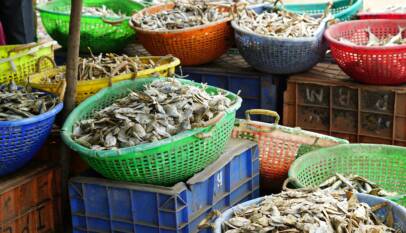
India’s fisheries sector has emerged as a major contributor to food security, employment, export …