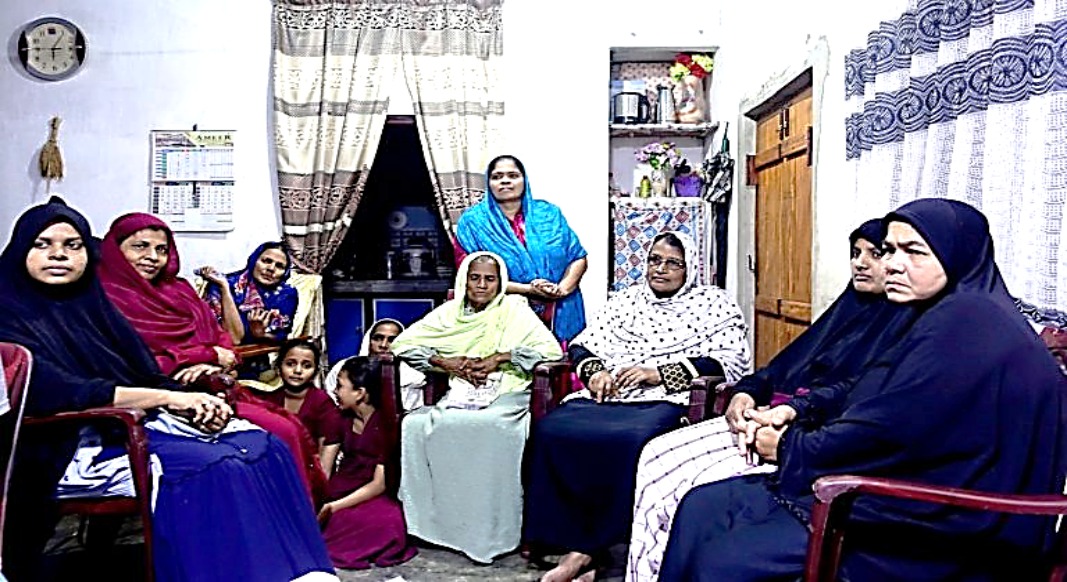
The Torrid time of Sri Lankan Women post Tsunami, 2004.

Twenty years after the tsunami of December 2004, women in Sri Lanka’s small-scale fisheries still struggle with the long-term effects of the disaster. The Eastern Coast of Sri Lanka, particularly the Batticaloa and Amparai districts, was badly affected by the December 2004 Tsunami. ICSF volunteers had visited Batticaloa soon after the disaster to explore how women in affected fishing communities could be helped with funds collected by the fisherwomen’s network VinVis of the Netherlands. They were was not alone; governments, NGOs, and individuals from around the world had come to assist. They had partnered with the National Fisheries Solidarity Movement (NAFSO), which has long experience working with fishing communities in Sri Lanka.
The tsunami drastically changed community populations. One woman recounted how 102 people from her community, Manjanthoduwai, died; most were women. Many young rescuers who returned after the first wave also perished in the unexpected second wave. The impact was enormous. Even now, women suffer psychological and health problems. Another woman described being a child swept away by water, mud, and debris, saved only when her father pulled her out by her hair while clinging to a tree.
She still suffers health issues from swallowing saltwater and grit and fears the beach to this day. Another was pregnant during the tsunami; rescued, she gave birth to a daughter the same day under difficult circumstances. She named her daughter after a sister who died in the disaster; the community still calls her Tsunami-Maryam. Many women lost babies and suffer ongoing mental health issues. Several reported reproductive health problems, including spontaneous abortions and fertility issues, linked to the trauma.
Initially, survivors were sheltered by neighbours whose homes remained intact but lacked proper medical care; wounds went untreated, and only dry rations were supplied. Later, many NGOs arrived, focusing primarily on material aid such as fishing boats, gear, and new houses. While fishermen benefited from boats and gear, women felt these did not support their livelihood activities. They appreciated the new houses but lamented that the homes were too small and lacked kitchens and toilets. They also mourned being relocated away from their ancestral lands to which they felt deeply connected. When I asked about psychological support and healthcare, the women emotionally expressed how much these were missed. They still struggle with the long-term consequences.
After the NGOs left, women felt abandoned. The only aid remaining was a yearly package of goods for tsunami-affected Muslim families provided during Ramadan by the Kuwait government. Women continue to face many challenges rebuilding their livelihoods. Some families sold land cheaply, fearful of another tsunami, and are now dependent on low-wage labour. Husbands often work on multi-day fishing boats, paid in shares of the catch, but their earnings shrink as costs, especially kerosene prices, rise. Women earn meagre incomes from sorting fish, repairing nets, agricultural labour, or tailoring. During the monsoon, wage work is scarce.
Climate change has brought stronger winds and high waves, making fishing more difficult, with families enduring nearly six months without work. Floods and droughts also affect crop cultivation. Illegal fishing further depletes fish stocks, and fish traders control prices and loans, keeping fisher families dependent and vulnerable. The local demand for fish is low and most of the fish goes to the urban markets or to the export. Women reported that fish is bought for 500 rupees (approximately USD 1.66) per kilogram but sold for 2,000 rupees (approximately USD 6.66) in Colombo, leaving them feeling powerless.
The women are desperately worried about the future. They have managed to save some income to invest in their children’s education, hoping it will provide a way out of poverty. However, the current economic crisis has tripled prices for food and essentials, and many can no longer save. Some have even stopped sending children to school because they cannot afford breakfast.
National Fisheries Solidarity Organisation (NAFSO) arrived three years ago, after other NGOs had left, and remains the only organisation supporting them. NAFSO assists small-scale fishing communities in fighting illegal fishing and advocating for a more inclusive Fisheries Act. With NAFSO’s help, women have formed savings and credit groups and receive livelihood training. Eleven women’s groups in Batticaloa now form part of the Eastern Province Women’s Federation. Their sheer objective is to build a strong women’s organisation that compels government attention
The women expressed gratitude for NAFSO’s support, feeling empowered through the wider network. They hope planned livelihood training and regional marketing networks will help them move beyond wage labour. Exchanges with other groups and participation in broader small-scale fisher and farmer rights movements have broadened their horizons. Their ambition is to build a strong women’s organisation that compels government attention – they have felt invisible until now.
Team Maverick

CJP Welcomes Tougher Anti-Paper Leak Law but Insists Education Minister’s Resignation Remains Non-Negotiable
New Delhi, July 2026 : The Cockroach Janata Party (CJP) on Saturday welcomed the Centre’s …

CJP Welcomes Tougher Anti-Paper Leak Law but Insists Education Minister’s Resignation Remains Non-Negotiable
New Delhi, July 2026 : The Cockroach Janata Party (CJP) on Saturday welcomed the …