Marine Traffic contributes to volumous methane from the ocean bed into the atmosphere.

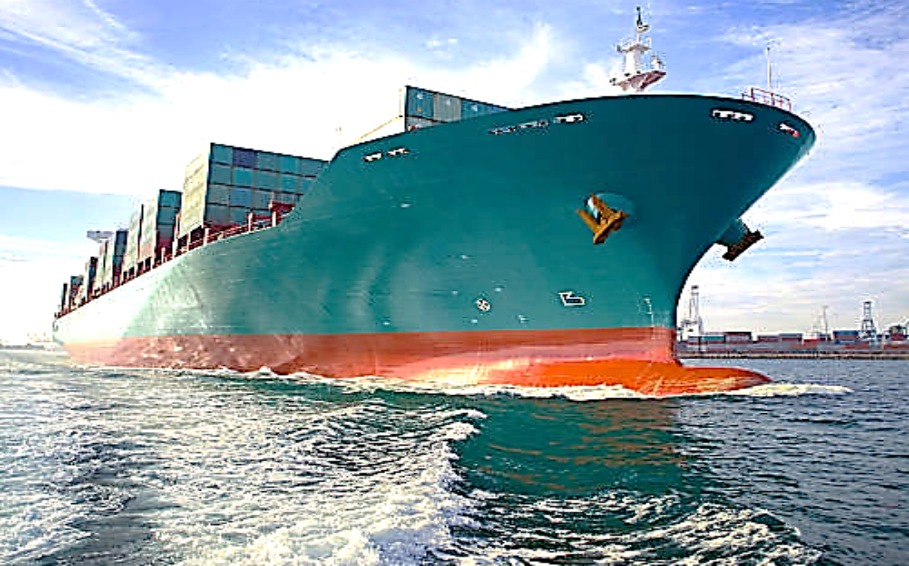
A study from Chalmers University of Technology in Sweden reveals, that Ships not only carries life & goods across the world, but also ruffles what lies beneath. When the ships move through shallow waters, they can release large amounts of greenhouse gas – methane, which is 27 times more powerful than carbon dioxide at trapping heat.
A study that was conducted across a stretch of the Neva Bay, a shallow part of the Baltic Sea, has revealed that ship traffic can generate methane emissions up to twenty times higher in busy lanes compared to calm areas nearby. Amanda Nylund, a researcher from Chalmers and the Swedish Meteorological and Hydrological Institute, explained, “Our measurements show that ship passages trigger clear pulses of high methane fluxes from the water to the atmosphere. This is caused by pressure changes and mixing of the water mass. Even if the pulses are short, the total amount during a day is significant”.
Methane often forms in muddy, oxygen-free layers at the bottom of shallow coastal areas. When a ship passes over these areas, it changes the pressure on the seafloor. That sudden drop lets methane bubbles escape into the water. The churning of the water behind ships also pushes the gas quickly to the surface, where it leaks into the air.
Many worry about methane leaks from ships that use liquefied natural gas (LNG) as fuel. But this study found something different. The methane emissions did not come from ship fuel at all. Instead, they were from the seafloor. This means that all ships – no matter what they run on – can cause these emissions just by moving through shallow water. Johan Mellqvist, Professor of Optical Remote Sensing at Chalmers, said, “The discovery of the hitherto unknown impact of ships is important for improving global estimates of methane emissions, not least considering that nine of the world’s ten largest ports are located in waters with similar conditions as Neva Bay”.
Researchers studied cruise ships, container ships, ropax ferries, and bulk carriers. Cruise and container ships caused the most frequent and largest methane releases. Ropax vessels, which carry both people and vehicles, also released large amounts. Bulk carriers, which are larger, had lower emissions. Rickard Bensow, Professor of Hydrodynamics at Chalmers, suggested that ropax ships may cause higher emissions because they often have double propellers, increasing the disturbance in the water.
The Science Behind The Plumes –
Methane is the second most important greenhouse gas for global warming. Around half of methane emissions worldwide come from human activities, with a large share also coming from aquatic systems. Coastal areas and estuaries are major natural sources, but ship traffic can increase this effect. In shallow water less than 10 meters deep, bubbles from the seafloor often reach the air before dissolving. Even in deeper water, ships mix the water so much that more methane escapes to the surface than normal. Turbulence from ship wakes can reach depths of over 18 meters.
Field measurements in Neva Bay showed 464 ship plumes, with nearly half meeting quality standards for analysis. Of these, about 28% showed significant methane releases. Cruise and container ships triggered emissions in 77% and 76% of their passages. For ropax vessels, the number was 56%.
The team of scientists have reaffirmed that, during 2012, the Neva Bay shipping lane had weak thermal layering with oxygen saturation between 80 and 90%. The methane flux in the shipping lane reached 11.1 mmol per square meter per day. This was ten to one thousand times higher than typical global estuarine or coastal fluxes. In fact, ship-triggered methane releases in the bay added about 22% more carbon dioxide equivalent to the atmosphere compared to emissions from ship exhaust alone.
Ships affect methane release in many ways. Their wakes mix the water, allowing methane bubbles to rise. Their mass and speed change the water pressure beneath them, squeezing gas out of sediments like air from a sponge. They also create turbulence that keeps the methane from dissolving back into the water, letting it reach the surface. Research studies have revealed that, the daily methane emission in the measured section of Neva Bay reached 120 kilograms, with an average of 0.2 grams / Square-Metre per day.
Team Maverick




US President Reaffirms Hitting Iran Hard For The Entire Next Week.
Washington DC: April 2026: Immediately after returning from the Supreme Court after the co…

US President Reaffirms Hitting Iran Hard For The Entire Next Week.
Washington DC: April 2026: Immediately after returning from the Supreme Court after the completion …