Trump’s 100% Chip Tariff Threat Shakes Asian Markets, But TSMC & Samsung See Gains on U.S. Investment Exemption

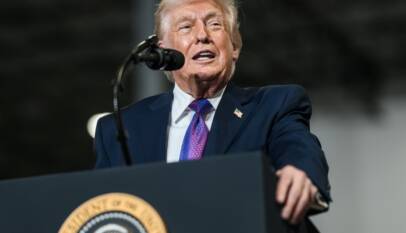
Aug 2025 – Former U.S. President Donald Trump’s threat to impose 100 percent tariffs on semiconductor imports rattled Asian chip markets on Thursday. However, sector giants TSMC and Samsung saw their shares rise after Trump assured exemptions for companies investing in the United States.
The remarks, delivered during a press briefing at the White House, come amid an escalating global race to dominate the high-end semiconductor industry — crucial for technologies such as artificial intelligence (AI) and advanced computing.
While no exact timeline was provided for the implementation of the new tariffs, the announcement sent immediate ripples across Asia’s technology markets.
In Japan, several semiconductor-related stocks dropped sharply:
- Tokyo Electron, a major chipmaking equipment producer, fell 3.2%
- Chipmaker Renesas declined 3.4%
- Disco Corporation, known for precision tools, lost 1.3%
- Sumco, a supplier of silicon wafers, slipped 1.2%
Despite the regional sell-off, Taipei-listed TSMC (Taiwan Semiconductor Manufacturing Company) — the world’s largest contract chipmaker — surged nearly 5%. The rally followed reassurances from Taiwanese officials that TSMC would be exempt from the planned tariffs due to its significant investments in the U.S.
“Because Taiwan’s main exporter is TSMC, which has factories in the United States, TSMC is exempt,” said Liu Chin-ching, Chief of the National Development Council, while addressing parliament.
While some smaller Taiwanese chipmakers may face the new levies, Liu emphasized that competitors from other countries would also be affected, helping to level the playing field.
In South Korea, Samsung Electronics rose 2% in response to the exemption, as the company is already investing billions of dollars into U.S.-based semiconductor facilities. However, fellow Korean chip giant SK hynix remained flat on the day.
Economists are interpreting the policy as an aggressive push to bolster domestic chip production, while penalizing companies producing low-end semiconductors outside the U.S.
Arisa Liu, a senior semiconductor researcher at the Taiwan Institute of Economic Research, agreed, noting that the announcement will significantly influence global semiconductor strategy.
Adding to the trend of U.S.-focused investment, Apple announced on Wednesday that it would invest an additional $100 billion in the U.S., bringing its total domestic commitment to $600 billion over the next four years. TSMC also pledged a further $100 billion investment in its U.S. operations.
Team Maverick




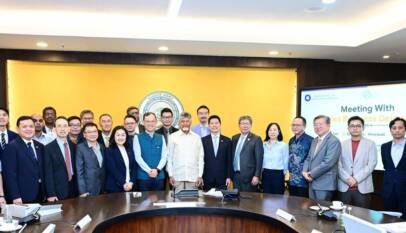

Adani group visits Hon’ble Deputy Chief Minister and Energy Department, Govt. of Odisha
Bhubaneswar, July, 2026 : Kharavel Bhawan, representatives from the Adani Group delivered …

Adani group visits Hon’ble Deputy Chief Minister and Energy Department, Govt. of Odisha
Bhubaneswar, July, 2026 : Kharavel Bhawan, representatives from the Adani Group delivered a comprehensive …