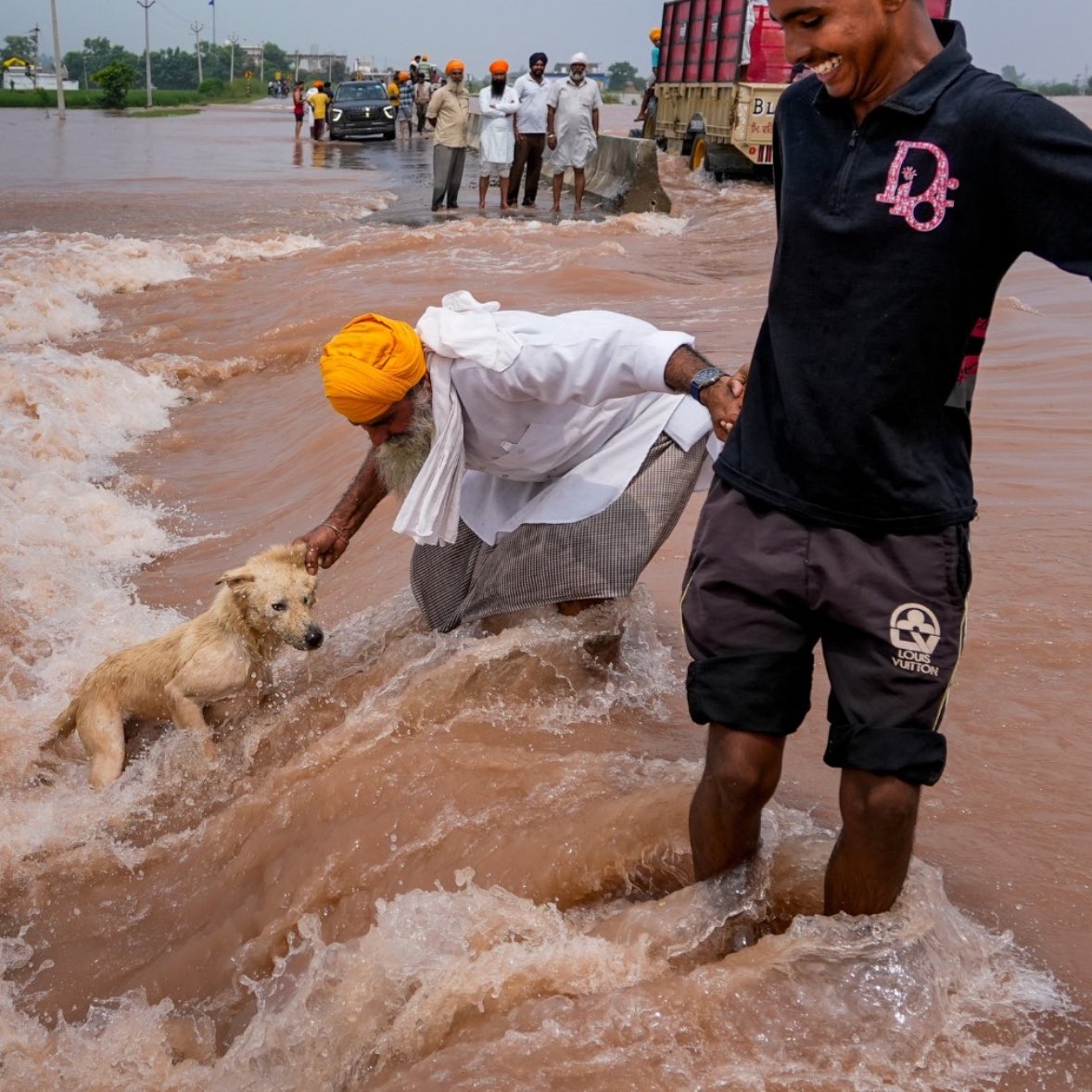
Punjab Reels Under Flood Fury: 23 Dead, Over 16,000 Rescued as Relief Efforts Intensify

In the past week, Punjab has been ravaged by floods that have claimed 23 lives and submerged over 1,000 villages. While more than 16,000 residents have been rescued, several districts remain under severe strain. Chief Minister Bhagwant Mann has mobilized state machinery along with central forces to expedite relief operations, even as rising river levels continue to pose a threat.
Aug 2025 : Punjab is battling one of its worst flood situations in recent years, with at least 23 people dead and 1,018 villages submerged across the state over the past week. Authorities confirmed that 16,039 residents have been rescued so far, but thousands remain stranded as swollen rivers and torrential rains wreak havoc in multiple districts.
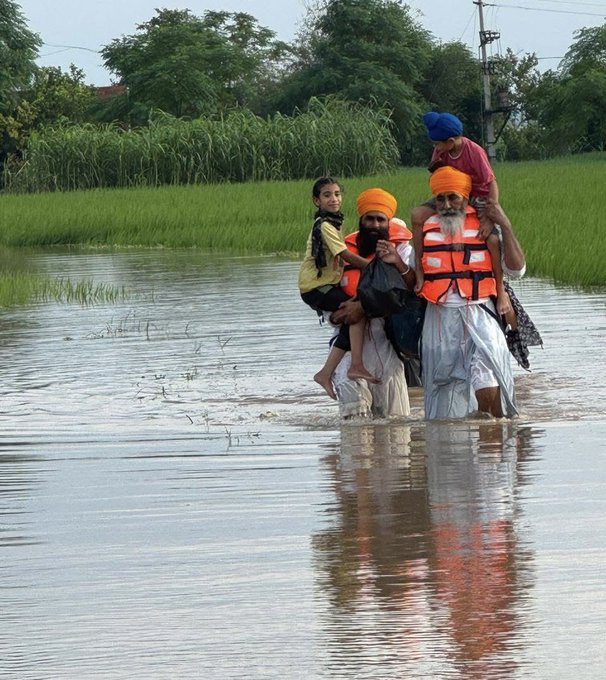
According to government data, the deaths have been concentrated in five districts: eight in Pathankot, seven in Hoshiarpur, three each in Rupnagar and Barnala, and two in Gurdaspur. In Barnala, three people were killed earlier this week in heavy rains, while others lost their lives as homes collapsed or were swept away by overflowing rivers — particularly the Ravi, Beas, and Sutlej.
Chief Minister Chairs Emergency Meeting
Chief Minister Bhagwant Mann convened a high-level meeting to assess the worsening crisis in the eight worst-hit districts — Gurdaspur, Pathankot, Amritsar, Tarn Taran, Kapurthala, Hoshiarpur, Ferozepur, and Fazilka. He announced the formation of a special committee to oversee rescue and relief operations, which are being conducted jointly by the state administration, Army, BSF, Air Force, and National Disaster Response Force (NDRF).
Mann directed Chief Secretary K.A.P. Sinha to ensure rapid deployment of relief supplies and medical aid, stressing that the unprecedented flow of 14.11 lakh cusecs in the Ravi river has caused severe destruction in border districts.
Social Security Minister Dr. Baljit Kaur added that her department was focusing on the safety of vulnerable groups, particularly children, women, and the elderly. She emphasized coordination with the Health Department to prevent outbreaks of water-borne diseases, a common post-flood challenge.
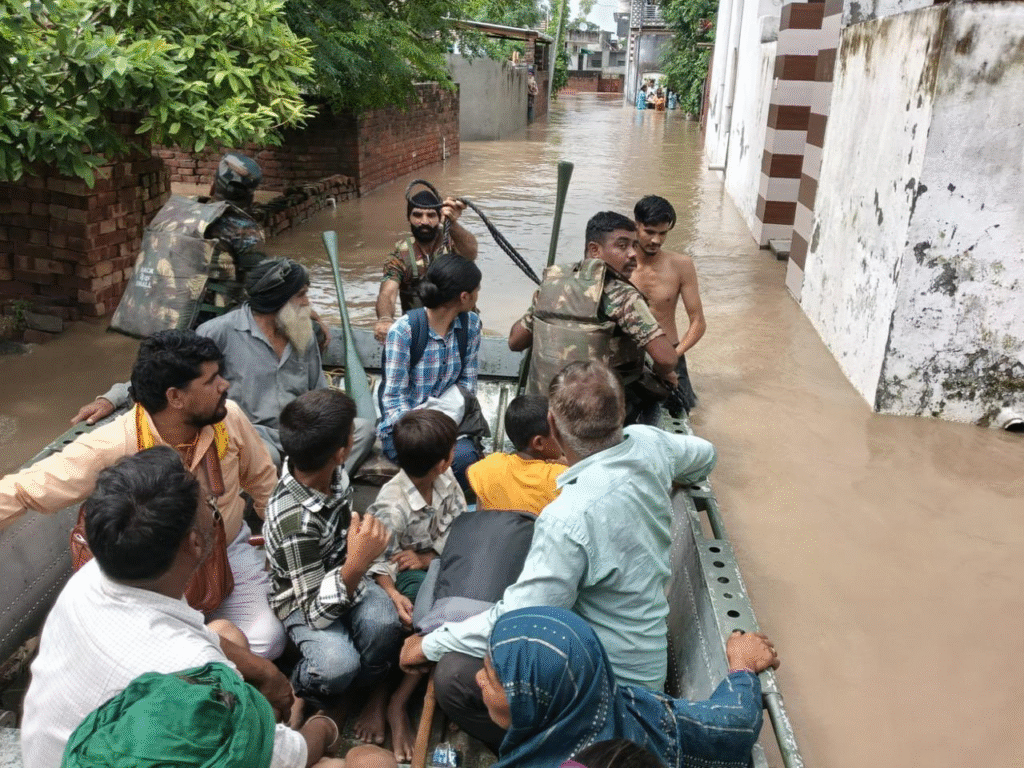
Rivers Recede in Some Areas, Rise in Others
While water levels in the Ravi and Beas rivers have started receding in the Majha and Doaba regions, fresh threats loom in Patiala and Sangrur, where the Ghaggar river has swelled after overnight rainfall. At Bhakharpur, the Ghaggar peaked at 70,000 cusecs in the morning, before declining by afternoon, temporarily easing pressure in Mohali and Patiala. However, by evening, rising levels in the Tangri and Markanda rivers once again placed Patiala district on high alert.
In Sardulgarh, the Ghaggar crossed the 30,000 cusecs mark, flooding low-lying areas. Equally worrying was the situation at Dharamkot in Gurdaspur, where the Ravi river surged to 4.60 lakh cusecs, well above the danger level. At least 323 villages in Gurdaspur and 81 in Pathankot remained marooned, with relief teams working around the clock.
Elsewhere, the Madhopur and Ujh barrages recorded declining flows of 39,000 cusecs and 7,700 cusecs, respectively. In Amritsar, water receded in Ramdas but began flowing toward Ajnala, endangering 15 nearby villages.
Political Unity in Flood Response
The magnitude of the disaster has seen leaders from across political parties visit affected areas, appealing to their cadres to join rescue efforts. Prominent visitors included AAP leaders Laljit Singh Bhullar, Raghav Chadha, Kuldeep Dhaliwal, and Tarunpreet Singh Sond; BJP leader Sunil Jakhar; Congress leaders Charanjit Singh Channi, Amarinder Singh Raja Warring, Pratap Bajwa, and Gurjit Singh Aujla; and Shiromani Akali Dal chief Sukhbir Singh Badal.
Farmers’ unions, including BKU (Ugrahan), Kirti Kisan Union, and BKU (Ekta Dakaunda), have also mobilized volunteers to distribute food, provide shelter, and support evacuations.
Mixed Relief: Dams Under Control, Water Release Managed
Flood levels have started dropping in Tarn Taran, Hoshiarpur, and Kapurthala, though officials caution it will take days before conditions normalize. On Friday, the Beas river was flowing at 1.80 lakh cusecs at Passi near Tanda and 2 lakh cusecs at Dhilwan.
In positive news, water levels in all three major reservoirs — Pong, Ranjit Sagar, and Bhakra dams — are now under control. The Pong dam, however, has exceeded its danger level of 1,390 feet, standing at 1,391 feet. This prompted authorities to release 1 lakh cusecs of water in a controlled manner. The Ranjit Sagar and Bhakra dams remain below danger marks, providing some reassurance to administrators.
Water-Sharing Tensions with Haryana
The floods have once again inflamed the longstanding water dispute between Punjab and Haryana. On August 22, the Punjab government wrote to both Haryana and Rajasthan, urging them to accept additional water being released due to floods. Initially, Haryana did not respond, but by Friday, officials in Chandigarh confirmed receiving communication from Haryana authorities requesting Punjab to slow down water discharge, as rivers in Haryana were also overflowing.
Looking Ahead
As rescue operations continue, the immediate priority remains saving lives, providing relief supplies, and preventing disease outbreaks. However, experts warn that the state must also focus on long-term flood management, including strengthening embankments, creating additional storage capacity, and improving inter-state water coordination.
For now, Punjab stands united in the face of disaster, with its government, central agencies, political leaders, and civil society working side by side to mitigate the impact of floods that have already taken a heavy toll.

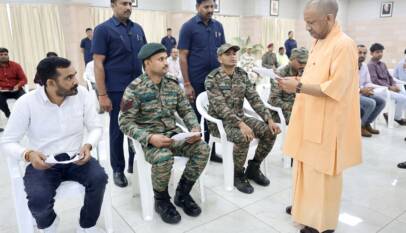



Major development projects in Lucknow receive cabinet approval; convention center, heritage conservation, and flyover construction to give the city a new identity
Revised cost for the International Exhibition-cum-Convention Center approved; Lucknow to g…
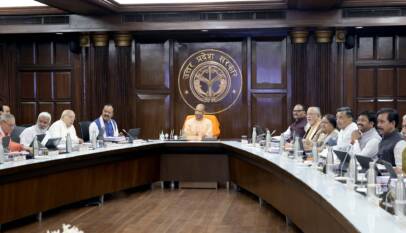
Major development projects in Lucknow receive cabinet approval; convention center, heritage conservation, and flyover construction to give the city a new identity
Revised cost for the International Exhibition-cum-Convention Center approved; Lucknow to get a world-class venue …