North Korea accelerates missile production with automated line heightening regional pressure.

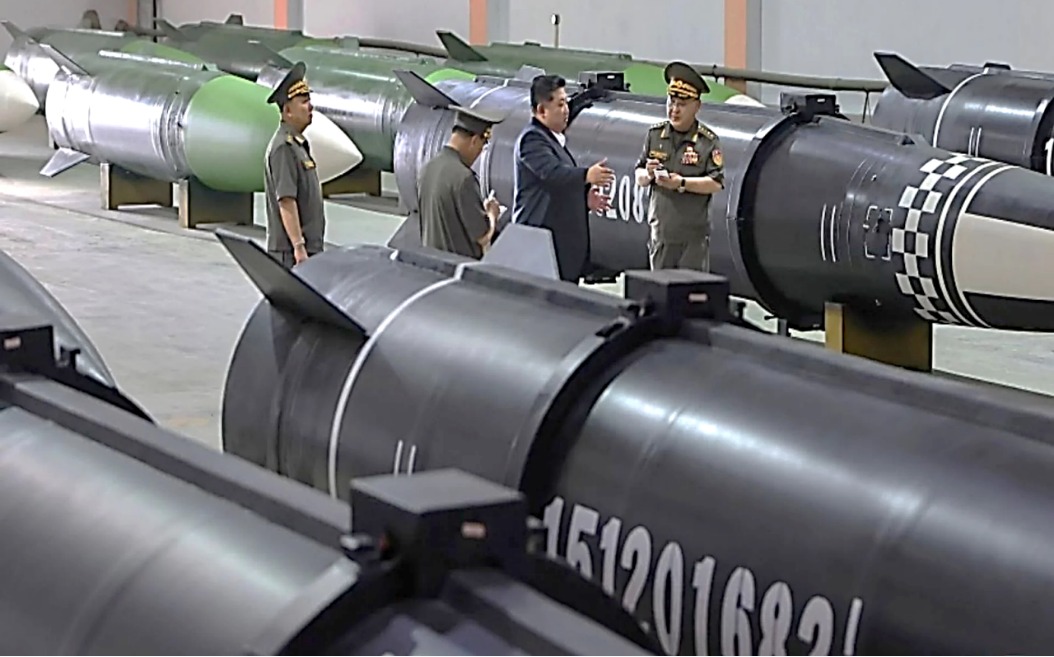
Sept 2025 : On August 31, North Korean leader Kim Jong Un inspected a new missile production line at a key military-industrial enterprise, according to the state news agency KCNA. The visit, reported on September 1, highlighted Pyongyang’s efforts to modernise missile manufacturing through automation and integration, while also underlining its broader defence ambitions. The inspection took place shortly before Kim’s planned trip to Beijing, where he is expected to attend a military parade alongside Chinese President Xi Jinping and Russian President Vladimir Putin, providing an opportunity for high-level diplomatic engagement. The push toward automation in missile production is likely to benefit programs centered on solid-fuel systems, which require precision engineering and consistent quality control to ensure reliability.
KCNA stated that Kim was apprised about the missile production automation process and expressed satisfaction with the new system, which is intended to increase productivity and guarantee better quality. He emphasised that the modernised process would strengthen the combat readiness of major missile units, reflecting North Korea’s intention to secure long-term sustainability in production. By streamlining manufacturing through automation, the country aims to reduce inefficiencies and expand its capacity to supply advanced systems to its armed forces.
North Korea’s missile arsenal includes a broad spectrum of systems, from short-range ballistic missiles such as the KN-23, designed with similarities to Russia’s Iskander, to medium and intermediate-range missiles like the Hwasong-12 capable of reaching Guam. In recent years, Pyongyang has also advanced its intercontinental ballistic missile (ICBM) program, unveiling variants such as the Hwasong-15 and Hwasong-17, which theoretically have ranges sufficient to strike the continental United States. These systems employ both solid-fuel and liquid-fuel technologies, with recent emphasis on solid-fuel designs that enable faster launch preparation and greater survivability against pre-emptive strikes.
The push toward automation in missile production is likely to benefit programs centered on solid-fuel systems, which require precision engineering and consistent quality control to ensure reliability. Such systems, including the recently tested solid-fuel ICBM Hwasong-18, represent a strategic shift for North Korea, as they reduce logistical vulnerabilities and shorten response times. An automated production line could therefore provide Pyongyang with the means to scale production more efficiently while maintaining tighter quality standards across different missile categories, ultimately enhancing the credibility of its deterrent capabilities.
Kim’s inspection was not limited to technical aspects but also carried political implications. South Korean observers noted that the timing, just before he visited China, was likely meant to showcase North Korea’s defence industrial capabilities to both domestic and foreign audiences. A spokesperson from South Korea’s Unification Ministry said the visit to the weapons factory appeared aimed at “highlighting missile production capabilities” as Kim prepares to meet foreign leaders.
The enterprise has officially launched integrated production, a milestone for North Korea’s defence industry. The inspection illustrated the country’s strategy of consolidating research, development, assembly, and operational readiness into a comprehensive centralised model. The shift from limited experimental output to sustained and automated manufacturing suggests a long-term approach designed to ensure independence from external constraints, particularly those related to international sanctions.
Despite years of strict sanctions imposed by the United Nations Security Council on its nuclear and ballistic missile programs, Pyongyang continues to expand its defence sector. Experts argue that the impact of sanctions has weakened as North Korea strengthens its economic, military, and political ties with Russia and China. This support provides the regime with greater flexibility to pursue sensitive programs while resisting international pressure. KCNA emphasised North Korea’s technological advances, presenting the new system as essential to guaranteeing efficiency and quality in missile production.
The geopolitical backdrop added further weight to the inspection. North Korea has sent soldiers, artillery ammunition, and missiles to Russia to support the war in Ukraine, thereby reinforcing military cooperation between Pyongyang and Moscow. At the same time, the regime has strongly criticised security cooperation between the United States, Japan, and South Korea. Following a recent trilateral joint statement addressing cybersecurity threats, North Korea’s foreign ministry condemned Washington and its allies, accusing them of turning cyberspace into a “theatre of geopolitical confrontation and hostile propaganda” and warning that such measures would only deepen mistrust and hostility.
Overall, Kim Jong Un’s visit to the missile production plant reflected North Korea’s intention to expand its arsenal, strengthen military autonomy, and deliver a political message to both adversaries and partners. The inspection highlighted technological modernization, international alignment with China and Russia, and the continuation of a policy of resistance to sanctions. As Kim prepares to appear on the international stage in Beijing, the visit symbolizes his intent to project resilience, capability, and readiness in both military and diplomatic arenas.
Team Maverick


End of an Era: Cristiano Ronaldo Bids Farewell to the FIFA World Cup After a Record-Breaking International Career
Dallas, July 2026 : One of football’s greatest chapters came to a close on Tuesday a…

End of an Era: Cristiano Ronaldo Bids Farewell to the FIFA World Cup After a Record-Breaking International Career
Dallas, July 2026 : One of football’s greatest chapters came to a close on …