Mercosur-EU Free Trade Agreement is Proving to be a Perplexing Puzzle.

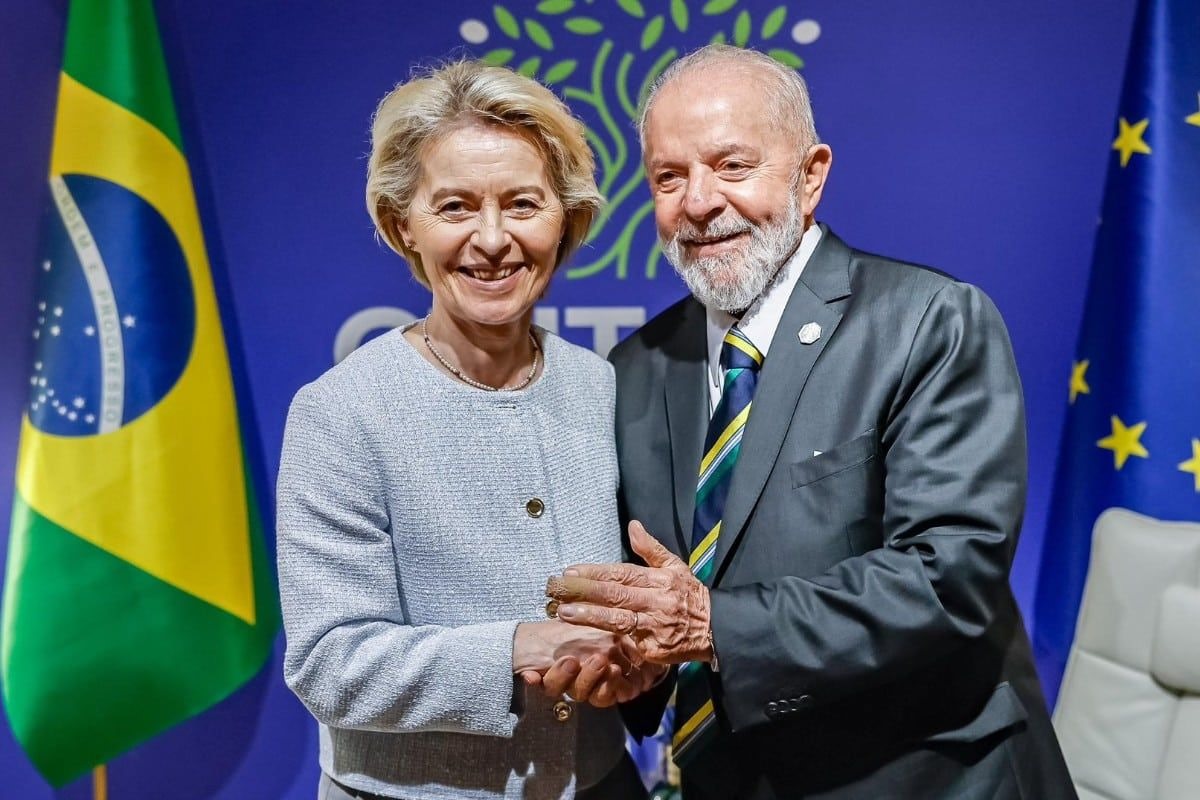
Brazilian President Luiz Inácio Lula da Silva has said on 23rd November 2025, at the G20 Summit in South Africa that the Free Trade Agreement (FTA) between the Southern Common Market (Mercosur) and the European Union (EU) would be signed on December 20th. Lula, who holds the South American bloc’s rotating presidency, has made the deal a priority.
“It is an agreement that involves nearly 722 million inhabitants and US$22 trillion in gross domestic product (GDP). It is extremely important, possibly the largest trade agreement in the world. And then, after signing the agreement, there will still be a lot of work for us to do before we can begin to enjoy the benefits of this agreement, but it will be signed”, Lula argued during a press meet in Johannesburg.
The European Union and the bloc formed by Argentina, Brazil, Paraguay, and Uruguay completed negotiations on the agreement last December, almost 25 years after the talks were initiated. Two texts will be signed: the first of an economic-commercial nature, which is provisional, and a complete agreement.
In September, they were formally submitted by the European Commission to the European Parliament and the member states of the European bloc. The European Parliament needs to approve the agreement with favourable votes from 50% of its members plus one, which may face resistance from countries such as France, where objections have been raised.
In addition, at least 15 of the 27 countries must ratify the text, representing at least 65% of the total population of the European Union, which could take several years. When the full agreement enters into force, it will replace the provisional trade agreement.
The Mercosur countries must do the same and submit the final document to their parliaments, but entry into force is individual, meaning that it is not necessary to wait for approval by the parliaments of the four member states.
France, the EU’s largest beef producer, has described the agreement as “unacceptable”, stating it does not take into account environmental requirements in agricultural and industrial production. President Lula responded by saying that France is protectionist about its agricultural interests.
European farmers have protested several times, saying that the agreement would lead to cheap imports of South American commodities, mainly beef, that do not meet EU food safety and ecological standards. The European Commission has denied that this is the case.
Brazil argues that any safeguard regulations adopted internally by the European Union must be fully compliant with the spirit and terms agreed upon in the agreement.
The Commission and proponents, such as Germany and Spain, say the agreement offers a way to offset trade losses due to tariffs imposed by Donald Trump and reduce dependence on China, particularly for essential minerals.
Supporters of the agreement in the European Union see Mercosur as a growing market for European cars, machinery, and chemicals, as well as a reliable source of minerals essential to its green transition, such as lithium metal for batteries, for which Europe currently depends on China. They also point to agricultural benefits, as the agreement would offer greater access and lower tariffs for EU cheese, ham, and wine.
During the press conference, Lula also clarified that the agreement is expected to be signed in Brasília during the Mercosur Leaders’ Summit on December 20 in Foz do Iguaçu. According to him, the President of Paraguay will not be able to attend on that date, so the high-level meeting should be held in early January in Foz do Iguaçu, in the triple border region between Brazil, Paraguay, and Argentina. “We will possibly schedule the Mercosur meeting for early January and sign the agreement on December 20”, he said.
Regarding his predecessor Jair Bolsonaro’s incarceration during the weekend, Lula said that “everyone knows what he did”. However, he declined to comment on specific Supreme Federal Court (STF) rulings. “I do not comment on an STF decision. The court made a decision, he was tried, he had every right to the presumption of innocence, there were practically two and a half years of investigation, plea bargaining, and trial. In other words, the court decided, it is decided, he will serve the sentence that the court determined, and everyone knows what he did”, Lula underlined.
Asked whether this measure would affect his relationship with US President Donald Trump, Lula replied that “Trump needs to know that we are a sovereign country, that our courts decide, and what is decided here is decided”.
On the contrary, what is considered to be a severe jolt to the Mercosur Mission, is the fact that Argentina has declined to endorse the final document circulated during the G20 Leaders’ Summit, which concluded yesterday in Johannesburg, South Africa, citing a breakdown of governing consensus rules and “substantive differences in the geopolitical considerations”.
Foreign Minister Pablo Quirno confirmed the decision in an official statement, expressing regret that the declaration was approved “without the consensus of all members of the forum, including Argentina, among others”. In addition, Quirno’s office said it was essential for the South American country “to preserve the rule of consensus as the basis for the legitimacy of the G20”.
Argentina strongly differed with the document’s approach to the conflict in the Middle East, which it considered “biased” after the text omitted the “regional context and the underlying structural causes of the conflict”, which Argentina deems indispensable for advancing a “genuine, sustainable, and balanced” peace process. Argentina’s decision came amid a summit already marked by deep geopolitical divisions and an unprecedented boycott by US President Donald Trump, an ally of Milei.
Despite the tensions, the G20, which represents 85% of global GDP, have issued a joint statement declaring that they were meeting “in a context of increasing geopolitical and geoeconomics competition and instability, intensifying conflicts and wars, deepening inequality, increasing global economic uncertainty and fragmentation”.
The United States have refused to send a high-level representative, a move the White House denied was a change in participation, though South African Foreign Minister Ronald Lamola stressed the minimum requirement was a head of state or minister. Trump also accused the South African government of persecuting the Afrikaner minority. Also skipping the event were President Xi Jinping (China), Vladimir Putin (Russia), and Claudia Sheinbaum (Mexico).
In this scenario, Canadian Prime Minister Mark Carney acknowledged that “we are not living through a transition, but a rupture. In every rupture lies the responsibility to build; nostalgia is not a strategy. Too many countries are retreating into geopolitical blocs or battlegrounds of protectionism”.
“The G20 could be coming to the end of a cycle”, French President Emmanuel Macron feared.
South African President Cyril Ramaphosa and others championed the summit’s focus on the priorities of the Global South, including tackling inequality and supporting debt sustainability.
The summit concluded with the G20 defending multilateralism in the face of a fragmented world order, even as the lack of full consensus underscored the bloc’s struggle to find common ground on sensitive geopolitical issues.
Team Maverick

Vijay’s TVK to Contest All Seats as Tamil Nadu Poll Campaign Gains Momentum
Chennai, March 2026: With less than a month to go for the Tamil Nadu Assembly elections sc…
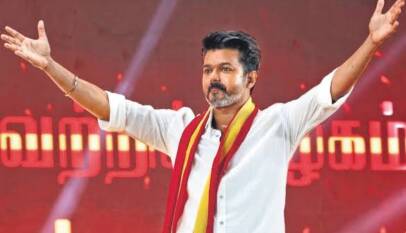
Vijay’s TVK to Contest All Seats as Tamil Nadu Poll Campaign Gains Momentum
Chennai, March 2026: With less than a month to go for the Tamil Nadu …