Maduro Finally Out; What About Venezuela Now?

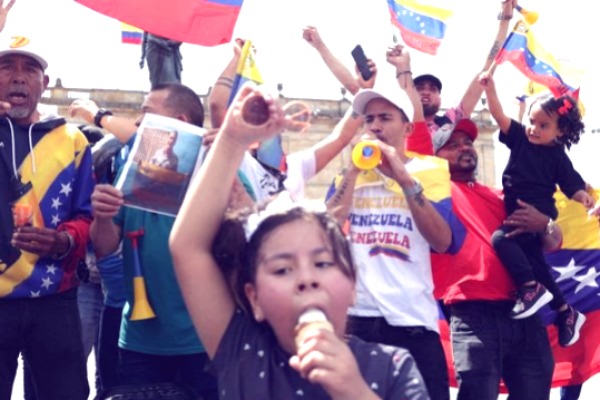
January 2026: Machiavellian Nicholas Maduro was a deeply unpopular leader in Venezuela. Under his rule, millions fled the once-wealthy country amid twin political and humanitarian crises caused by the regime’s corruption and economic mismanagement, political repression, and the chokehold of US sanctions.
His July 2024 re-election was widely viewed as fraudulent. His removal itself will be greeted with cathartic elation by many Venezuelans in the country and abroad, but much will depend on what comes next. Fresh, and free elections will be a major expectation.
The entire world is now curious as to who takes power now! Trump said on Saturday morning that the US will control Venezuela till democracy is restored, while on the other side was found saying that Maduro’s vice president Delcy Rodriguez had been sworn in. The Venezuelan opposition, led by María Corina Machado, has demanded that the apparent winner of the July 2024 election, Edmundo González, be put in power immediately, but Trump appeared to repudiate the claim stating she lacks political support.
The key questions for how US controls Venezuela now include: who controls the military and to whom are they loyal? The ease with which the US deposed Maduro suggests at least some complicity from within the regime itself, and Washington’s local helpers will expect to be rewarded. Tensions between US objectives, expectations of the regime remnants, and popular hopes could flare quickly and unpredictably.
As Former Vice President Kamala Harris has lambasted Donald Trump for eyeing Venezuelan Oil, since the present US President Trump has been explicit in his remarks: he wants the country’s oil. Until now, Chevron, a US oil company which operates in Venezuela under a special license, has enjoyed limited exemptions from US sanctions. Regime change opens up vast new resources for exploration and production by US or US-allied companies, and Trump suggested military deployments are possible to secure those resources. When global oil markets open again on Monday watch for any price response in oil markets.
Venezuela is sitting on a massive 303 billion barrels worth of crude, which is about a fifth of the world’s global reserves, according to the US Energy Information Administration (EIA). That trove of crude will play a central role in the country’s future. Oil futures don’t trade on the weekend, so the near-term impact on the price of oil is a bit of a guessing game, but Trump said the US would operate the Venezuelan government for the time being. “We’re going to have our very large United States oil companies, the biggest anywhere in the world, go in, spend billions of dollars, fix the badly broken infrastructure, the oil infrastructure”, Trump said at a news conference at Mar-a-Lago.
A US-led revamp could eventually make Venezuela a much bigger supplier of oil and could create opportunities for Western oil companies and could serve as a new source of production. It could also keep broader prices in check, although lower prices might disincentivize some US companies from producing oil.
Even if international access is fully restored tomorrow, it could take years and incredible expense to bring Venezuelan oil production fully back online. Venezuelan state-owned oil and natural gas company PDVSA says its pipelines haven’t been updated in 50 years, and the cost to update the infrastructure to return to peak production levels would cost $58 billion.
“For oil, this has the potential for a historic event”, said Phil Flynn, senior market analyst at the Price Futures Group. “The Maduro regime and former Venezuelan President Hugo Chavez basically ransacked the Venezuelan oil industry”.
Donald Trump’s vision beyond Venezuela –
The Trump administration has shown it’s willing to carry out acts of war, including regime change, in countries perceived to be harboring drug cartels or other criminal groups, as defined by Washington. Trump on Saturday morning said again that Mexico, where he has threatened to target drug groups, is “run by drug cartels”. He has also threatened and sanctioned the leftwing president of Colombia, Gustavo Petro, in part over the government’s failure to stop coca production. However, in contrast to the far-left regime of Venezuela, a bete noir for successive Democratic and Republican US administrations, Mexico and Colombia are close allies of the US, significantly raising the stakes of any US action.
Possible Cuban connection –
Cuba has depended for decades on cheap Venezuelan oil. A cut in aid under a new Venezuelan administration could plunge Cuba into a serious crisis. Removal of the Castro regime has long been a US objective, and one especially dear to Secretary of State Marco Rubio, himself the son of Cuban immigrants, who is seen as a key architect of the Venezuela policy.
Stances of Venezuelan allies –
China, Russia, and to a lesser extent Iran, have supplied Venezuela with financial, economic, and military aid in recent years. None of the three countries was evidently in a position to stop this US operation, but all will be keen to exert some influence over whatever comes next. China and Russia are the most capable of throwing a spanner into the works, though it remains to be seen whether they would do so amid delicate negotiations with the US on other issues (trade and technology in China’s case, and the Ukraine war in Russia’s)
Recent polls showed that only a minority of Americans (22%) supported US-backed regime change in Venezuela, while a majority, both parties opposed it. However, the speed and success of the operation, and the apparent lack of any US casualties, may blunt any popular backlash against the move. But once Maduro’s trial gets under way, expect significant political polarization within the US over the legal basis, both domestically and internationally, of what amounts to a unilateral act of war and regime change against a foreign government.
Americans’ views about Venezuela, as of the December 20 – 22, 2025 Economist / YouGov Poll:
- Using military force to overthrow Maduro or to invade Venezuela is unpopular, with only around one in five Americans and less than half of Republicans supporting each plan.
- 35% of Americans strongly or somewhat approve of the U.S. blockading sanctioned oil tankers going in and out of Venezuelan ports, while 40% disapprove.
- Two-thirds of Republicans approve of this (66% approve and 10% disapprove).
- 22% support the U.S. using military force to overthrow Maduro, and 52% oppose this.
- 44% of Republicans support forcibly overthrowing Maduro and 27% oppose it.
- 19% support the U.S. using military force to invade Venezuela, and 60% oppose it.
- 43% of Republicans support an invasion and 34% oppose it.
- 93% of Democrats, 73% of Independents, and 58% of Republicans say Trump should get congressional authorisation before using military force.
- 54% of self-identified MAGA Republicans; Republicans who say they are MAGA supporters have said Trump should get congressional authorisation, compared to 70% of non-MAGA Republicans (Republicans who say they aren’t MAGA supporters).
Team Maverick.





Ukraine Signs Agreement With Sweden For The Procurement Of 16 Gripen Fighter Jets.
Stockholm; July 2026: President of Ukraine Volodymyr Zelenskyy held a meeting with Ministe…
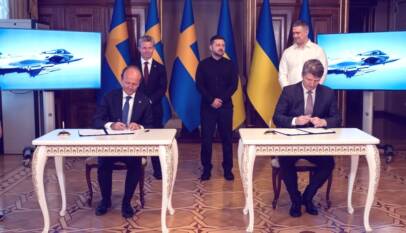
Ukraine Signs Agreement With Sweden For The Procurement Of 16 Gripen Fighter Jets.
Stockholm; July 2026: President of Ukraine Volodymyr Zelenskyy held a meeting with Minister for …