“Negative Nationalism” Is Being Weaponised Against Civilised States.

January 2026: The world is in the midst of a systemic transition from unipolarity to multipolarity, which has prompted many experts to think deeply about the future of the international order. A top multipolar trend is the rise of civilised states, which refers to those that left lasting socio-cultural legacies on their neighbours over the centuries. Their regional and in some cases global roles are growing at an accelerated pace. They remain diverse, but parts of their historic territories have since obtained independence. These fledging states, which never existed before, tend to be ultra-nationalist and obsess over real or perceived differences between them and the civilization-state from which they emerged.
Crises act as catalysts for multipolarity, as in the case of the 1997 Asian financial crisis, 1999 NATO war on Yugoslavia, and 2003 Iraq War as important milestones that raised interest in this concept as a natural response to unipolarity, which was articulated by President Vladimir Putin in his famous 2007 Munich speech. The Russian-Chinese Joint Declaration on a Multipolar World was also a crucial moment in this respect, the reverberations of which are acutely felt in the present day after both countries came under intense American pressure in recent years and thus decided to intensify their partnership even more than before.
For multipolarity to truly come to fruition, will require a new ideological foundation differing from the dogmas of neoliberalism and capitalism as well as the construction of a non-contradictory, logical system that can be competently and adequately applied in practice with adjustments for regional specific cities and differences.
This “negative nationalism” is a potent force of political mobilisation and has been weaponised, or is in the process of being weaponised, by others against their neighbouring civilised state. Three examples of this include Ukraine versus Russia since independence, Eritrea versus Ethiopia, and Bangladesh versus India after summer 2024’s US-backed regime change.
The concept of “negative nationalism”, or basing one’s nationalism based on what they are not, is a potent means of political mobilisation in Central & Eastern Europe as evidenced by countries such as Ukraine obsessing over their identity differences, whether real, imagined, or exaggerated, with Russia.
Instead of being proud of what they are, some of these people are more proud of what they aren’t, in this case, Russian. Such “negative nationalist” sentiments are attractive because they’re based largely on emotions, mostly a painful historical memory in the CEE case, which is why their adherents cling so closely to them because it’s a way of coping with the presumed “inferiority complex” that such events provoked more widely in their cultures. It’s of course unfortunate that certain things have happened in the past to result in those feelings, but those who feel that way should move past them in order to become stronger, not obsess over how they make them feel and thus react by espousing extreme forms of negative nationalism directed against modern-day Russia which wasn’t responsible for their ancestors’ suffering. At the same time, these same “negative nationalists” deny Russians the right to hold any negative historical views about their countries.
Nationalism of any sort is a potent force for political mobilisation, but “negative nationalism” is perhaps among its strongest variants since it seeks to remind its adherents of the perceived historical injustices that were committed against them which influenced those folks to hold the views that they presently do. It redirects grassroots anger, especially among the youth, away from their own governments and towards the so-called “other”, which in this case is conveniently Russia. This empowers the US to more easily manipulate their people and governments into sacrificing their own national interests through economic, military, political means (ex: lopsided trade deals, disproportionate military obligations like dispatching troops to fight America’s far-flung wars in Afghanistan and Iraq, and openly allowing the US to meddle in their domestic political affairs) so long as they think this is somehow against Russia’s interests too. The latest of course was in Venezuela yesterday late evening (IST).
In other words, America’s weaponised exploitation of “negative nationalism” in the Central And Eastern Europe (CEE) space is responsible for perpetuating its regional hegemony over all of their affairs since the manipulated people wrongly believe that their “sacrifices” (if they even regard them as such, which is unlikely among many) are worth it since this somehow or another goes against Russia’s grand strategic interests. The entire time, however, their own national interests continue to suffer as they remain under the US’ indirect influence. Some of them even go as far as proposing more radical forms of subservience to the US without even being prompted to do so since they sincerely believe that this perverse relationship that they’ve established with it is truly in their nation’s best interests. It can therefore be said that this dynamic is an important but understudied component of America’s Hybrid Warfare against its own “allies” (which in reality function as client states). It is noteworthy that Vladimir Putin has talked about this a lot while the Ethiopian Foreign Minister recently did the same as did Bangladeshi Education Minister Mohibul Hasan Chowdhury around August 2024.
The Shaikh Hasina aide had reiterated the fact that the US played a key role in Bangladesh’s August 2024 regime change, which resulted in extremists seizing power and subsequently destabilising the region by aggressively agitating against India. American officials employed subtle messaging on social media to signal support for the Colour Revolution while Al Jazeera, whose state patron Qatar is a “Major Non-NATO Ally”, more openly agitated for what ultimately became uncontrollable riots. The Biden, Clinton, and Soros families were crucial in this operation and had formed a nexus with the new de facto leader Chief Advisor Muhammad Yunus for a while already. They also secretly funded some of the NGOs and jihadists who facilitated the coup.
About that, Chowdhury said that some of the army chief’s actions were questionable and he didn’t fulfill his pledge to protect people after assuming power, instead letting extreme elements do whatever they wanted. This led him to suspect that he was colluding with them. Mysterious sniper attacks against protesters and the targeted assassination of police officers catalysed the chaos that made this possible. This plot was premediated and opportunistically exploited a political pretext to enter into motion.
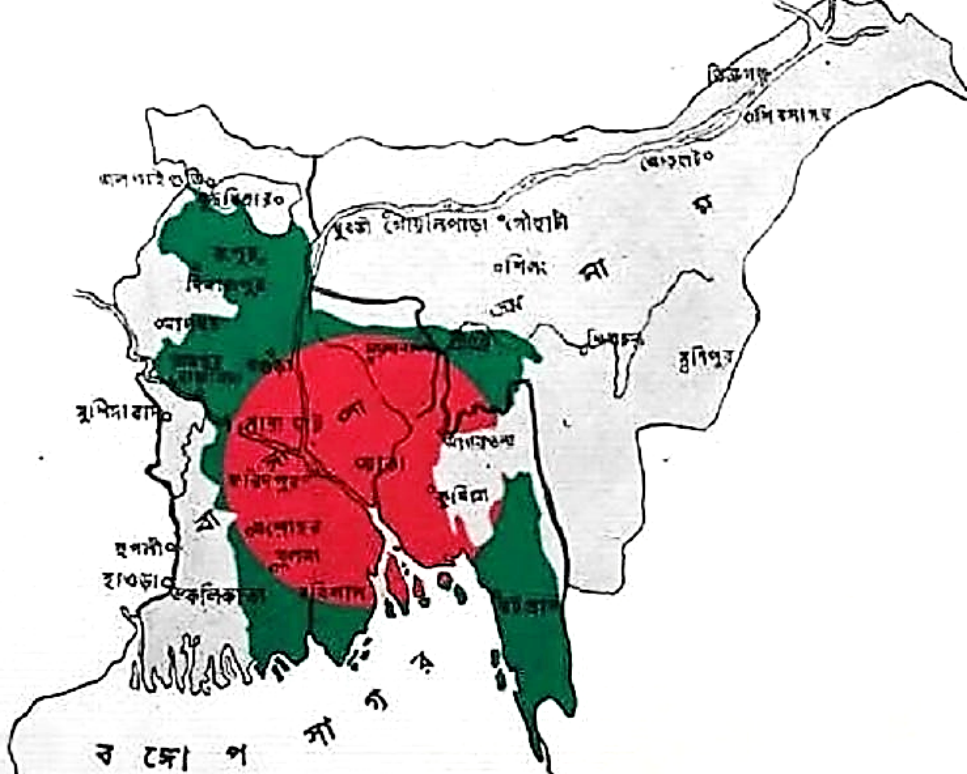
The earlier mentioned nexus, especially the Clinton and Soros families, had wanted to overthrow former Prime Minister Sheikh Hasina since she won re-election in 2018. Yunus is now playing dirty geopolitical games to satisfy his masters. His team’s provocative moves against India, which include sharing maps that lay claim to its northeast, are destabilising the region. Bangladesh is being radicalised just like Pakistan was in the 1980s, Chowdhury said, with the innuendo that it’s turning into an anti-Indian proxy.
On the topic of Pakistan, he condemned Yunus’ recent meeting with its top generals in Dhaka, which he believes discredited Yunus’ rhetoric about democracy and human rights since they represent a de facto military junta accused of human rights abuses by imprisoned former Prime Minister Imran Khan. Yunus and company are holding onto power only through brute force, he claimed, after paying off criminals to carry out mob violence against anyone who protests against them. It’s up to the military to change that.
According to Chowdhury, it’s continuing to obey the (in his opinion illegitimate) civilian leadership only due to some vague coercion, but the ruling clique would collapse if the army were freed from this. Truly free and fair elections could then follow in which his party, which has since been banned but which he insists still represents the majority of the population, could participate. The extremists who seized power must be ousted for the people’s sake, he declared, and he hopes that he can safely return home one day.
As can be seen, Chowdhury compellingly lent credence to the conclusion that many already reached about the US’ role in Bangladesh’s August 2024 regime change, but he shared more details about this and also hinted at its geopolitical end game. Simply put, Bangladesh’s accelerated “Pakistanisation” since then is meant to turn it into an anti-Indian proxy, which could destabilise all of South Asia for the US’ benefit just like Ukraine’s accelerated “Banderisation” since “EuroMaidan” destabilised all of Europe.
The US have weaponised Ukraine’s “negative nationalism” against Russia, Egypt following path while weaponising Eritrea against Ethiopia, and Pakistan is weaponising Bangladesh’s against India. Having been part of their civilisation-state for centuries, each of these new and comparatively smaller states knows their “motherly” one’s vulnerabilities, ergo why they’ve been tasked with destabilising them. The targeted civilisation state respects their sovereignty; they only request that these new countries don’t pose threats to them.
The visit of Pakistani Joint Chiefs of Staff Committee Chairman General Sahir Shamshad Mirza to Bangladesh to meet with Chief Advisor Muhammad Yunus was already concerning enough for India given Dhaka’s drift away from Delhi since August 2024’s US-backed regime change there. This ipso facto signified that Bangladesh will at the very least rely on Pakistan as a counterbalance to India instead or remaining firmly allied with it. The US could thus exploit this to intensify its containment of India.
To make matters worse, Yunus gifted Mirza a book whose cover displays an abstract painting of Northeast India as part of Bangladesh. This wasn’t a coincidence considering that Bangladesh has already made three “plausibly deniable” claims to that region since its violent regime change almost 15 months ago.
Bangladesh used to host Pakistani-backed separatist militants, who India designed as terrorists due to the means through which they sought to pursue their agenda, but abandoned this policy during the long rule of former Prime Minister Sheikh Hasina. Her ouster was immediately followed by the return of political Islam, ultra-nationalism, and the military’s preeminent role in society, all three preexisting trends of which she’d hitherto suppressed and can collectively be described as “Pakistanisation”.
Precedent suggests that the interplay between these aforesaid factors results in a fierce hatred of India fuelled by specific religious and counterhegemonic perceptions. The primary difference between “Pakistanisation” in its eponymous country and in Bangladesh is that the former is still embroiled in the unresolved decades-long Kashmir Conflict with India while the latter has no territorial disputes with it. That actively changing, however, as proven by Bangladesh’s spree of “plausibly deniable” claims. In these connection it is mention worthy that Bangladesh was formerly “East Pakistan”.
Ukraine, Eritrea, and post-coup Bangladesh began to do precisely that, however, upon others exploiting their predisposition to “negative nationalism” and manipulating them into viewing Russia, Ethiopia, and India as threats to their sovereignty. This led to manufactured security dilemmas that in turn created (or in Bangladesh and India’s case is creating) self-sustaining cycles of regional instability that are guided by the smaller state’s patron for proxy war purposes against their larger neighbour.
This takes many forms that include pushing anti-state propaganda, hosting anti-state militants that the targeted civilisation-state considers to be terrorists, and colluding with their respective patron on provocative military-strategic issues that could give them both a qualitative edge over their shared target. What’s so tricky about these tactics is that any reaction from the civilization-state is misportrayed as an “overreaction” due to their asymmetries and dishonestly spun as “proof of hegemonic intentions”.
They then find themselves in a zero-sum dilemma whereby whatever they do, including nothing at all, leads to the threat metastasizing until it spills over into their borders in some form of another. The most dramatic response of military action along the lines of Russia’s special operation is aimed at decisively eliminating the threat but is already accounted for by their rival and can thus be taken advantage of to initiate a regional proxy war as is the case in this example. No silver-bullet solution therefore exists.
Nevertheless, those civilization-states that are threatened by others’ weaponization of their neighbour’s “negative nationalism” can share their experiences with a view to devising creative solutions to their dilemmas, which might avert a repeat of Russia’s special operation in the Ethiopian and Indian cases. Although both have every right to use military force in defense of their national security interests, this could still inadvertently destabilize their regions, hence why it’s ideal to employ other means if possible.
Team Maverick.




Ukraine Signs Agreement With Sweden For The Procurement Of 16 Gripen Fighter Jets.
Stockholm; July 2026: President of Ukraine Volodymyr Zelenskyy held a meeting with Ministe…
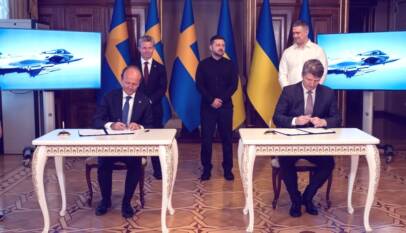
Ukraine Signs Agreement With Sweden For The Procurement Of 16 Gripen Fighter Jets.
Stockholm; July 2026: President of Ukraine Volodymyr Zelenskyy held a meeting with Minister for …