The Interim Government Of Bangladesh Has Already Restructured The Banking Architecture.

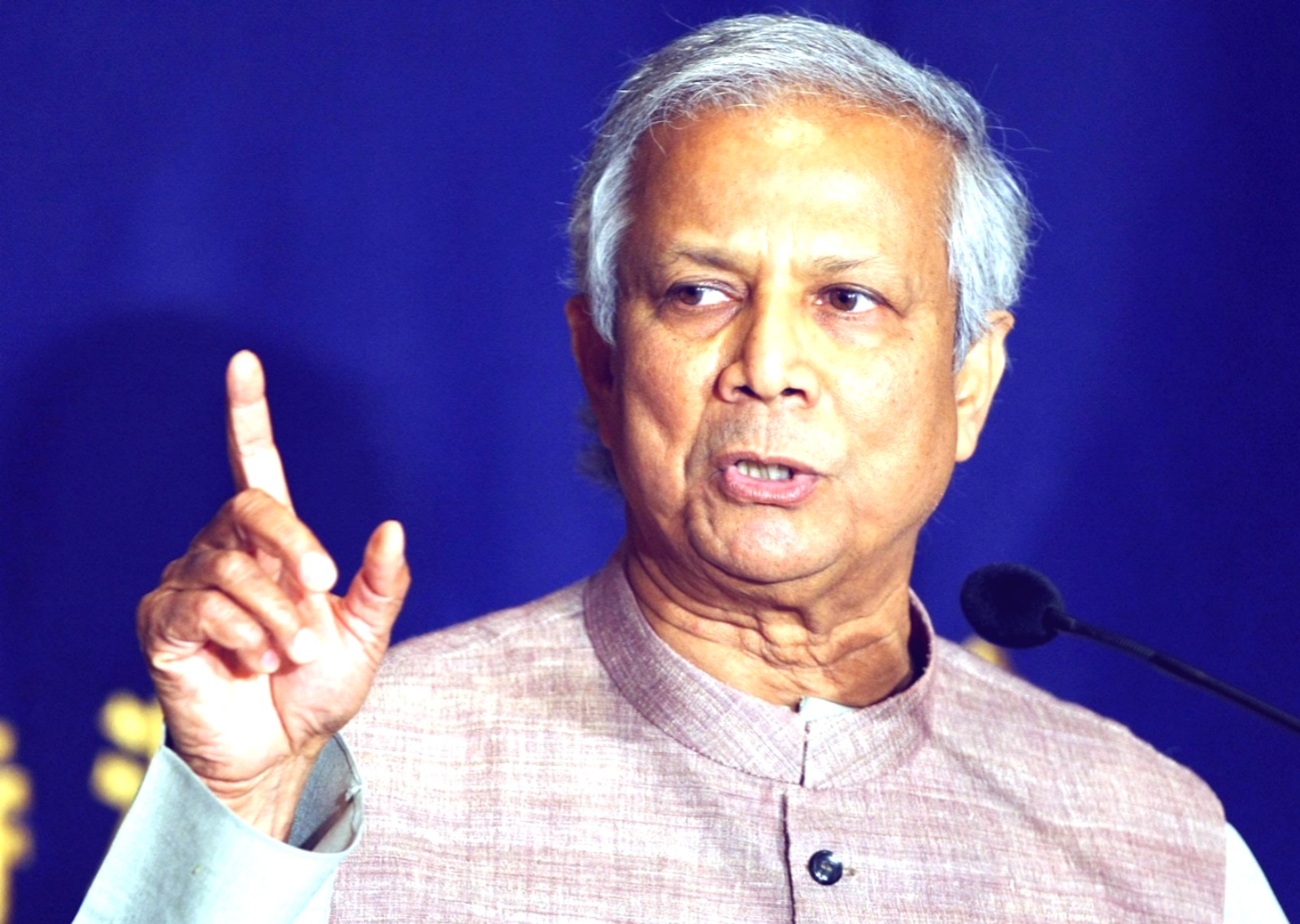
Dhaka; January 2026: The time when Sheikh Hasina’s government was toppled by mass agitation, the economic system was absolute topsy-turvy, while the banking sector was on the verge of a collapse. The interim government under economist and Noble Laureate Muhammad Yunus took office in the middle of 2024, banks officially reported non-performing loans had exceeded 1.7 trillion taka, roughly $15.5 billion, equivalent to nearly 11% of total outstanding credit of about $140 billion, with analysts estimating the true figure to be far higher once the rescheduled and evergreened loans were included.
Years of politically driven lending, forced capture of bank boards, regulatory forbearance, and opaque governance had hollowed out large parts of the financial system. But the learned economist Yunus had a different game plan. The actions which soon started yielding paradigm shift since the liberalisation in the 1990s and the clearest break yet from the authoritarian economic management that preceded it.
The scale of the damage was severe:
- growing number of banks were effectively insolvent, surviving through repeated liquidity injections from Bangladesh Bank that cumulatively ran into several billion dollars, alongside regulatory indulgence and the quiet erosion of depositor confidence.
- Capital adequacy ratios in multiple institutions fell below Basel III minimums, while governance failures became systemic rather than exceptional.
- Several banks, particularly in the Islamic banking segment, functioned less as financial intermediaries than as conduits for connected lending. By 2024, five Islamic banks alone controlled deposits worth more than $10 billion, yet carried some of the highest stress ratios in the system, with paid-up capital in several cases fully eroded.
- Under Hasina’s rule, banking licences were granted on political grounds, while influential sponsors enjoyed near-total immunity from regulatory action.
Yunus’s interim government moved quickly to arrest the slide. The central bank was given political backing to reassert supervisory authority, boards of troubled banks were reconstituted, and long-deferred decisions were finally taken. Unlike earlier reform attempts that relied on cosmetic changes or short-term liquidity support, the current approach acknowledged an uncomfortable reality that some banks were beyond repair in their existing form.
A move, which the erstwhile Bangladeshi Governments had avoided, wary of political backlash and legal entanglements, by which 05 crisis-ridden Islamic banks (First Security Islami, Global Islami, Union Bank, Social Islami Bank, and Exim Bank) were merged into 01 institution holding deposits of more than Tk 1.1 trillion, or about $10 billion, with combined assets exceeding $13 billion.
Between September 2023 and May 2025, deposits at these banks fell from Tk1.58 lakh crore to Tk1.36 lakh crore. Loans, however, kept growing, reaching Tk1.95 lakh crore. Default loans ballooned to Tk1.47 lakh crore, an extraordinary 77% of their total loan portfolio. Union Bank’s non-performing loan ratio stood at 98%, First Security’s at 96%, Global Islami’s at 95%, Social Islami’s at 62%, and Exim’s at 48%.
According to Bangladesh Bank’s draft outline, the merger had cost Tk35,000 crore. Of this, Tk20,000 crore came directly from government coffers, meaning taxpayers’ money. Another Tk10,000 crore drawn from the deposit insurance fund, which had required legal amendments to allow its use as a loan. The remainder, around Tk5,000 crore, were fetched from multilateral development partners such as the IMF, World Bank, and ADB, as part of broader financial sector support. However, these funds too, will ultimately be debt repaid by taxpayers.
The government insists that small savers will be protected, with early payouts to safeguard confidence. Institutional deposits, such as those of corporates and agencies, will be converted into shares in the new bank. Jobs will be preserved, except those linked to fraud, with excess staff absorbed through rural branch expansion.
Governance reforms being promised: the existing boards were dissolved, shares cancelled, a new license issued, and an experienced managing director appointed under Bangladesh Bank stewardship. The plan envisions running the bank under central bank supervision for three to five years before eventually selling it, possibly to a multinational buyer. Under the interim administration, Bangladesh Bank invoked new resolution frameworks that prioritized systemic stability over shareholder sensitivities.
The reopening of withdrawals after months of restrictions marked a crucial psychological turning point, stabilizing deposits and containing the risk of broader financial contagion. The logic behind such a consolidation was straightforward. Bangladesh’s banking system, with more than 60 commercial banks serving a $460 billion economy, had become overcrowded and politicised.
These factors also made them weakly governed. Mergers offered economies of scale, simplified supervision and reduced regulatory arbitrage. More importantly, they signaled a philosophical shift that failure would be managed, not indefinitely postponed. These steps were complemented by tighter oversight of related-party lending, stricter enforcement of loan classification rules and a gradual move away from interest-rate caps that had long distorted risk pricing.
The interim government also backed a bank resolution framework aligned with international norms, giving regulators early-intervention powers long absent from Bangladesh’s financial architecture. Critically, the reforms unfolded in a changed political context. The fall of Hasina’s government removed the protective shield that had insulated from scrutiny influential borrowers responsible for billions of dollars in bad loans. Under authoritarian rule, the boundary between political power and financial privilege had blurred to the point of invisibility.
Analysts estimate that cleaning up legacy bad loans across the sector could take five to seven years and cost an additional several billion dollars in capital support. Reform durability will depend on whether the next elected government resists pressure to revert to politically expedient banking practices. Yet the direction of travel is unmistakable. For the first time in over a decade, banking reform in Bangladesh is being driven by economic necessity rather than political convenience. The interim government has resisted calls to simply recapitalize failed banks without structural change, a strategy that would have socialised losses while preserving the behaviours that caused them.
Team Maverick.







Netanyahu Meets Trump at White House for Eighth Bilateral Talks Amid Regional Tensions
Jerusalem/Washington, July 2026 : Israeli Prime Minister Benjamin Netanyahu arrived at the…

Netanyahu Meets Trump at White House for Eighth Bilateral Talks Amid Regional Tensions
Jerusalem/Washington, July 2026 : Israeli Prime Minister Benjamin Netanyahu arrived at the White House …