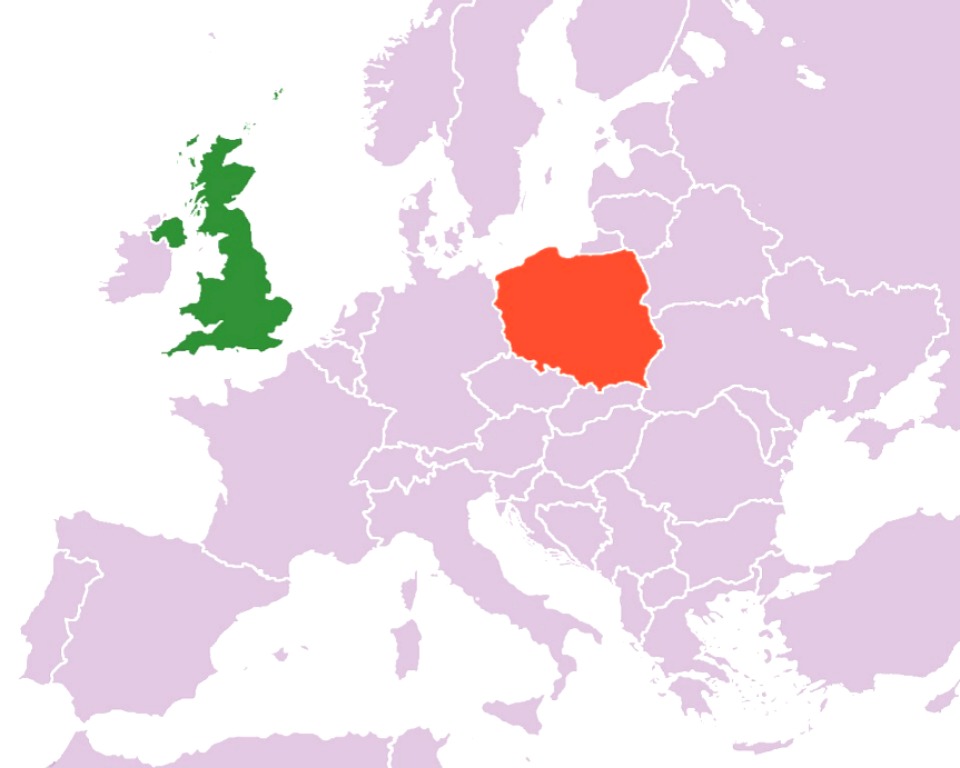
UK And Poland Bilaterally Agrees Enhancing Missile Defence And Helicopter Training Cooperation.

London; January 2026: United Kingdom and Poland agrees to enhance joint training in improving both countries’ ability to shoot down air and missile threats. Polish helicopter pilots and instructors to begin training in the UK this summer as part of deepening cooperation. The Agreement comes as Prime Minister Sir Keir Starmer welcomes Polish President Karol Nawrocki to Downing Street.
The UK and Poland’s ability to shoot down air and missile threats will be strengthened by deepened cooperation between the two countries. The allies have agreed to explore the development and procurement of new capabilities to counter a range of air threats, as well as how to encourage the establishment of new manufacturing capacity in Europe.
Under the agreement, the British and Polish militaries will train together in virtual environments to improve air defence coordination without the cost and danger of live exercises. The enhanced training will boost Euro-Atlantic security and will be delivered as part of the UK-led NATO initiative known as Delivering Integrated Air and Missile Operational Networked Defences (DIAMOND).
The UK and Poland also agreed at today’s meeting in Downing Street between Prime Minister Keir Starmer and Polish President Karol Nawrocki to enhance their helicopter training cooperation. From this summer, the first of 08 Polish military helicopter pilots will begin training in the UK under the NATO Flight Training Europe (NFTE) programme. They will be joined by two experienced Polish helicopter instructors who will be permanently stationed in RAF Shawbury for a full rotational tour. The pilots will undertake world-class helicopter training at RAF Shawbury, including advanced training to prepare them for their future roles flying attack helicopters.
Defence Secretary John Healey MP said, “The UK and Poland’s defence relationship has never been stronger. Standing strong on NATO’s eastern flank, Poland is a crucial ally for the UK in this era of rising threats. This new cooperation we have announced today will see more joint training and integration between our two militaries. It is another example of how the UK and Poland are stepping up to defend Europe and face down the threat from Putin”.
It comes as the UK defence budget is rising to record levels, with the biggest boost to defence spending since the Cold War, totalling £270bn this parliament alone. Poland is one of the UK’s strongest allies with over 350 British personnel currently deployed across Poland, and with British and Polish pilots flying together as part of NATO’s Eastern Sentry mission to protect Polish and NATO airspace. UK-Polish defence industrial collaboration is deepening rapidly, worthing £8 billion to the UK over the past three years, showcasing how defence is an engine for growth.
Industry experts have recognised this alliance as historic, since the United Kingdom military faces challenges amid budget constraints. Meanwhile, flagging these challenges, the Defence Chief Air Chief Marshal (ACM) Sir Richard Knighton, the UK’s Chief of the Defence Staff, acknowledged that “we can’t do everything we would want to do as quickly as we would want to do it within the context of the budget we set”, adding that difficult decisions will have to be made.
This comes more than six months after the UK Government published its Strategic Defence Review, detailing its core priorities and requirements for bolstering the military. Supporting this was a pledge to increase defence spending to 2.5% of GDP by 2027, 3% in the next parliament, and 3.5% by 2035 – although the roadmap for reaching the 3% and 3.5% targets are yet to be laid out.
The Defence Investment Plan (DIP) is due to outline where this money will be allocated. However, it has been beset by delays. Originally slated for late summer, its publication has been pushed back repeatedly. Recent official reports suggest the delay partly stems from a GBP28 billion defence spending shortfall identified over the next decade. The plan is not expected until March, the publication claims.
ACM Knighton declined to comment on the GBP28 billion shortfall or on when the DIP would be completed during the committee session. However, he acknowledged that “we are not as ready as we need to be for the kind of full-scale conflict that we might face”, with difficult decisions ahead for the military.
One possible idea being considered to deal with the funding and capability challenges is to slow some programmes down, he said, although he avoided questions on whether some would be cut.
The ongoing delay of the DIP has led to widespread frustration across the UK defence community, with industry leaders warning that without clear demand signals they cannot commit to long-term investment or the expansion of production capacity. Recognising this, the chair of the defence select committee, Tan Dhesi, said: “We seem to be trundling along rather than realising the urgency of the moment”.
Team Maverick.






Sugar Prices Rise Sharply Across India Amid Monsoon Concerns, Strong Demand
New Delhi, July 2026 : Sugar prices have witnessed a sharp increase across India over the …

Sugar Prices Rise Sharply Across India Amid Monsoon Concerns, Strong Demand
New Delhi, July 2026 : Sugar prices have witnessed a sharp increase across India …