US Shoots Down Iranian Drone Near Aircraft Carrier Amid Rising Tensions Ahead of Nuclear Talks

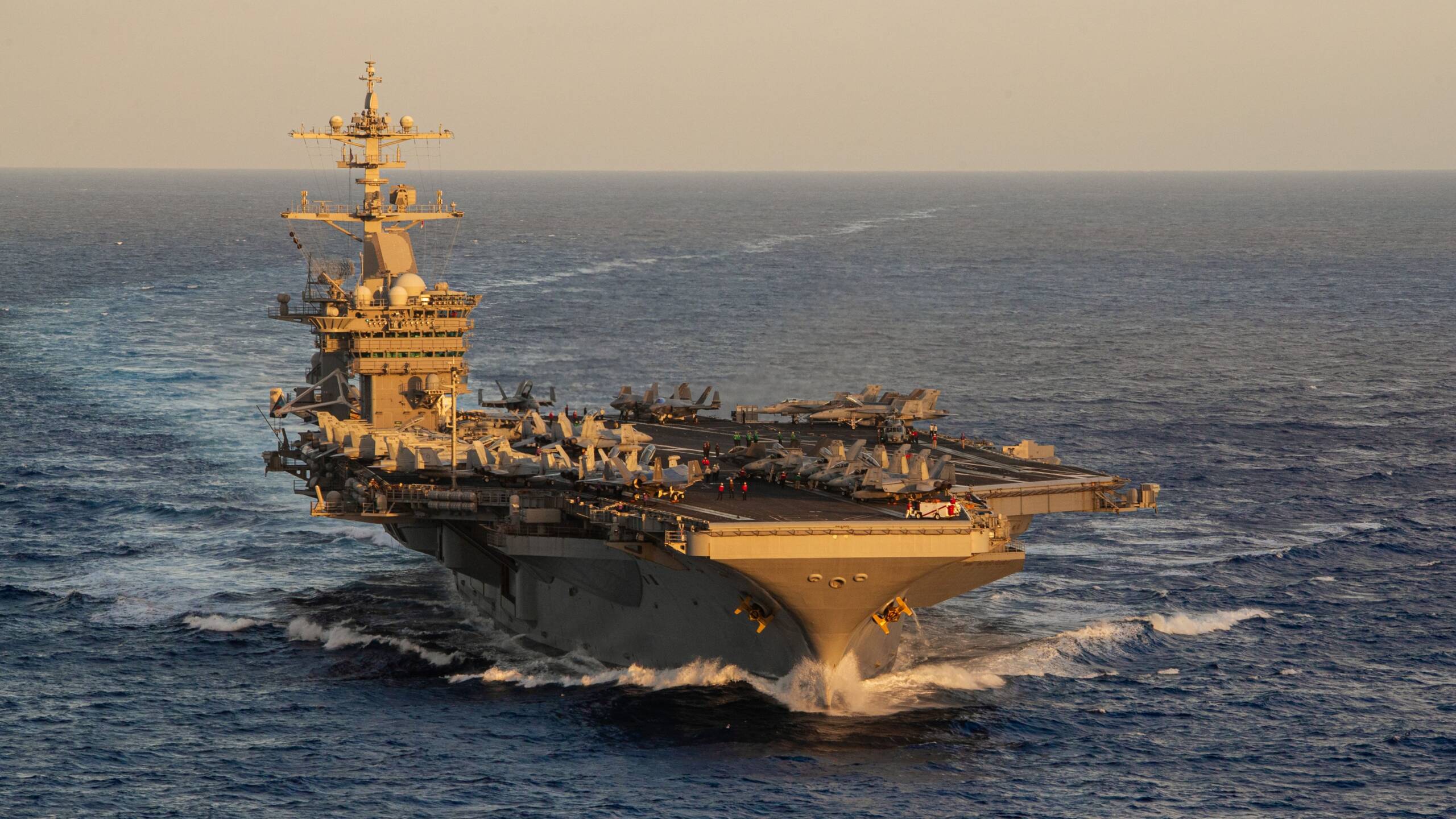
Washington, Feb 2026 : Tensions between the United States and Iran escalated sharply in the Middle East on Tuesday after a US fighter jet shot down an Iranian drone that officials said had “aggressively approached” the American aircraft carrier USS Abraham Lincoln. The incident, which unfolded in the Arabian Sea, has added fresh strain to already fragile relations just days before planned nuclear talks between Washington and Tehran.
US officials said the drone was intercepted by an F-35C fighter jet operating from the Abraham Lincoln, which had been deployed to the region last month as part of a broader buildup of American forces. According to US Central Command, the drone was brought down “in self-defense” after it posed a potential threat to the carrier and its air wing. Captain Tim Hawkins, a Central Command spokesperson, said the US aircraft acted to protect American personnel and assets operating in international waters.
Despite the flare-up, the White House signalled that diplomatic engagement with Iran was still on track. White House spokeswoman Karoline Leavitt told Fox News that US envoy Steve Witkoff is expected “to have conversations with the Iranians late this week,” suggesting that Washington does not intend to allow the maritime incident to derail talks entirely.
The drone shootdown was not the only confrontation reported on Tuesday. Earlier the same day, Iranian forces were accused of attempting to detain a US-flagged oil tanker transiting the strategically vital Strait of Hormuz, a narrow waterway through which a significant portion of the world’s oil supply passes. US Central Command said Iranian gunboats challenged the tanker M/V Stena Imperative, with two boats and a drone allegedly approaching the vessel and threatening to board and seize it.
In response, a US Navy destroyer moved in with air support and escorted the tanker safely onward, according to the US military. The intervention prevented the situation from escalating further, but underscored the volatility of the region and the risks faced by commercial shipping amid heightened geopolitical tensions.
British maritime security firm Vanguard Tech reported that the tanker was approached by multiple small, armed boats believed to be linked to Iran’s Islamic Revolutionary Guard Corps. The vessel was sailing about 16 nautical miles north of Oman at the time. Vanguard Tech said the tanker increased speed, maintained its course and did not enter Iranian territorial waters, helping it avoid detention.
Iran offered a different version of events. The semi-official Fars news agency claimed that a ship — without specifying its nationality — had entered Iranian territorial waters in the Strait of Hormuz and was warned by Iranian forces to leave. According to the report, the vessel complied and exited the area, framing the encounter as a routine enforcement of maritime boundaries.
The incidents come at a sensitive diplomatic moment, as Washington and Tehran prepare to resume talks on Iran’s nuclear programme, expected to begin on Friday, although the venue has yet to be confirmed. Iran has indicated that countries such as Turkey and Oman have expressed willingness to host the negotiations, describing the timing and location as “not a complicated issue.”
US President Donald Trump has repeatedly warned that military action remains an option if Iran fails to reach a deal that satisfies Washington’s concerns. On the Iranian side, President Masoud Pezeshkian has stressed that negotiations can only proceed in an atmosphere free from coercion. In a post on X, Pezeshkian said he had instructed his foreign minister to pursue talks “provided that a suitable environment exists — one free from threats and unreasonable expectations.”
Adding another layer of complexity, Israeli Prime Minister Benjamin Netanyahu reportedly told US envoy Steve Witkoff during a meeting in Jerusalem that Iran “cannot be trusted,” according to a statement from Netanyahu’s office. Israel has long opposed any agreement it believes would leave Iran with the capacity to develop nuclear weapons.
The United States maintains that Iran’s nuclear programme could be aimed at weapons development, a charge Tehran strongly denies, insisting its activities are strictly for civilian research and energy production. Washington is also pushing to curb Iran’s ballistic missile programme and its support for proxy forces across the region — issues Iran argues should not be linked to nuclear negotiations.
These international tensions are unfolding against the backdrop of significant internal unrest in Iran. Protests over rising living costs that erupted in December have expanded into nationwide anti-government demonstrations. Iranian officials have acknowledged more than 3,000 deaths during the crackdown, while the US-based Human Rights Activists News Agency claims it has confirmed 6,872 deaths, mostly protesters, and recorded at least 50,553 arrests, with detentions continuing.
Iranian authorities have blamed the violence on “terrorist acts” and accused the United States and Israel of fuelling the unrest, accusations both countries have denied. As diplomatic efforts resume amid military incidents and domestic turmoil, the coming days are likely to prove critical for the future of US–Iran relations.
(The content of this article is sourced from a news agency and has not been edited by the Mavericknews30 team.)






Habuild at 6: ‘We Are Not Just Teaching Yoga, We Are Helping Millions Build Lifelong Healthy Habits’
As Habuild celebrates six years of transforming lives through wellness, its founder reflec…

Habuild at 6: ‘We Are Not Just Teaching Yoga, We Are Helping Millions Build Lifelong Healthy Habits’
As Habuild celebrates six years of transforming lives through wellness, its founder reflects on …