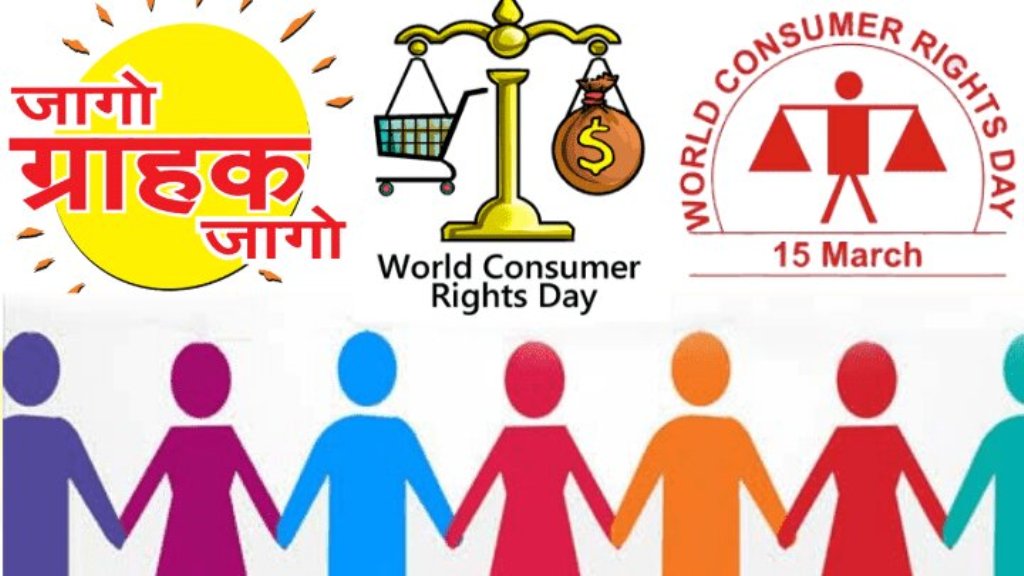
An Aware Consumer is the Identity of an Empowered Society

Every year on March 15, the world observes World Consumer Rights Day. The day is dedicated to raising awareness about consumer rights, promoting transparency in markets, and protecting consumers from exploitation. In today’s rapidly evolving marketplace—where globalization and digital technologies are transforming buying and selling practices—it has become increasingly important for consumers to understand their rights.
Background of World Consumer Rights Day
The inspiration for World Consumer Rights Day dates back to March 15, 1962, when the then US President John F. Kennedy delivered a historic speech in the US Congress. In that address, he outlined four fundamental consumer rights for the first time: the right to safety, the right to be informed, the right to choose, and the right to be heard.
These principles were later accepted internationally and laid the foundation for modern consumer protection frameworks. Since 1983, March 15 has been officially observed worldwide as World Consumer Rights Day to emphasize the importance of safeguarding consumer interests.
Consumer Protection System in India
In a vast and diverse market like India, the significance of consumer rights becomes even greater. Millions of people use a wide range of goods and services every day, making it essential to have strong laws and institutional mechanisms to protect their interests.
To safeguard consumers, the Government of India implemented the Consumer Protection Act, 2019, replacing the earlier Consumer Protection Act, 1986. This modern law aims to protect consumers from misleading advertisements, defective products, poor service, overcharging, and unfair trade practices.
Under this legislation, consumer dispute redressal commissions have been established at the district, state, and national levels, where consumers can file complaints and seek justice. Additionally, institutions such as the Central Consumer Protection Authority (CCPA) monitor unfair trade practices and take action against companies that violate consumer rights.
Key Rights of Consumers
Consumers are entitled to several important rights designed to ensure a fair and safe marketplace. These include:
- Right to Safety: Protection against goods and services that may be hazardous to life or property.
- Right to Information: The right to receive accurate information regarding the quality, quantity, price, and usage of goods or services.
- Right to Choose: The freedom to select goods or services from a range of options at competitive prices.
- Right to be Heard: The ability to present complaints and concerns before appropriate authorities.
- Right to Seek Redressal: The right to receive compensation in cases of exploitation or damage caused by defective goods or services.
- Right to Consumer Education: The right to acquire knowledge about consumer rights and responsibilities.
- Right to a Healthy Environment: The right to live and work in an environment that is safe and sustainable.
New Challenges in the Digital Age
In today’s digital era, the use of e-commerce, online shopping, and digital payments has increased significantly. While these developments have made transactions more convenient, they have also introduced new challenges for consumers.
Issues such as fake websites, counterfeit products, cyber fraud, and data theft are becoming increasingly common. These threats make it essential for consumers to remain vigilant while conducting transactions online.
To address such problems, the government has launched several digital initiatives. Platforms such as the National Consumer Helpline and the E-Daakhil Portal enable consumers to lodge complaints online and track the progress of their cases without visiting government offices.
Awareness is the Greatest Power
To enhance consumer awareness in India, campaigns such as “Jaago Grahak Jaago” have been widely promoted. These initiatives aim to educate citizens about their rights and responsibilities in the marketplace.
Simple steps—such as always taking a bill when purchasing goods, checking the Maximum Retail Price (MRP), verifying product quality, and carefully reading terms and conditions—can help consumers avoid major losses.
World Consumer Rights Day conveys a powerful message: an aware consumer is the foundation of a strong society and a robust economy. When consumers are informed about their rights and raise their voices against unfair practices, markets become more transparent, accountable, and consumer-friendly.
Consumer awareness not only protects individual interests but also promotes ethical business practices, transparency, and responsibility within society. For this reason, an informed and vigilant consumer is considered a vital pillar in building a strong and empowered nation.







Indian Naval Ships Conclude Successful Visit To Singapore
Reinforcing the deep-rooted strategic and maritime partnership between India and Singapore…

Indian Naval Ships Conclude Successful Visit To Singapore
Reinforcing the deep-rooted strategic and maritime partnership between India and Singapore, Indian Naval Ships Udaygiri, …