Standoff at South Korean President Yoon’s Residence Over Arrest Warrant

South Korea is witnessing an unprecedented political and legal standoff as investigators attempt to arrest impeached President Yoon Suk Yeol at his official residence. This marks the first time in South Korean history that a sitting president faces potential arrest. Yoon, who has been suspended from his duties by lawmakers, is accused of issuing a failed martial law declaration that destabilized the country and revived memories of its authoritarian past.
The Corruption Investigation Office (CIO), leading the inquiry into the martial law fiasco, confirmed that the execution of the arrest warrant had begun. Senior prosecutor Lee Dae-hwan and other investigators managed to enter Yoon’s heavily guarded residence but were met with resistance from the Presidential Security Service. The standoff escalated into a confrontation between Yoon’s security forces and the CIO team, according to Seoul’s Joint Chiefs of Staff.
Yoon’s security detail announced they were negotiating with the CIO investigators but expressed uncertainty over whether they would allow the execution of the warrant. The security service’s loyalty to Yoon as the sitting president has already obstructed previous police raids on the presidential office. Yoon, for his part, has ignored three prior summonses from investigators, compelling the CIO to pursue the court-approved warrant.
Yoon’s legal counsel, Yoon Kap-keun, labeled the warrant “illegal and invalid,” adding that its execution would not be lawful. Meanwhile, prosecutors indicted two senior military officials, including a former martial law commander, on charges of insurrection related to the December 3 declaration. Both officials are already in custody.
Heightened Tensions Outside the Residence
The situation outside Yoon’s residence in central Seoul is equally tense. Streets are lined with hundreds of police buses and uniformed officers to prevent clashes between Yoon’s supporters and opponents. Yonhap News Agency reported the deployment of 2,700 police and 135 buses to control the crowd. Pro-Yoon demonstrators, led by activists like Rhee Kang-san, expressed solidarity with the embattled president, chanting slogans such as “Illegal warrant is invalid.”
The CIO’s objective is to detain Yoon and bring him to their Gwacheon office near Seoul for questioning. If arrested, Yoon could be held for up to 48 hours on the current warrant. Investigators would then need to secure a new warrant to extend his detention. Yoon, however, remains defiant, vowing to “fight” any attempts to arrest him.
Political and Legal Fallout
Yoon’s impeachment by parliament awaits a final decision from the Constitutional Court, which will either confirm or reject the legislature’s decision. His legal team has already appealed to the Constitutional Court to invalidate the arrest warrant, calling it unconstitutional. CIO head Oh Dong-woon has warned that individuals obstructing Yoon’s arrest could face prosecution themselves.
This dramatic episode evokes memories of previous failed attempts to execute arrest warrants against lawmakers in 2000 and 2004, where supporters blocked authorities during the warrant’s seven-day validity. Yoon’s situation, however, has garnered extraordinary attention due to his role as the head of state and the gravity of the charges.
Broader Implications
The fallout from Yoon’s failed martial law declaration has plunged South Korea into political and social turmoil. North Korean state media, in rare comments on the South’s politics, described the crisis as paralyzing state affairs and deepening chaos. The Korean Central News Agency noted that the warrant against Yoon has amplified divisions in Seoul.
The opposition has accused Yoon of using anti-communist rhetoric to divert attention from his actions, while Yoon maintains that his political adversaries are in league with South Korea’s enemies. This narrative has further polarized the nation, intensifying public demonstrations on both sides.
Amidst this chaos, the humanitarian cost is mounting. The prolonged standoff threatens to erode public trust in institutions and the rule of law, as South Korea faces a moment of reckoning. Whether Yoon’s arrest is carried out or blocked, the implications for the nation’s democracy will be profound.
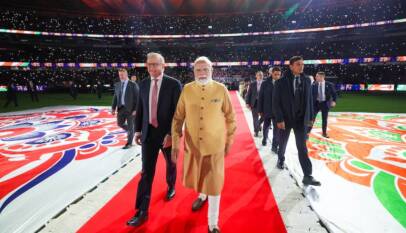
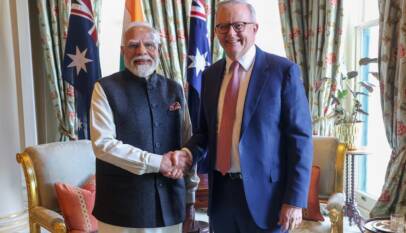

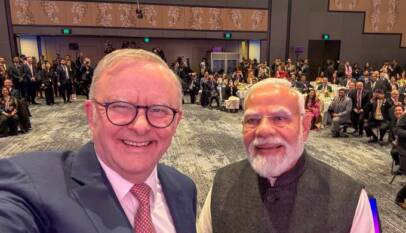

PM Modi, Australian Opposition Leader Angus Taylor Reaffirm Bipartisan Commitment to Stronger India-Australia Ties
Melbourne, July 2026 : Prime Minister Narendra Modi on Friday met Australian Opposition Le…
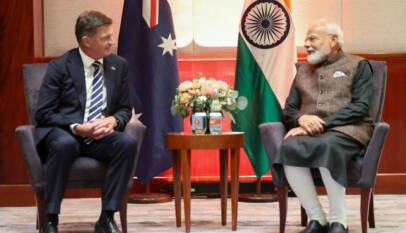
PM Modi, Australian Opposition Leader Angus Taylor Reaffirm Bipartisan Commitment to Stronger India-Australia Ties
Melbourne, July 2026 : Prime Minister Narendra Modi on Friday met Australian Opposition Leader …