BIS Unveils Annual Standardisation Programme for 2025-26

Bureau of Indian Standards (BIS), the National Standards Body of India, releases the Annual Programme for Standardisation (APS) for the year 2025-26.
“It is important for India to be recognized for its best quality. We must strive to make Indian Standards synonymous with International Standards. When Indian Standards become International Standards, it will make it easier for our products to receive global acceptance. This will depend on the quality of our production, the quality of our services, and the quality of our approach. Therefore, we must focus on quality as we move forward”. – Mr. Narendra Modi, Prime Minister
Resonating with the vibrant ideology of our honourable Prime Minister, Mr. Narendra Modi; the Bureau of Indian Standards (BIS) the National Standards Body of India, has released the Annual Programme for Standardisation (APS) for the year 2025 – 2026.
The APS 2025-26 will include both new standards to be developed and existing standards to be revised in the coming year. BIS has also introduced a digital interface that allows stakeholders to upload proposals and track their progress. This effort aligns with sustained efforts to boost the adoption rate of the more than 23,000 standards developed by BIS, ensuring globally accepted quality across various
sectors. BIS works closely with ministries and industry associations through Standardisation cells, aiming to identify gaps and participate in the formulation of national standards. Before the consultative meetings for preparing the APS for 2025-26, BIS conducted a comprehensive mapping exercise of Indian standards against various Government of India schemes and missions, along with a series of focus group meetings during the period August 2024 and January 2025.
As the National Standards Body of India, the Bureau of Indian Standards (BIS) is focused on developing new standards and upgrading an extensive repository of 23000 standards to keep pace with the latest technological advancements. In March, over 200 new standards were developed/ upgraded across various fields. Some of the new standards developed are listed as –
Medicine: Ophthalmic instruments, surgical implants, Anaesthetic and Respiratory equipment’s, dentistry, medical endoscopes and endotherapy devices, plastic surgery equipment’s.
Chemical Industry: Photographic grade chemicals and testing methods, Methods of sampling and testing for paper and allied products.
Electrical & Electronics: Performance & Test Requirement for UPS, Battery energy systems, Miniature fuses, Rotating electrical machines, Electric Welding equipment – assessment of restrictions related to Human exposure to electromagnetic fields.
Management Systems: Project Programme and Portfolio management – Earned Value Management Guidance, Tools and methods for innovation management, Governance of IT for the organisation, Implementation of Health Safety Management System in agencies dealing with solid waste management – guidelines.
Additionally, new standards were created for water colours (used by students), poster colours, Online Coaching Services Requirement, Graphic Technology – Image Quality Evaluation Methods, Public transport services – guidelines, silver and silver alloy jewellery and artifacts (fineness and marking).
Some of the Indian Standards Withdrawn in March 2025.
| Standards | Date of Withdrawal |
| IS/ISO/IEEE 11073-30300: 2004 | 19/03/2025 |
| IS/ISO 12967-2: 2009 | 19/03/2025 |
| IS/ISO 13606-1: 2008 | 19/03/2025 |
| IS/ISO 13606-5: 2010 | 19/03/2025 |
| IS/ISO 17115: 2007 | 19/03/2025 |
| IS/ISO 17432: 2004 | 19/03/2025 |
| IS/ISO 22857: 2013 | 19/03/2025 |
| IS/ISO/TS 25238: 2007 | 19/03/2025 |
| IS/ISO/TR 27809: 2007 | 19/03/2025 |
DRAFTS UNDER WIDE CIRCULATION –
As of date (1 April 2025), 193 draft Indian standards have been uploaded to the BIS portal for comments from experts and the public before being formally announced. Some of the important drafts include the National Lighting Code of India, Installation of Lifts, Escalators, Moving Walks, and Parking Systems, Asset and Facility Management, Lighting and Natural Ventilation under the National Building Code of India, Construction of Masonry in Dams – Code of Practice, Tea Bags – Specification, Herbal Raw Materials for Use in Traditional Medicine – Methods of Test.
STANDARD IN FOCUS: IS 17482:2020 – Drinking Water Supply Management System; Requirements for Piped Drinking Water Supply Service.
In line with the vision of the Government of India’s Jal Jeevan Mission, the IS 17482:2020 certification scheme establishes a piped drinking water supply management system for Water Utilities and Jal Boards. This certification assures that the water supplier or utility can provide drinking water that meets the relevant drinking water specifications, IS 10500.
The scheme ensures that there are functioning water intake works at the source, effective water treatment at the plant, and safe disposal of any residues. It confirms that water utilities have established systems for water treatment, safe residue disposal, water storage, and distribution to customers at specified pressure levels, in accordance with applicable norms and guidelines. It also
requires water supplier/utility to determine risks, have a disaster management plan for the implementation, provide and maintain the necessary infrastructure, monitor resources and conduct water audits.
It is mention worthy that Bangalore Water Supply and Sewerage Board (BWSSB) has emerged to be the first water board in India to receive the certification for its piped drinking water supply management system.
QUALITY COMPLIANCE THROUGH ENFORCEMENT OF QUALITY CONTRL ORDERS ON E-COMMERCE FIRMS –
Intensifying enforcement against unsafe and non-certified products, the Bureau of Indian Standards (BIS) conducted search and seizure operations at the warehouses of firms like Amazon and Flipkart across various locations in the country, including Delhi, Noida, Gurugram, Faridabad, Lucknow, Mumbai, and Shamshabad (Hyderabad). During these operations, thousands of substandard items, such as electric food mixers and toys, were confiscated. Following the raids, legal proceedings have been initiated against the offenders under the BIS Act, 2016.Currently there are 769 products notified for compulsory certification by various regulators, and line ministries of the Govt of India. It is prohibited to manufacture, import, distribute, sell, hire, lease, store, or exhibit (for sale) these products without a valid license or Certificate of Compliance (CoC) from BIS. Any person who contravenes the provisions of this Order shall be punishable under sub-section (3) of section 29 of the BIS Act, 2016, with imprisonment, a fine, or both.
Team Maverick




Priyanka Gandhi Demands Strict Action After Bonded Labour Horror Unearthed in Muzaffarnagar
New Delhi, June 2026 : Congress leader and Lok Sabha MP Priyanka Gandhi Vadra on Wednesday…
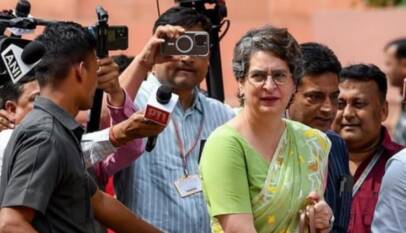
Priyanka Gandhi Demands Strict Action After Bonded Labour Horror Unearthed in Muzaffarnagar
New Delhi, June 2026 : Congress leader and Lok Sabha MP Priyanka Gandhi Vadra …