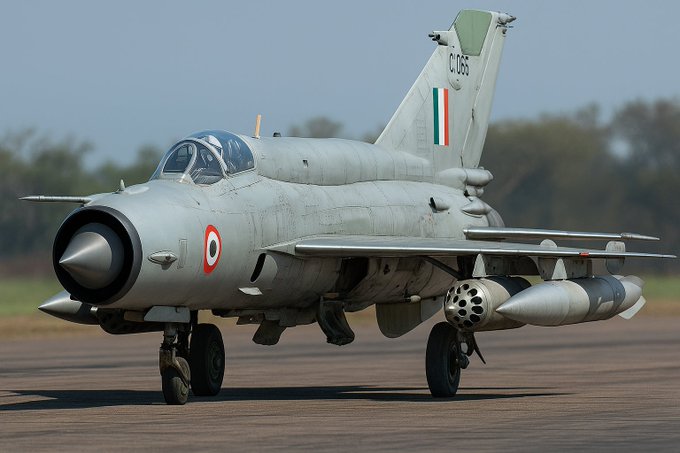
MiG-21:A fighter that demanded total mastery

The MiG-21 Bids Farewell: End of an Era in Indian Skies
Sept 2025 : The distinct roar of the MiG-21’s afterburner echoed for one last time across the skies of Chandigarh on a hot September morning. It was more than just the sound of a jet engine; it was the sound of history, sacrifice, and transformation. With this final flight, the Indian Air Force (IAF) bid farewell to its most enduring warrior — a fighter aircraft that had served the nation faithfully for over six decades.
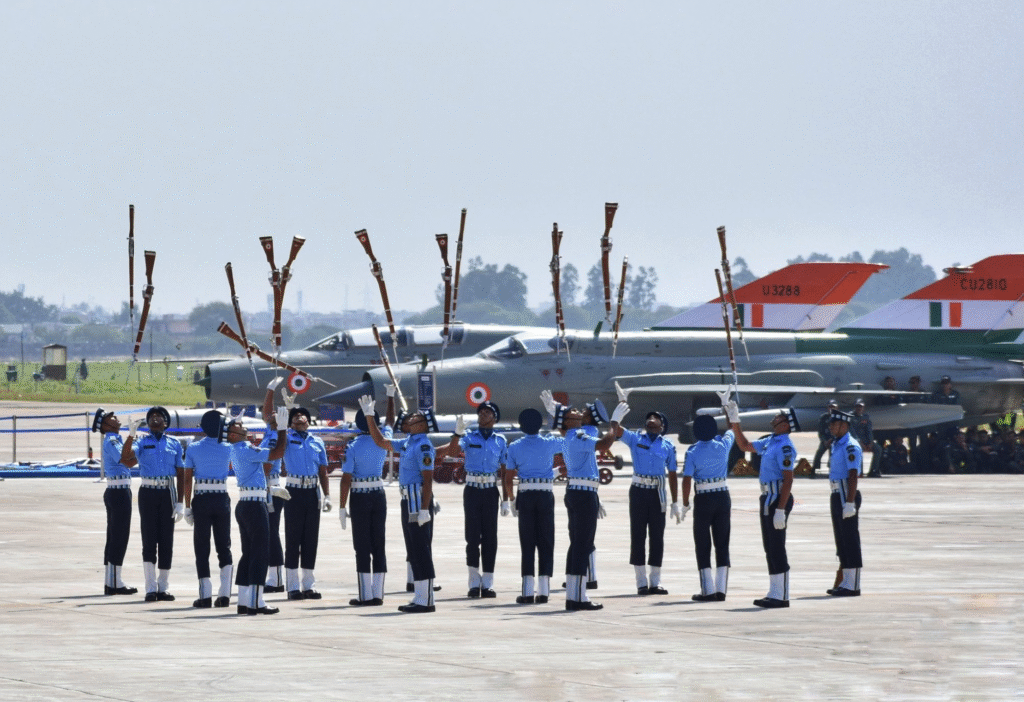
The farewell was not simply an event but a gathering of generations. Veterans in their nineties, many of whom had flown the MiG-21 during its earliest days, stood alongside serving officers and their families, all drawn by the desire to witness the last chapter of a story that had defined Indian combat aviation. There was something about the MiG-21 — its sheer presence, its legacy, its character — that created a bond far deeper than that of a mere machine and its operators.
From Supersonic Dreams to Combat Legend
The saga began in 1963 at this very base in Chandigarh, when the MiG-21 was inducted into the IAF. At the time, it was India’s first supersonic fighter, placing the country among the handful of air powers equipped with such advanced capability. The 28 Squadron, flying the MiG-21F-74 variant, earned the proud title of “The First Supersonics.”
Globally, the MiG-21 became one of the most produced combat aircraft in history. With more than 11,500 airframes built and flown in nearly 60 countries, its NATO codename “Fishbed” became synonymous with agility, resilience, and affordability. India produced around 900 of these aircraft domestically, and at the peak of its service, the IAF operated 24 squadrons of various MiG-21 variants.
For India, the MiG-21 was more than just another fighter. It was the aircraft that transformed the IAF into one of the most respected professional air forces in the world and reshaped the very concept of air power in South Asia.
The Warhorse of Every Battle
From the wars of 1965 and 1971 to the Kargil conflict of 1999, the MiG-21 was everywhere. It flew air defense missions, conducted ground strikes deep inside enemy territory, and even performed tactical reconnaissance. Designed originally as a high-speed interceptor during the Cold War, the IAF’s innovative use of the MiG-21 expanded its role far beyond what its Soviet designers could have imagined.
This fighter’s versatility was proven in every terrain imaginable: the scorching deserts of Rajasthan, the icy Himalayan valleys, the dense jungles of the Northeast, the salt marshes of Kutch, and even over the waters of the Arabian Sea. Wherever the IAF needed her, the MiG-21 stood ready.
Simple, robust, and surprisingly forgiving, the MiG-21 also had a stern side. She demanded respect, discipline, and complete mastery of her quirks. Pilots quickly learned that the aircraft, though hardy and accommodating, had strict performance limits. Cross them at your peril. It was this uncompromising nature that turned young aviators into seasoned warriors.
The Rites of Passage
For generations of Indian fighter pilots, strapping into a MiG-21 was both a dream and a challenge. Combat aviation is not for the faint-hearted — it requires skill, precision, and nerves of steel. The MiG-21, with its unique handling characteristics, became the ultimate test of a pilot’s ability. Those who mastered it emerged sharper, more resilient, and ready for any mission.
To fly the MiG-21 was to undergo a rite of passage. It was a machine that demanded your full attention, yet rewarded you with unmatched performance when handled with care and expertise. For pilots, engineers, and technicians, it was never just another aircraft; it was a mentor, a companion, and a test of character.
The Unfair Label
Despite clocking nearly 15 million flying hours over 62 years — with accident rates comparable to other jets of its vintage — the MiG-21 came to be unfairly dubbed the “flying coffin.” This label, often repeated without context, ignored the fact that the IAF continued to operate the platform out of necessity, not choice. It also overlooked the professionalism and courage of those who flew her, often in situations of extreme risk.
To the pilots, however, the MiG-21 was never a coffin. Ask any one of them, and they will speak of it with passion, pride, and respect. It was the aircraft that turned them into professionals, that taught them discipline, and that gave them wings to serve their nation.

The Final Flight
The farewell ceremony was as poignant as it was symbolic. The MiG-21 Bison fighters of 23 Squadron, the “Panthers,” performed a final formation, closing the chapter that began back in 1963. A “Vic” formation of three Bison jets made their last run, escorted by two Tejas aircraft. The message was clear: the baton had been passed. The younger generation of indigenous fighters was ready to take over from the veteran warhorse.
As the formation touched down, six Bison aircraft taxied through a ceremonial water salute. Then, in perfect unison, all six engines shut down. A heavy silence fell over the tarmac. For a fleeting moment, it felt as if time itself had paused. Every pilot who had ever flown the MiG-21 — young or old — felt their heart skip a beat. This was it.
A Swan Song for the Ages
On that shimmering runway, with the scent of jet fuel still lingering in the air, the MiG-21 sang her swan song. It was not just the end of an aircraft’s service but the closing of an era that had shaped India’s aviation identity. The MiG-21 was more than metal and rivets. She was a teacher, a protector, and a faithful companion who had taken a piece of every aviator’s heart.
For 62 years, the MiG-21 stood as the backbone of the IAF, defining its combat identity and safeguarding India’s skies. With her retirement, a new chapter begins — one led by aircraft like the Tejas, designed and built in India, standing proudly on the shoulders of the legends that came before.
The MiG-21 leaves behind a legacy of courage, sacrifice, and excellence. And though she will never again roar over Indian skies, her spirit will live on in every pilot who once called her home.
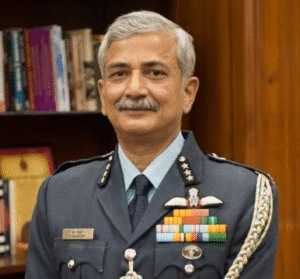
Air Marshal (Dr) Diptendu Choudhury
About the Writter
Air Marshal (Dr) Diptendu Choudhury, PVSM, AVSM, VM, VSM (Retd) is a distinguished fighter pilot and strategic thinker, with extensive experience in commanding combat units and shaping air operations at tactical, operational, and strategic levels. An alumnus of the Royal College of Defence Studies, UK, he holds a Master’s degree from King’s College, London. During his service in the Indian Air Force, he played a key role in policy formulation and led the IAF in international exercises with the USA, France, and the UAE. Prior to retirement, he served as the Commandant of the National Defence College, New Delhi. A noted scholar, author, and speaker on air power and strategic affairs, he is the author of Indian Air Power: Contemporary and Future Dynamics.






AAIB Interim Statement on the Progress of Investigation into the Accident Involving Air India Flight AI-171
Today marks one year since the tragic accident involving Air India Flight AI-171, a Boeing…
AAIB Interim Statement on the Progress of Investigation into the Accident Involving Air India Flight AI-171
Today marks one year since the tragic accident involving Air India Flight AI-171, a …