
Rapido to Roll its Wheels beyond Metro Cities.

Nov 2025 : Bengaluru based bike and auto mobility platform Rapido is going full throttle beyond metros, rolling its wheels across India’s Tier II and III cities. Co-founder Aravind Sanka while addressing the media has attributed this as the company’s next big wave of growth.
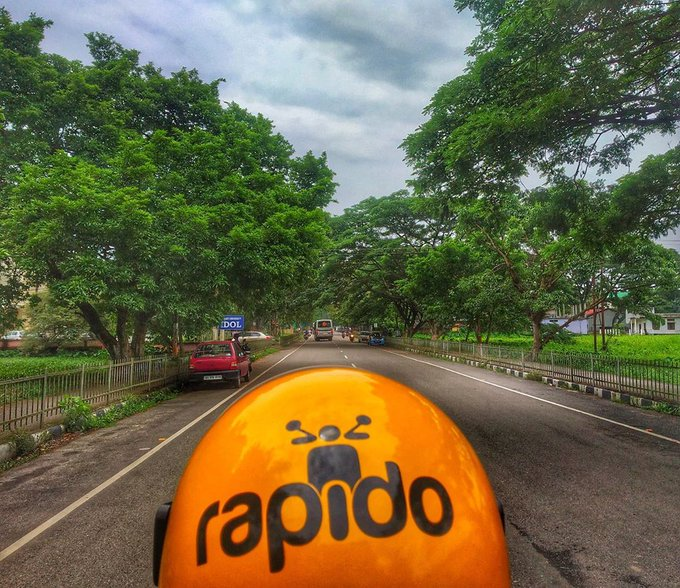
“We’re now present in every district headquarters, from Jhansi to Siliguri and across smaller towns”, said Sanka, while speaking with the Press. Rapido was launched in November 2015 by IIT graduates Aravind Sanka, Pavan Guntupalli, and Rishikesh SR.
Over the time, Sanka realised that while most big brands limited themselves to the top 10 cities, while awareness and access beyond these places are almost non-existent. “We wanted to change that”.
According to him, the company’s expansion into smaller cities is driven by employment opportunities and affordability.
“Unemployment rate is so high that supply of drivers is easy to get”, he added. “And then there’s demand as well”.
Rapido, he explained, is not building for India’s top few million consumers but for the next 500 million. “We are not solving for the top 5 million or 10 million people. So that is the next wave we are going after”. Today, Rapido serves over 5 million customers every day, powered by a network of 3 million ‘captains’, as the company calls its driver partners.
With an average ticket size of Rs 100, the platform facilitates around Rs 50 crore worth of rides daily, though, as Sanka clarified, this figure reflects total customer spending on the platform, not company revenue.
Interestingly, Rapido’s user penetration remains consistent across cities irrespective of their size.
“There’s a city with a population of 10 million (100 lakh), another with 1 million (10 lakh), and one with just 3 lakh. In all these three cities, our penetration is the same”, Sanka noted.
“That means the number of people who are paying in one of the metropolitan cities as a percentage of the population is similar across cities”. Sanka attributed this to Rapido’s inclusive approach of “solving for everyone”.
Women’s safety is a top priority for Rapido, said Aravind Sanka. With about 35% of rides coming from women, the company has introduced multiple safety features and safeguards to build trust and comfort among its women riders. Sanka was expanding on how women’s safety is priority for the company. He said that in larger cities, about 35% of rides come from women. “Over time, we’ve worked hard to change their perception on safety. We’ve introduced multiple safety features and platform-level safeguards, and we go a step further whenever the customer is a woman. All of this has helped build trust and comfort among women riders, and we’re proud of that progress”, he said.
He said a natural progression on that route will be to add more women drivers, or ‘captains’ as Rapido calls them. “Now, our next goal is to extend this inclusion to the other side of the platform by bringing more women on board as captains. The gig economy, whether it’s delivery partners, cab drivers, or auto captains, is still overwhelmingly about 98 to 99% are male. Women have been left behind in these categories, often due to a lack of access, awareness, or training. Changing that won’t happen on its own. It requires deliberate intent”, he said.
Sanka said this is why the company is working on ways to train women and help them access vehicles. “I genuinely believe that change at scale only happens when there’s intent behind it. And in our case, that intent is clear and strong. The challenge is big, but if we keep things simple and focused, it’s absolutely achievable. Earlier this year, the company announced that it plans to onboard 200,000 women captains as part of its ‘Pink Mobility’ initiative”.
In cities where potholes outnumber pavements and metros still struggle to reach every corner, Rapido claims to be quietly positioning itself as India’s parallel public transport network. For millions of commuters navigating broken roads, unpredictable traffic, and limited last-mile options, two-wheeler ride-hailing platforms like Rapido have become a pragmatic fix faster than buses, cheaper than cabs, and more accessible than metros.
“In cities where metros exist, our customers are often the same people who also take the metro. We’re solving a universal need which is affordable, convenient daily mobility”.
Many of Rapido’s captains are students, part-timers, or teachers supplementing their income, as per the founder. The company claims to have a presence in every district headquarters in the country, with the fastest growth coming from Tier II and Tier III towns—places where public transport remains skeletal. “Beyond the top ten cities, hardly anyone knew about most mobility brands. We wanted to change that”, he said
As Indian cities expand faster than their infrastructure can catch up, two-wheelers have filled the gaps that metros and buses often leave behind. About 35% of riders in its largest city are women, Sanka said, adding that the company is now working to bring more women captains onto the platform.
“In a country where public transport is overburdened, we’re just helping people move,” he said. “When mobility becomes accessible, everything else follows”.
Team Maverick





Maharashtra Shuts Schools Across Several Districts as Heavy Rain Alert Triggers Safety Measures
Mumbai, July 2026: Authorities across several districts in Maharashtra have declared a hol…

Maharashtra Shuts Schools Across Several Districts as Heavy Rain Alert Triggers Safety Measures
Mumbai, July 2026: Authorities across several districts in Maharashtra have declared a holiday for …