Romania Approves US Military Deployment To Support Operations Against Iran.

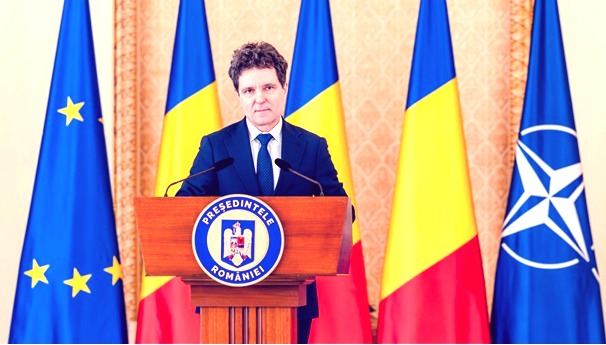
Bucharest; March 2026: On March 11, 2026, Romanian President Nicușor Dan approved a request from the United States to deploy military aircraft, equipment, and personnel on Romanian territory in support of operations against Iran, following a meeting of the country’s Supreme Council of National Defence at Cotroceni Palace in the heart of Bucharest – capital city of Romania.
The decision authorises the temporary deployment of aerial refuelling aircraft, monitoring systems, and satellite communication equipment, along with several hundred American troops, at Romanian military installations, including Mihail Kogălniceanu Air Base on the Black Sea and the Câmpia Turzii Air Base.
During the Press Statement, the Honourable Romanian President have said: “We had a meeting of the Supreme National Defence Council today, with three topics:
First, we discussed the situation in the Middle East. We discussed it from a military perspective, with presentations from the responsible institutions about the exact situation and short, medium and long-term forecasts.
We discussed, very importantly, the situation of the Romanians in the area. We had a presentation by the Foreign Minister regarding the situation of the Romanians there. Obviously, this is one of our important concerns. Up to this point, approximately 5,700 people have returned from the area to Romania, of which approximately 3,700 have been helped in one way or another by the authorities, through work that I must salute the people of the Ministry of Foreign Affairs.
And we discussed the political side of this conflict. Romania, together with European countries, is trying, through diplomatic, political means, to stop this war, which, obviously, has consequences on our economy and has consequences on the Romanians who live in the area, whether they are residents or not, whether they have only Romanian citizenship or have dual citizenship. And, as part of this diplomatic effort, recently, a meeting of Union representatives with representatives of the Gulf Cooperation Council, who condemned Iranian attacks on Gulf countries.
Second, concerned the economic situation and the economic consequences of the war, the increase in prices on the international oil market. Here we had a presentation by the Minister of Energy on the general situation and discussions – the Prime Minister, the Minister of Energy, the Minister of Finance – on the different scenarios that we can expect and what the Romanian state’s reaction will be depending on these scenarios.
As you know, regarding gas, not oil; regarding gas, the Government has already adopted, starting from 01st April 2026, a capping scheme, to control prices, so that the population and companies are not affected.
Third, discussion in the CSAT was the temporary deployment of some American military equipment and forces in Romania. We are talking about refuelling planes, as has already been discussed in the public space, some monitoring equipment and some satellite communications equipment, the latter in correlation with the Deveselu shield.
I emphasise that these devices are defensive and I emphasise that they are not equipped with actual weapons. In technical terms, these are said to be non-kinetic devices. They will be – to the extent that Parliament approves in the meeting that is to take place today – they will be deployed based on the partnership agreement between Romania and the United States, and it is a collaboration between Romania and the United States similar these days to a collaboration that other NATO countries are doing.
As I said, for this equipment and these military forces to arrive in Romania, a vote of Parliament is needed. So, following the CSAT meeting, we sent a letter to Parliament and we will have a debate in Parliament this afternoon. I emphasise that this is equipment that increases Romania’s security. So, I assure Romanians that they have no reason to worry, their country is a safe country, even safer”.
DEPLOYMENT EXERCISE –
The deployment was examined during a three-hour security council session addressing three main subjects: the military situation in the Middle East, the economic consequences of the war, and the temporary presence of additional American military capabilities in Romania. Romanian authorities also addressed the situation of Romanian citizens in the conflict zone, with about 5,700 individuals having returned to Romania since the escalation of hostilities, including about 3,700 assisted directly by state institutions through evacuation and logistical support coordinated by the Ministry of Foreign Affairs.
The request from Washington was transmitted within the framework of the bilateral strategic partnership between Romania and the United States and required approval by the Romanian Parliament following the CSAT decision. Parliamentary debate was scheduled the same day in accordance with Romanian defense legislation, which requires legislative approval for the deployment of foreign military forces or structures on national territory. The equipment involved includes aerial refuelling aircraft, intelligence and monitoring systems, and satellite communication equipment integrated with the Aegis Ashore ballistic missile defense system deployed at Deveselu.
The American request involves deploying tanker aircraft, such as KC-135 Stratotankers or KC-46 Pegasus, to extend the operational range of fighter jets and surveillance aircraft participating in air operations against Iranian targets over distances exceeding several thousand kilometres. Romania’s geographic position on the western side of the Black Sea places Mihail Kogălniceanu Air Base roughly 1,500 to 2,000 kilometres from operational areas in the Middle East, allowing aircraft departing from the base to reach the eastern Mediterranean and Persian Gulf regions with refuelling support. The deployment also includes monitoring systems and satellite communication equipment intended to expand situational awareness and communication links for U.S. and NATO forces operating across the theater.
These systems can provide real-time intelligence collection, target tracking, and command connectivity for aircraft and naval units participating in regional operations. The satellite communication equipment is probably connected to the ballistic missile defense infrastructure at Deveselu, where the Aegis Ashore system provides missile defense coverage against potential ballistic threats originating from the Middle East. The integration of these systems allows the United States to combine air operations with missile defense surveillance networks deployed in Europe. Romania’s decision places the country within a wider international network of host states providing military infrastructure for U.S. operations against Iran.
In the Middle East itself, key installations include Al Udeid Air Base in Qatar, which hosts more than 10,000 U.S. personnel and functions as the central command hub for U.S. air operations in the region. Naval Support Activity Bahrain hosts the headquarters of the U.S. Navy Fifth Fleet, responsible for maritime operations across the Persian Gulf, Red Sea, and Arabian Sea. Additional air and logistics bases operate in Kuwait, including Ali Al Salem Air Base and Camp Arifjan, supporting fighter jet deployments and ground force logistics. Al Dhafra Air Base in the United Arab Emirates hosts reconnaissance aircraft, fighter jets, and drone operations, while Prince Sultan Air Base in Saudi Arabia supports air defense systems and air operations infrastructure.
Across the Middle East, the United States maintains approximately 40,000 to 50,000 troops distributed across roughly 19 installations supporting air, naval, and missile defense missions. Beyond the core Gulf states, additional countries host U.S. military facilities providing logistical support and operational reach toward Iran. Iraq hosts several installations, including Ain al Asad Air Base and Erbil Air Base, which accommodate American forces normally supporting regional operations and training missions. Jordan hosts American forces and infrastructure supporting air operations and logistical movements across the region. Oman provides access to airfields and ports under military cooperation agreements, allowing U.S. aircraft and naval forces to stage operations and conduct refuelling and resupply missions in the Arabian Sea and near the Strait of Hormuz.
These facilities extend the operational depth of the U.S. military network surrounding Iran by providing forward staging locations outside the Gulf itself. Iranian missile and drone strikes during the conflict have targeted several countries hosting American forces, demonstrating the operational significance of these installations in this military campaign. Several allied states in Europe have allowed the use of military installations for logistics, defensive missions, or operational support related to the conflict. The United Kingdom hosts multiple installations used by U.S. forces, including RAF Fairford, RAF Lakenheath, and RAF Mildenhall. France and Portugal have authorized access to certain installations for logistical or defensive missions, while Italy hosts major American facilities, including Aviano Air Base and Naval Air Station Sigonella, that can support regional operations.
Not all European countries have accepted direct involvement in the conflict. Spain refused to allow U.S. forces to use Spanish bases for attacks on Iran, but, taken together, the United States relies on a network of installations across more than ten countries in the Middle East and Europe to sustain operations connected to the war. Within Europe, several bases have experienced a surge in military air traffic, with more than 120 U.S. military aircraft repositioned toward the Middle East. Ramstein Air Base in Germany, which functions as the largest U.S. Air Force hub outside the United States, serves as the main logistical gateway linking North America with Europe and the Middle East. Aircraft redeployed cover transport (C-17 Globemaster III, C-5M Super Galaxy, and C-130 Hercules), command and surveillance (E-3 Sentry AWACS), strategic bombing (B-1B Lancer and B-52H Stratofortress), and combat operations (F-15E Strike Eagle, F-35).
Activity at U.S.-operated bases in the United Kingdom has also increased, as RAF Fairford hosts American strategic bombers, RAF Lakenheath hosts strike fighters and stealth fighters, while RAF Mildenhall supports tanker aircraft operations enabling aerial refuelling missions toward the Middle East. Further east, the U.S. military also operates from Souda Bay in Greece, a naval and air installation on the island of Crete in the eastern Mediterranean. Aircraft operating from the base have included F-22 Raptor and F-35 Lightning II fighters, A-10 ground attack aircraft, aerial refuelling tankers, and heavy transport aircraft. The location of the base allows aircraft departing from Western Europe to shorten flight distances to operational areas in the Middle East while remaining within NATO territory.
The installation also supports U.S. Navy vessels operating in the Mediterranean and Red Sea, including destroyers and submarines responsible for missile defense and maritime security operations. Combined with the logistical functions of Ramstein and the bomber and fighter infrastructure in the United Kingdom, Souda Bay forms part of a layered network of bases enabling continuous air operations against Iranian targets. Romania plays a specific role within this network because of its geographic position on NATO’s eastern flank and its proximity to the Black Sea region. The country shares a 650-kilometer land border with Ukraine and lies near maritime routes connecting Europe with the Middle East and Caucasus regions.
Approximately 1,000 American troops remain deployed in Romania following a force posture adjustment announced by the United States in October 2025, when Washington reduced part of its rotational brigade presence across Eastern Europe. Even after this reduction, Romania continues to host a permanent allied presence of roughly 3,500 NATO troops, including American forces stationed at several installations such as Mihail Kogălniceanu, Câmpia Turzii, and the missile defense site at Deveselu. These facilities support logistics, training operations, and air deployments connected to NATO’s eastern flank posture.
The United States also maintains logistical infrastructure through Area Support Group Black Sea, responsible for coordinating support activities for American forces operating in Romania and neighbouring countries. Mihail Kogălniceanu Air Base near Constanța represents the main American military hub in Romania and has been used by U.S. forces since 1999 for operations in Iraq, Afghanistan, and other regional missions. Located near the Black Sea coast, the base lies about 400 kilometres from Russian-occupied Crimea and about 100 kilometres from the Ukrainian border, placing it close to NATO’s eastern security perimeter.
The installation hosts the largest American military presence in Romania, with about 800 of the roughly 1,000 U.S. troops in the country stationed at the base. Romania is currently implementing a large-scale expansion program valued at more than €2 billion designed to transform Mihail Kogălniceanu into one of the largest NATO air bases in Europe by 2040. The project includes new runways, hangars, logistics facilities, fuel depots, command centres, and housing infrastructure capable of supporting more than 10,000 personnel during major deployments. The temporary deployment of additional American aircraft, refuelling assets, monitoring systems, and several hundred troops linked to operations against Iran will likely reinforce the base’s strategic importance as a logistical hub connecting European infrastructure with operational infrastructures in the Middle East.
Team Maverick.





Farooq Abdullah Says He Holds No Malice After Assassination Attempt, Praises Security Personnel
Jammu, March 2026 : Former Jammu and Kashmir Chief Minister Farooq Abdullah on Thursday is…

Farooq Abdullah Says He Holds No Malice After Assassination Attempt, Praises Security Personnel
Jammu, March 2026 : Former Jammu and Kashmir Chief Minister Farooq Abdullah on Thursday …