Trump Announces 25% Tariff on Indian Goods Starting August 1

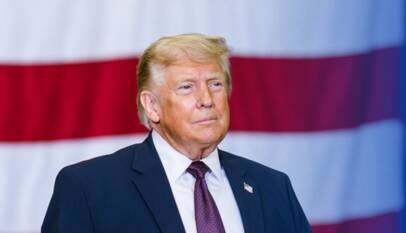
Washington : Former U.S. President Donald Trump announced on Wednesday that the United States will impose a 25% tariff on all goods imported from India starting August 1. Trump also hinted at an additional unspecified penalty on India the same day but did not provide details about its nature or amount.
“While India is our friend, we have, over the years, done relatively little business with them because their tariffs are far too high, among the highest in the world, and they have the most strenuous and obnoxious non-monetary trade barriers of any country,” Trump wrote in a post on Truth Social.
He further criticised India for purchasing the majority of its military equipment from Russia and being one of Russia’s largest energy buyers. “All things not good,” he added, linking India’s ties with Moscow to ongoing international efforts to pressure Russia to end the war in Ukraine.
Tariffs Jeopardise Ongoing Trade Talks
The announcement is a significant blow to the ongoing trade negotiations between the two countries. U.S. and Indian negotiators had been working for months to reach a limited trade agreement. The discussions focused on opening India’s market to American agricultural and dairy products, but Indian officials remained firm in protecting domestic farmers from competition.
Despite progress in some areas, India resisted allowing imports of wheat, corn, rice, and genetically modified soybeans, citing risks to the livelihood of millions of small-scale farmers. Trump’s decision effectively dashes hopes of concluding the first phase of a trade deal by autumn 2025, a target previously set by Prime Minister Narendra Modi and Trump.
Impact on Indian Exports
The new tariffs could hit India’s goods exports to the U.S., valued at around $87 billion in 2024. Key affected sectors include labour-intensive industries such as garments, pharmaceuticals, gems and jewellery, and petrochemicals.
India, which currently faces a U.S. trade deficit of $45.7 billion, had been hoping to build on previous commitments to expand bilateral trade to $500 billion by 2030, up from $191 billion in 2024.
The White House had repeatedly flagged India’s high average tariffs, particularly on agricultural goods, which stand at 39%, with rates reaching 45% on vegetable oils and 50% on apples and corn.
Possible Retaliation
Analysts warn that India may retaliate with its own set of tariffs. U.S. manufacturing exports to India, worth approximately $42 billion in 2024, as well as American energy exports like liquefied natural gas, crude oil, and coal, could be targeted.
Indian officials have so far refrained from commenting publicly on Trump’s announcement. The Commerce Ministry, which is spearheading the trade talks, is expected to formulate a response in the coming days.
India has long viewed the U.S. as a strategic partner, particularly in counterbalancing China’s growing influence. However, New Delhi has consistently emphasised the need to preserve policy autonomy in sensitive areas such as agriculture, data governance, and state subsidies.
Trump’s decision places India on a growing list of countries facing steep tariffs under his “Liberation Day” trade policy, which seeks to reshape U.S. trade relations by demanding greater reciprocity.
The development introduces fresh uncertainty into one of the world’s most consequential strategic and economic partnerships.
Team Maverick.





Prashant Kishor to Contest Bankipur Bypoll, Jan Suraaj Eyes Breakthrough in BJP Stronghold
Patna, July 2026 : Election strategist-turned-politician Prashant Kishor will contest the …

Prashant Kishor to Contest Bankipur Bypoll, Jan Suraaj Eyes Breakthrough in BJP Stronghold
Patna, July 2026 : Election strategist-turned-politician Prashant Kishor will contest the upcoming by-election from …