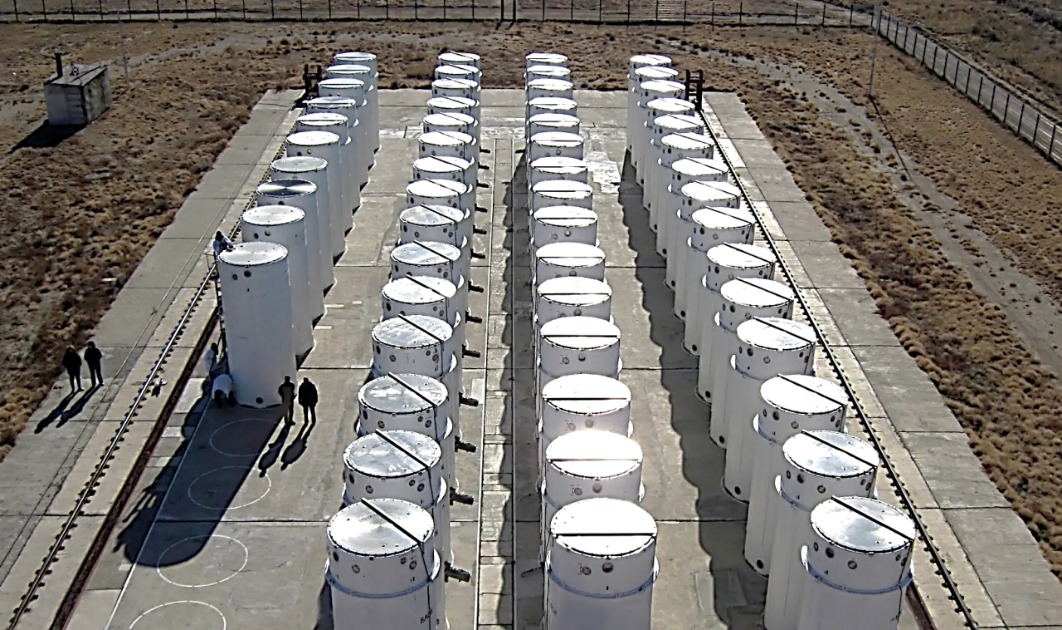
US Energy Department orders “special” investigation of plutonium pit problems.

Aug 2025 : The United States has for almost a decade been on a cross-country nuclear weapons odyssey known as plutonium pit production. The project is set to pump out cores for nuclear warheads in South Carolina and New Mexico, as drawn up in 2018, is now years behind schedule and billions beyond budget estimates.
A memo this month from Energy Department leadership reignites questions about the future of the effort, which has become a punching bag for critics and a pea among the mattresses of nuclear modernisation. Deputy Energy Secretary James Danly earlier this month ordered a 120-day “special study” of the pit production endeavour overseen by the National Nuclear Security Administration. It includes a review of NNSA leadership and management practices; individual projects at Savannah River Site and Los Alamos National Laboratory; and contractual mechanisms “to hold contractors to account“.
Both the current leader and head of defence programs at NNSA are working in an acting capacity.
Danly said he is “increasingly concerned” about NNSA’s “ability to consistently deliver on nuclear weapons production capabilities”. Further delays to pit production, he added, could “result in significant cost increases and risks to national security“.
“We do think it’s very serious, especially with this administration that is willing to make, as we’ve seen, drastic personnel decisions“, Greg Mello with the Los Alamos Study Group told. “Sooner or later, DOE is going to recognise that it can’t build and operate two pit factories at once“, he said. “That two-site plan costs four to six times more than was thought when the plan was first approved”.
In order to run the investigation, Danly tapped the Office of Enterprise Assessments, an internal oversight group that typically probes cyber, site security and environmental concerns. That choice has drawn the curiosity of experts. “It is very interesting that they’re doing this“, Stephen Young with the Union of Concerned Scientists told the media. “Who they chose to do it is also interesting“.
A two-pronged production plan was greenlit during the first Trump administration by Ellen Lord and Lisa Gordon-Hagerty, at the time the Pentagon’s chief weapons buyer and the NNSA administrator, respectively. Biden administration Energy Secretary Jennifer Granholm and NNSA boss Jill Hruby also endorsed the tandem approach. What they’re saying: “The current plan for pit production is one of the most expensive endeavours that the U.S. has ever undertaken in its nuclear complex“, Dylan Spaulding, also with the Union of Concerned Scientists, told the media.
Dylan Spaulding further reiterated that, “It’s good that the DOE apparently recognizes how troubled this program really is and this study is a chance for a much-needed change of course. The important takeaway is that pit production, at scale, is simply not necessary right now. There are other options that don’t detract from national security … and that would help open doors for arms control and a more secure future”.
The Energy Department however did not respond to questions about the selection of the Office of Enterprise Assessments, the potential repercussions of its findings and the overall timing of the deep dive. The combined 2025-34 nuke plans of the Defence and Energy departments amount to $946 billion, according to the Congressional Budget Office. That includes big-ticket items like the fickle Sentinel missile, meant to replace Minuteman III.
As, both the current leader and head of defence programs at NNSA are working in an acting capacity.
Deputy Energy Secretary James Danly’s apprehension about NNSA’s ability to consistently deliver on nuclear weapons production capabilities, and further delays worsening the pit production, resulting in significant cost increases and risks to national security; Donald Trump administration plans to make Cold War-era plutonium available to power companies for reactor fuel deserves a close look, nuclear industry officials said Wednesday.
Experts in arms control and nuclear safety say the idea — which would repurpose plutonium from dismantled warheads — is costly and dangerous. They worry it could increase the likelihood that U.S. enemies could get their hands on the material used to build nuclear weapons. The Energy Department plans to announce it will soon seek proposals from industry.
Bradley Williams, an Idaho National Laboratory senior policy adviser and lead for energy policy and strategic analysis, said at a National Press Club media briefing that plutonium “may or may not be a broadly used fuel of the future” for commercial reactors. “An initial step that makes sense is, we have to dispose of this plutonium that the DOE has one way or another. We might as well get useful electricity out of it and demonstrate these advanced nuclear technologies“.
Williams is working with the administration to implement executive orders that President Trump signed in May to speed construction of advanced reactors at federal sites. Nuclear energy enjoys bipartisan support as a zero-carbon energy source that can meet rising demand from data centres and manufacturing. But cost challenges and fuel supply concerns around building new reactors have slowed development. It was an agreement in 2000 between Russia and the U.S. led to an effort to convert the leftover plutonium to mixed oxide fuel, or MOX, that could be used in nuclear plants.
But the effort ran into serious cost overruns as well as other obstacles, and in 2018, the first Trump administration killed the contract for the MOX project. Since then, some plutonium has been trucked to New Mexico’s Waste Isolation Pilot Plant (WIPP) — an underground burial site for materials used in making in nuclear bombs — after being diluted through a chemical process. Despite the MOX program’s problems, other DOE projects have had more success in researching ways to recycle nuclear materials, said John Kotek, the Nuclear Energy Institute’s senior vice president for policy development and public affairs. “So, it’s not like these companies would be starting from scratch“, Kotek said.
On the other side, the concept faces numerous obstacles, said Ross Matzkin-Bridger, senior director for nuclear materials security at the nonprofit Nuclear Threat Initiative. “Plutonium material has proven to be far more of a liability than an asset, and it is hard to imagine that a private company would be willing to take that on their balance sheet”, Matzkin-Bridger said. He also questioned whether it could lead to nuclear proliferation and what could happen to the plutonium if the effort proves unsuccessful. Burying it at the New Mexico site is a far cheaper and better solution, said Edwin Lyman, the Union of Concerned Scientists’ director of nuclear power safety.
Team Maverick






FIFA Chief Infantino Hails Messi’s ‘Timeless Brilliance’ After Record-Equalling World Cup Feat
New Delhi, June 2026 : FIFA President Gianni Infantino has showered praise on Lionel Messi…

FIFA Chief Infantino Hails Messi’s ‘Timeless Brilliance’ After Record-Equalling World Cup Feat
New Delhi, June 2026 : FIFA President Gianni Infantino has showered praise on Lionel …