The Holy Father reiterates that Religious freedom is an ‘essential element to seek and live truth’.

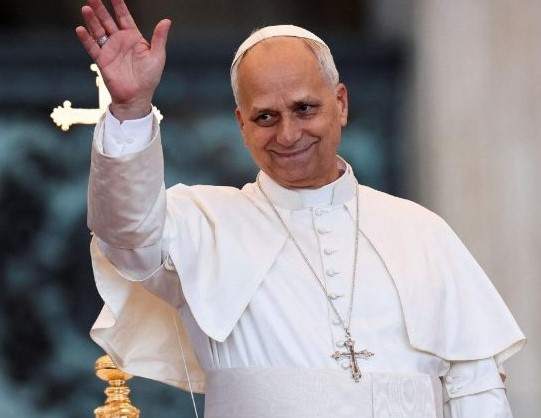
Oct 2025 : Ahead of the publication of the Religious Freedom in the World Report on October 21, Pope Leo XIV held an audience on Friday with members of the pontifical foundation Aid to the Church in Need International (ACN).
In his address, the Pope said their visit to Rome comes at a time of rising hostilities and violence “against those who hold different convictions, including Christians”. The mission of ACN, he added, stands in contrast to that violence, proclaiming that the Church can never abandon our persecuted brothers and sisters. Every person’s right to religious freedom is “not optional but essential”, he said, noting that everyone carries within their heart a “profound longing for truth, for meaning, and for communion with others and with God. Rooted in the dignity of the human person, created in God’s image and endowed with reason and free will, religious freedom allows individuals and communities to seek the truth, to live it freely, and to bear witness to it openly”, he said.
Religious freedom is therefore the cornerstone of society, since it safeguards the moral space in which we may form and exercise our conscience. “Religious freedom, therefore, is not merely a legal right or a privilege granted to us by governments. It is a foundational condition that makes authentic reconciliation possible”. Pope Leo went on to note that, when religious freedom is denied, people witness the slow disintegration of ethical and spiritual bonds within communities.
Citing Pope Francis, the Pope said, “There can be no peace without freedom of religion, freedom of thought, freedom of expression, and respect for the views of others”. The Catholic Church upholds religious freedom for all people, he said, recalling the Second Vatican Council’s declaration that religious freedom is a right that must be recognized by every nation.
Aid to the Church in Need, said Pope Leo, was born in 1947 in response to the suffering caused by war, seeking to foster forgiveness and reconciliation while giving voice to the Church anywhere she suffers or is threatened. He praised ACN’s Religious Freedom in the World Report, published every two years, as an important tool to raise awareness and reveal the “hidden suffering of many”.
The Pope also thanked ACN for providing financial support for Church institutions across the globe, noting especially the Central African Republic, Burkina Faso, and Mozambique. “Wherever Aid to the Church in Need rebuilds a chapel, supports a religious sister, or provides for a radio station or a vehicle,” he said, “you strengthen the life of the Church, as well as the spiritual and moral fabric of society”.
Support for local Christians, concluded Pope Leo, allows minorities to be peacemakers in their homelands, so that they may become a “living sign of social harmony and fraternity, showing their neighbours that a different world is possible”.
The Holy Father while coining a message for the International Congress on Philosophy taking place in Asuncion, Paraguay, and reaffirms the complementary role of faith and reason, and the role of Christian believers who are called to be part of the dialogue and to ‘account for the reason of their hope’.
The Pope began observing that the high-level academic gathering bringing together international experts aims to analyse “the role and significance of Christian philosophical thought in shaping the culture of the continent, to shed light beginning from faith on the challenges of our time, and seeks to create a space for ‘encounter, diagnosis, dialogue, and projection“.
Reflecting first on ‘encounter,’ the Pope said this is a praiseworthy aim that opposes the temptation of those who, because philosophy arose in a pagan context, have seen rational reflection as a threat that could “pollute” the purity of the Christian faith, and have had a distrust toward philosophy. The Holy Father further emphasised, “In contrast, Saint Augustine reminded us. Whoever thinks that philosophy must be avoided altogether is simply insisting that we should not love wisdom“. Therefore, he said, the believer should not remain distant from what different philosophical schools propose, but should instead enter into dialogue with them, beginning from Sacred Scripture. In this way, philosophical thought becomes a privileged space of encounter with those who do not share the gift of faith.
“I know from experience, that unbelief is often linked to a set of historical, philosophical, and other kinds of prejudices“. While the Pope cautioned against “reducing philosophy to a mere apologetic tool“, he suggested great good that can come from exploring it.
The second aim which is the diagnosis, allows us to unmask the presumption of attaining transcendent knowledge through mere rational analysis, to the point of confusing the goods of a life according to reason with those that can only come to us through divine grace. We must not forget that philosophy, as a demanding task of human intelligence, can rise to heights that enlighten and ennoble—but can also descend into dark abysses of pessimism, misanthropy, and relativism, where reason, closed off from the light of faith, becomes a shadow of itself. Not everything labelled “rational” or “philosophical” possesses the same value; its fruitfulness is measured by its conformity with the truth of being and its openness to the grace that illuminates every intellect.
“With genuine empathy for all, we must offer our contribution so that the noble task of philosophising may reveal ever more clearly the dignity of the human being created in the image of God, the clear distinction between good and evil, and the fascinating structure of reality that leads to the Creator and Redeemer“.
The Pope called the next step of dialogue fundamental. This has proven extraordinarily fruitful for great thinkers, theologians, and Christian philosophers. They have demonstrated how human rationality is a gift expressly willed by the Creator, and how the deepest search of our intellect tends toward wisdom, which is manifested in creation and culminating in the encounter with our Lord Jesus Christ, who reveals the Father to us. In this perspective, already visible in the 2nd century in Saint Justin, philosopher and martyr, and later continued by such eminent figures as Saint Bonaventure and Saint Thomas Aquinas. It becomes evident that faith and reason not only do not oppose each other, but support and complete one another in admirable ways.
In today’s world, the Holy Father stated, “the Christian thinker is called to be a living reminder of the authentic philosophical vocation as an honest and persevering search for Wisdom.
Team Maverick
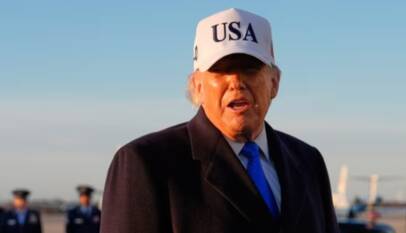
Panic Buying Triggers Fuel Chaos Across Hyderabad Amid Rumour-Driven Shortage Fears
Hyderabad, March 2026 : Widespread panic gripped fuel stations across Hyderabad on Wednesd…

Panic Buying Triggers Fuel Chaos Across Hyderabad Amid Rumour-Driven Shortage Fears
Hyderabad, March 2026 : Widespread panic gripped fuel stations across Hyderabad on Wednesday as …