Millions of Mosquitos turn to be the Saviour of Endangered Hawaii’s Birds.

There were once more than 50 species of Hawaiian honeycreepers, small colorful birds that filled the native forests and have important significance in Native Hawaiian culture. Now, those forests are going silent. Today, only 17 species of honeycreeper are left, with some expected to go extinct in the wild as soon as this year.
The Reason: Honeycreepers are disappearing because of ‘avian malaria’, transmitted by mosquitoes that were introduced to Hawaii by accident in the 1800s. With no immunity, native birds often die after a single mosquito bite.
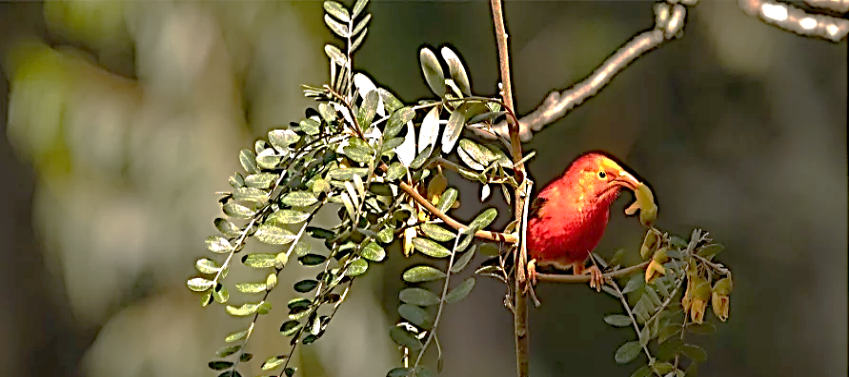
Still, small pockets of birds have endured because the mosquito onslaught has been halted by an invisible line. Above 4,000 to 5,000 feet in elevation, temperatures are too cold for mosquitoes, so the birds there have remained safe. But as temperatures rise with climate change, the mosquitoes are advancing into the birds’ last remaining refuge.
As a last-ditch effort to save the birds, a coalition of groups, including the National Park Service, the state of Hawaii and nonprofits like the Maui Forest Bird Recovery Project, is borrowing a strategy from public health departments. Where mosquitoes spread human diseases, modified mosquitoes that are unable to reproduce successfully are often released, helping to suppress the overall mosquito population. This strategy is now being used for wildlife conservation for the first time, according to the coalition, known as “Birds, Not Mosquitoes”. It’s a sign of the more aggressive level of intervention that humans are engaging in to stem biodiversity loss as the climate gets hotter. The question is whether it can effectively suppress the mosquito population in time to save the birds.
Every week at the Maui airport, a small helicopter gets loaded with 2,50,000 passengers. They’re Male Mosquitoes, key players in a strategy that could be the last, best hope for Hawaii’s endangered birds. A volunteer Christa Seidl of the Maui Forest Bird Recovery Project reiterates that they have got mosquitoes to drop, while rolling a crate with several hundred cardboard tubes filled with mosquitoes. Soon, they’ll be airdropped into Maui’s high-elevation forests, the last refuge for endangered birds.
Hawaii’s honeycreepers are found nowhere else on Earth and make up an integral part of the ecosystem. The birds help pollinate Hawaii’s native plants, eat insects and support the forest. Those forests also filter the rainfall that provides drinking water to many communities. As honeycreepers have steadily disappeared, conservationists have made a difficult call. When it’s clear a bird will vanish, the remaining few are brought into captivity for safe-keeping at the Maui Bird Conservation Center, which is part of the San Diego Zoo Wildlife Alliance.
“We call our program an intensive care unit. This is the last resort“. says Jennifer Pribble, wildlife care supervisor at the centre. The honeycreepers are not the only species those who have found a Samaritan. The cluster of buildings in upcountry Maui is home to some of the rarest birds on the planet. There’s the ‘alalā, the Hawaiian crow, which is extinct in the wild. The calls of the chatty, intelligent birds can be heard echoing between the buildings.
There’s also the ‘akikiki, a pale gray bird that’s likely to go extinct on its home island of Kauai sometime this year. In a tall enclosure, the tiny birds hop from branch to branch. “Fifteen years ago, the population was over a thousand. Today there’s anywhere from two to five birds left in the wild“, Pribble expressed her deepest anguish.
Just over 40 ‘akikiki in captivity represent essentially the entire population of the species, which is split between the Maui bird center and a facility on another island. So, every bird matters. When the Maui wildfires hit in August 2023, a fire began not far from the center. Pribble, who lives at the facility, realised at 3 AM that the flames were just across the road, spewing embers.

To augment the population of the rare birds, the center has a breeding program, carefully pairing birds to ensure their genetic health. Every year, three to four ‘akikiki chicks are born. But the birds can’t be released into the wild yet. The only place that’s safe is inside these buildings, which are carefully wrapped in mosquito screens.
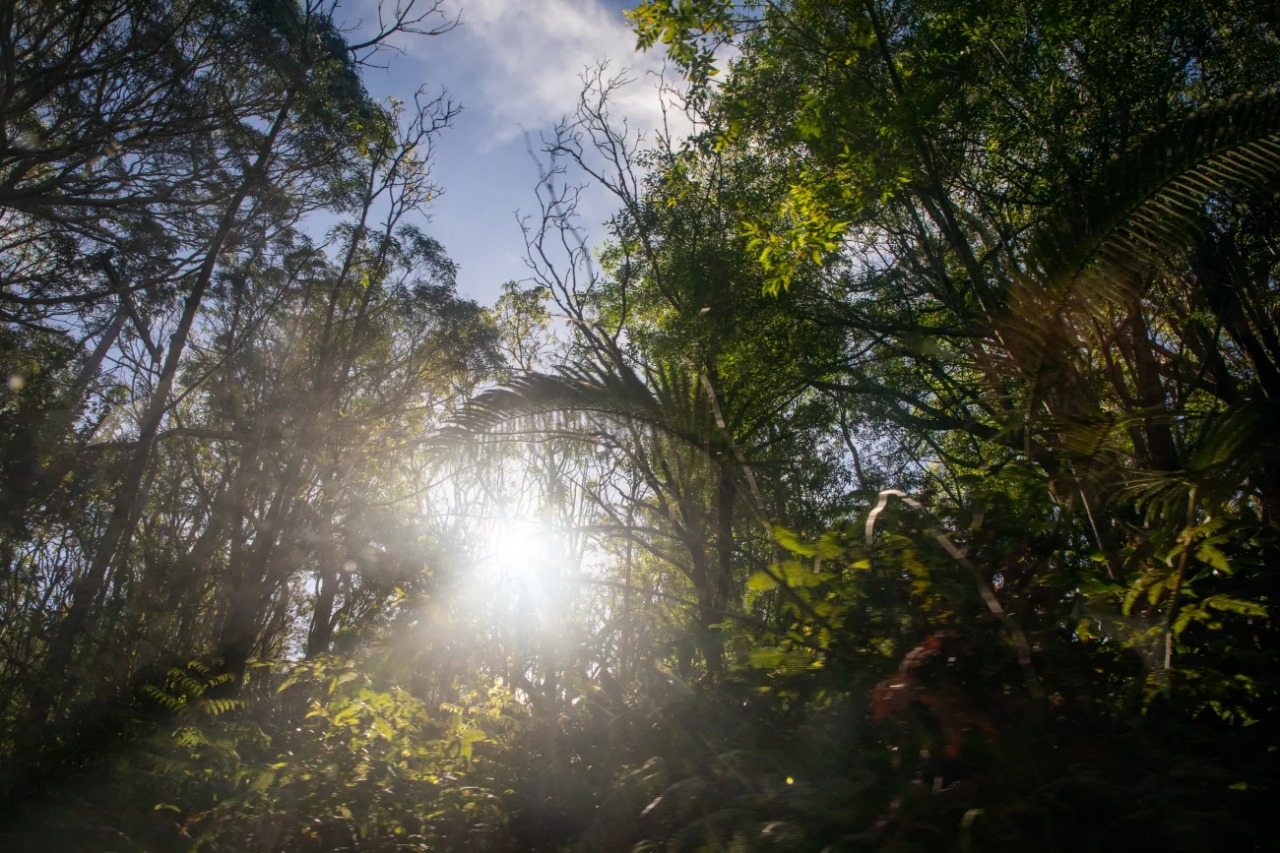
The dense Maui forest has been heavily changed, like many of Maui’s remaining forests. Invasive plants like ginger choke out the native trees. Animals not native to Hawaii, like deer and rats, have moved in. And the forest has become eerily quiet as Hawaiian birds have disappeared. Still, there are pockets of forests still filled with the sounds of native birds. At higher elevations, the southern house mosquito, which carries avian malaria, hasn’t been able to advance because temperatures were too cold. With climate change, that all changed.
It’s increasing in temperature, and that’s allowing mosquitoes to creep increasingly upslope and now invade habitats that were once the last remaining refugia for a lot of our native birds. One of the next honeycreepers headed toward extinction is the “kiwikiu”, a small yellow bird with a parrot-like beak. Today, there are only around 100 left in the wild. With most of Maui’s forests cut down for ranching and agriculture, the Maui Forest Bird Recovery Project began a lengthy effort to restore new habitat for the birds that was safe from mosquitoes. Over a decade, they planted tens of thousands of trees.
In 2019, 14 kiwikiu were released into the new reserve. Within weeks, almost all of them died. A spate of hot weather had allowed mosquitoes to move in, spreading avian malaria. “It was really hard“, says Hanna Mounce, program manager at the Maui Forest Bird Recovery Project. “When failure is extinction and we want to know we’ve done every single thing that we possibly can, even if we do end up losing some of these species, it’s still incredibly difficult“.
So, they looked to mosquito-control efforts already going on around the globe. Since mosquitoes spread human diseases like dengue and Zika, public health programs have targeted them using new technology. One technique is to release mosquitoes that help to suppress the population because they can’t successfully mate.
The method, known as “incompatible insect technique”, relies on naturally-occurring bacteria. Just like humans, insects also have bacteria living inside their bodies. One kind, known as Wolbachia, is already found in Maui mosquitoes and it alters their reproductive cells. When two insects both have the same strain of Wolbachia, they can successfully reproduce. But when a male and female have a different strain, their eggs don’t hatch.
This technique has been used all over the world to reduce mosquito populations. They’ve used it successfully in China, Mexico. There are programs ongoing in California, Florida. So far, 10 million male mosquitoes have been given a different strain of Wolbachia and released by helicopter in high-elevation forests on Maui. Since females only mate once, mating with a modified male mosquito ensures they don’t have offspring, helping shrink the overall population.
“What the previous studies have really shown is that this tool works, but the biggest issue with this is: can we apply the tool effectively enough to reduce the mosquito population?” says Warren of the National Park Service.
Since mosquitoes only live a few weeks, the helicopter releases must be ongoing to keep the population down, often in locations that are difficult to access. The project will need continual funding, which so far has come through the National Park Service. It’s already survived a legal challenge from a group opposed to the releases. To measure its effectiveness, the team hopes to start seeing reduction in mosquito levels after the summer months, when mosquito populations typically boom.
Ultimately, the hope is that Hawaii’s honeycreepers will develop immunity to avian malaria, as birds in other places have done. And there’s already been a sign it could be possible. Recently, one of the kiwikiu that was thought to be dead reappeared, far from where he was released, having survived malaria.
Team Maverick







Suryavanshi’s 17-Ball Blitz Powers Rajasthan Royals to Dominant Win Over CSK
Guwahati, March 2026 : A sensational knock by Vaibhav Suryavanshi powered the Rajasthan Ro…

Suryavanshi’s 17-Ball Blitz Powers Rajasthan Royals to Dominant Win Over CSK
Guwahati, March 2026 : A sensational knock by Vaibhav Suryavanshi powered the Rajasthan Royals …