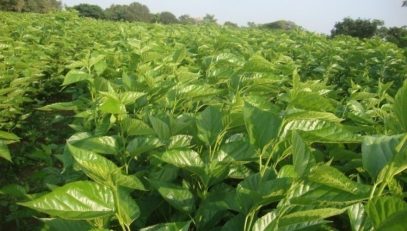
Embrace Sericulture, Welcome Prosperity into Your Home

India has a high demand for silk yarn, but due to low domestic production, the country has to import silk from other nations. This creates a significant opportunity to boost silk production within India. The mulberry silk industry is currently active in 27 districts of Maharashtra, while the tussar silk industry is traditionally practiced in Bhandara, Gondia, Gadchiroli, and Chandrapur districts of eastern Vidarbha, providing a valuable supplementary income to farmers in tribal regions.
Natural silk yarn, known for its soft texture, is often referred to as the “Queen of the Textile Industry.” After the production of silkworm cocoons, the silk is extracted and used for textile manufacturing. The government has implemented several initiatives to expand and develop this sector, aiming to increase farmers’ income through various agricultural schemes. This project is executed under the guidance of the Textile Department and the Directorate of Sericulture, Nagpur.
Silk is produced from silkworm cocoons, and there are four types of silkworms found in nature. For large-scale mulberry silk cocoon production, continuous mulberry plantation is required. Feeding mulberry leaves to silkworms for cocoon production is called sericulture, which is a cottage industry and a profitable allied agricultural activity. Silkworm rearing requires proper infrastructure, rearing equipment, and well-constructed silkworm-rearing houses.
A Profitable Agricultural Enterprise
Silk cocoon production is a significant agro-based industry that serves as an excellent supplementary occupation for farmers. Since it is a short-term crop, proper management allows farmers to harvest at least five crops annually from the second year onwards. Mulberry plantations require replanting only once every 10 to 15 years, reducing the need for frequent land preparation. Additionally, mulberry branches and silkworm excreta can be used to create high-quality organic fertilizer. Sericulture is an ideal occupation for household members and educated unemployed individuals since it requires less water compared to other crops. Women constitute 50–60% of the workforce in this sector, and the industry is environmentally sustainable.
Engage in Sericulture, Cultivate Wealth from the Soil
The Minimum Support Price (MSP) is set for silk cocoons, and farmers are permitted to sell them in other states as well. Furthermore, excess mulberry leaves serve as high-quality fodder for livestock. Farmers are provided with stipend-based sericulture training, technical guidance, and subsidized silkworm eggs. For successful silk cocoon production, farmers need at least one acre of well-drained land with year-round irrigation. However, mulberry should not be intercropped with other crops. From the second year onwards, a farmer can produce 500–600 kg of cocoons, generating an income of ₹1.5–2 lakh annually, with expenses ranging from ₹40,000 to ₹50,000. This results in a net profit of ₹1–1.5 lakh per acre.
Recently, Amravati District Collector Saurabh Katiyar flagged off the Sericulture Awareness Campaign 2025. The campaign aims to educate farmers about the importance of mulberry sericulture and its assured and sustainable income, while also facilitating registration for sericulture farming. Through visual exhibits, the campaign is being conducted across 78 villages in 14 talukas of Amravati district, promoting sericulture awareness and farmer enrollment. Sericulture is an excellent supplementary agricultural business, and farmers should explore its potential for a stable and profitable livelihood.







End of an Era: Cristiano Ronaldo Bids Farewell to the FIFA World Cup After a Record-Breaking International Career
Dallas, July 2026 : One of football’s greatest chapters came to a close on Tuesday a…

End of an Era: Cristiano Ronaldo Bids Farewell to the FIFA World Cup After a Record-Breaking International Career
Dallas, July 2026 : One of football’s greatest chapters came to a close on …