Karki’s New Cabinet Promises Relief, But Protests Continue

Sept 2025 : Nepal’s fragile political transition entered a turbulent new phase on Monday, as the country’s newly sworn-in interim government faced its first wave of protests from the same youth-led movement that toppled the previous administration. The developments highlight both the urgency of restoring order and the fragility of public trust in the political establishment.
Fallen Protesters Declared Martyrs
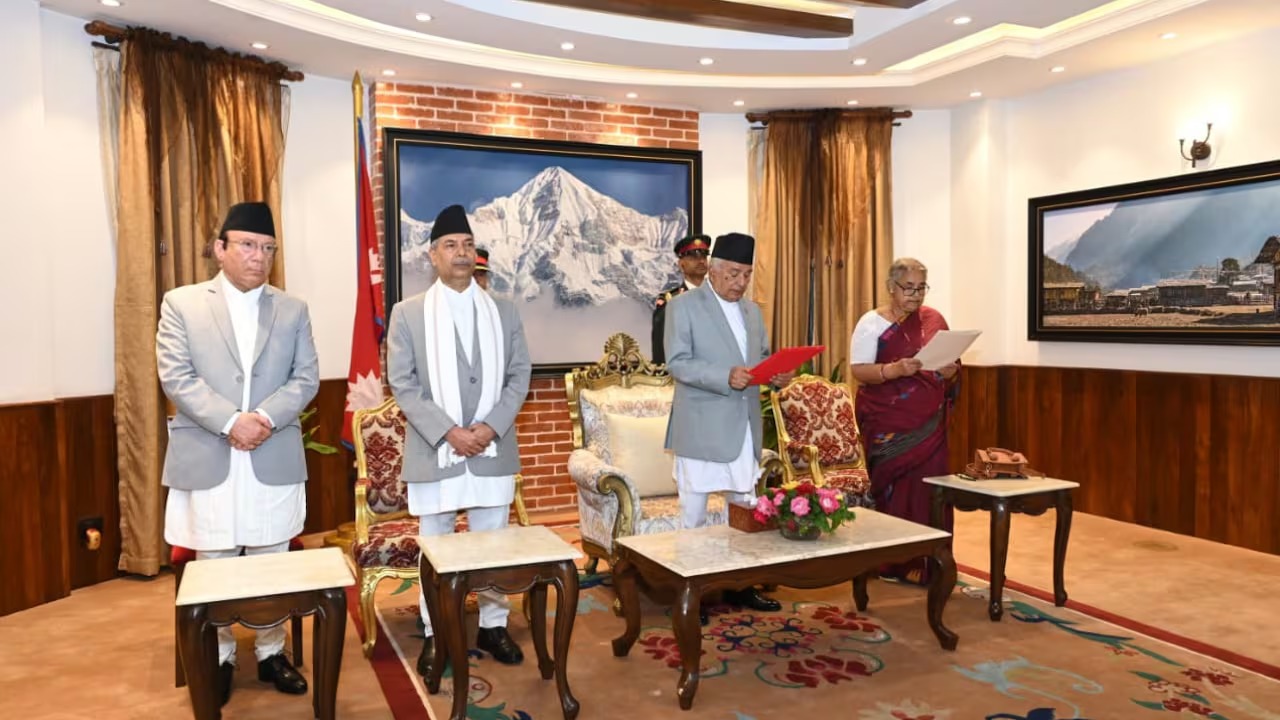
In its first cabinet meeting, the interim administration led by Prime Minister Sushila Karki, the 73-year-old former chief justice, declared that those killed in the recent youth-led uprising would be recognized as martyrs. The government announced a relief package of one million Nepali rupees for each bereaved family, along with an additional Rs 500,000 to cover funeral and other expenses.
Funeral rites of the deceased will be conducted with full national honours, and a nationwide day of mourning will be observed on September 17, during which the national flag will fly at half-mast. Authorities also pledged to provide free medical treatment to the injured.
In parallel, Nepal Police declared that it will extend one million rupees in compensation to the families of police personnel who died during the unrest. A judicial inquiry commission is set to investigate the incidents, aiming to provide accountability and restore public trust.
Cabinet Announced, But Discontent Grows
Despite the sombre gestures, anger erupted soon after Prime Minister Karki unveiled her new ministers. Three key figures were sworn in without reportedly consulting Hami Nepal (“We Are Nepal”), the group at the forefront of the protests. This decision triggered the movement’s first major confrontation with the interim government.
The newly appointed ministers include:
- Om Prakash Aryal – A prominent anti-corruption lawyer, entrusted with the sensitive portfolio of Home, Law, Justice, and Parliamentary Affairs.
- Kulman Ghising – Former head of the Nepal Electricity Authority, credited with solving the country’s chronic load-shedding crisis, now in charge of Energy, Infrastructure, Transport, and Urban Development.
- Rameshwor Khanal – A respected economist and former finance secretary, named Finance Minister, tasked with tackling the unemployment crisis that fuelled the uprising.
While these appointments were intended to signal competence and reform, Gen Z activists were quick to express frustration. Protest leader Bipin Gurung accused political insiders of hijacking the movement, warning: “If our demands are not met, this government will also be toppled.”
Protest Erupts Outside PM’s Residence
On Sunday night, hours before the swearing-in ceremony, Hami Nepal staged a demonstration outside the Prime Minister’s residence in Baluwatar. The group demanded Karki’s resignation, claiming her decisions undermined the movement’s push for a generational shift in governance.
Though the ceremony proceeded as planned on Monday, the protest underscored the fragile legitimacy of the three-day-old administration. Karki, who assumed office on Friday, had already dissolved parliament and announced general elections for March 5, 2026, pledging to restore democratic stability within six months.
Political Parties Signal Election Readiness
Meanwhile, Nepal’s major political parties have cautiously welcomed the announcement of elections, though they remain divided over the constitutional implications of dissolving parliament. Eight parties, including the Nepali Congress, CPN-UML, CPN (Maoist Centre), Janata Samajbadi Party, and CPN (Unified Socialist), have argued that the dissolution was unconstitutional.
Still, party leaders have signaled that they are prepared to contest elections if conducted under free and fair conditions. Formal decisions on their strategies are expected in the coming weeks.
Roots of the Uprising
The unrest that toppled the former government began on September 8, when a controversial social media ban collided with mounting frustrations over corruption, unemployment, and economic stagnation. The protests escalated rapidly, with demonstrators setting fire to parliament and several key government buildings.
According to government figures, at least 72 people were killed in just two days of violence, while 191 remain hospitalized with injuries. The scale of the casualties and destruction underscored the intensity of public anger and the depth of Nepal’s governance crisis.
A Fragile Path Forward
For Prime Minister Karki, the days ahead will be critical. Her challenge lies in balancing the demands of young protesters who seek generational change, the expectations of established political parties, and the practical necessity of stabilizing a country shaken by violence.
While the recognition of fallen protesters as martyrs and the promise of elections may provide some immediate relief, the early protests suggest that public patience is already wearing thin. Nepal’s fragile experiment with interim governance now faces its first real test.

Amarnath Yatra Resumes After Six-Day Rain Halt, Pilgrims Hail Safety Arrangements and Renew Their Journey of Faith
Jammu, July 2026 : The annual Shri Amarnath Yatra resumed on Saturday after remaining susp…
Amarnath Yatra Resumes After Six-Day Rain Halt, Pilgrims Hail Safety Arrangements and Renew Their Journey of Faith
Jammu, July 2026 : The annual Shri Amarnath Yatra resumed on Saturday after remaining …